ADVERTISEMENT
The Moment Nigeria
  • Home
  • News
  • Business
  • Entertainment
  • Interviews
  • Life and Styles
  • Sport
No Result
View All Result
  • Home
  • News
  • Business
  • Entertainment
  • Interviews
  • Life and Styles
  • Sport
No Result
View All Result
The Moment Nigeria
No Result
View All Result
  • Home
  • News
  • Business
  • Entertainment
  • Interviews
  • Life and Styles
  • Sport

Africa’s integration problem begins at the border

...Until mobility improves, Africa’s tech sector will continue to grow in fragments

by Honesty Victor
December 7, 2025
Reading Time: 2 mins read
Africa’s integration problem begins at the border
Share on FacebookShare on TwitterShare on WhatsappShare on LinkedIn


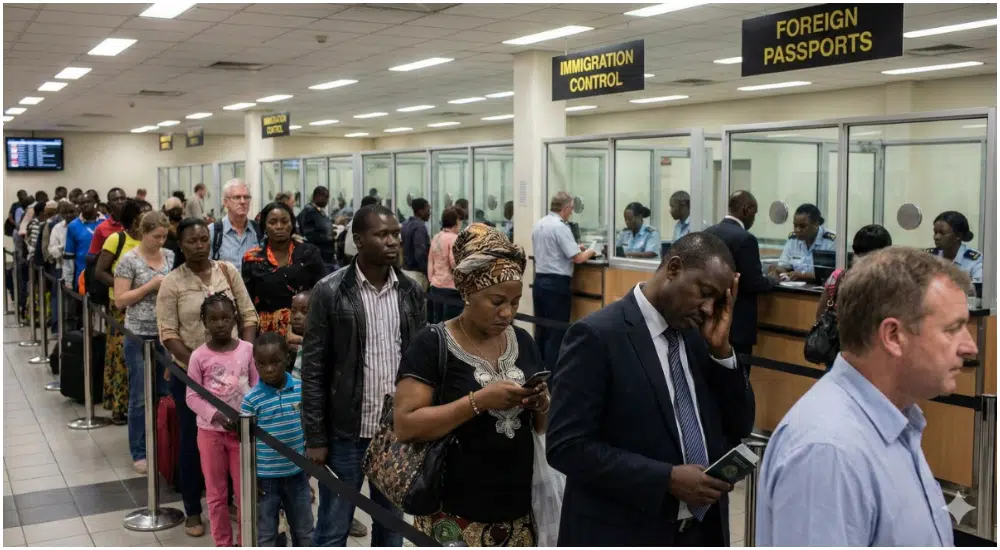
A few weeks ago, I spent nearly twenty-four hours travelling from Kigali to Casablanca. Two major African cities. One African passport. And yet, the most efficient route required a detour through Europe. This was not an airline glitch. It was a reflection of how far Africa still is from the integrated continent we like to imagine in speeches and strategy documents.

It remains easier for an African to move through Paris or Istanbul than through parts of East, West, or Southern Africa. That reality should concern us. It should prompt an honest reckoning with the real barriers to African integration, which come from policy choices, political mistrust, and a reluctance to build the systems that enable Africans to move freely.

RELATED STORIES

Court Sentences Winners Chapel Pastor To Death

Court Sentences Winners Chapel Pastor To Death

February 20, 2026
ICPC raids Nasir El-Rufai’s residence

DSS to arraign el-Rufai Feb. 25 on alleged cybercrime, breach of national security

February 20, 2026

Visa policy is the first barrier we pretend not to see

Two-thirds of African countries still require visas from fellow Africans, rooted in the assumption that greater mobility weakens security. But the evidence shows the opposite: predictable, regulated movement makes borders stronger, not weaker, and economies more competitive, not more vulnerable.

There is also a more practical and uncomfortable truth behind African visa policy. Many African governments treat visa fees as a dependable source of revenue. For some states, visa income provides a steady flow of foreign exchange. It feels like low-hanging financial fruit.

But this approach destroys far more value than it captures. A fifty- or hundred-dollar visa fee may appear to be revenue on paper, but it comes at the cost of thousands of dollars in tourism, business travel, conferences, professional exchanges, and cross-border investment that never materialise. The price of entry becomes the cost of lost opportunity.

Countries that have liberalised their visa regimes for African nationals are already seeing tangible results. In Rwanda, the total number of international visits increased from approximately 600,000 in 2010 to an estimated 1.36 million in 2024.

Available industry estimates indicate that around 52 per cent of these visitors, or about 774,000 people, came from within Africa, showing how intra-African mobility has strengthened alongside overall demand.

Rwanda’s decision to simplify entry for African travellers has contributed to this growth, and Kigali’s hospitality sector has expanded accordingly, with more high-quality hotel rooms and conference venues being built to meet the rising regional demand.

The economic benefits are clear. The opportunity cost of restrictive visas is even clearer. Short-term visa income blocks long-term economic activity. It is the equivalent of choosing a one-time fee over a compounding return.

Credit: Techpoint Africa

Next Post
JAMB clears 85 underage candidates for Admission after special screening

2026 UTME: JAMB releases registration guidelines, deadlines

More Articles...

Incidence at Periwinkle estate and Citizen Endurance Udeke

Olukoyede Tasks Fresh Students of Yakubu Gowon University on Anti-corruption Values

February 22, 2026
2027: Ganduje, Kano APC stakeholders endorse Tinubu

Gov. Yahaya pledges Gombe APC support for Tinubu’s 2027 re-election

February 22, 2026
IFAD grant boost rice, cassava value chains in Niger

IFAD grant boost rice, cassava value chains in Niger

February 22, 2026
Ramadan: Lawmaker distributes 52,000 bags of foodstuffs to indigents

Ramadan: Lawmaker distributes 52,000 bags of foodstuffs to indigents

February 22, 2026
Maikalangu wins AMAC chairmanship election

Maikalangu wins AMAC chairmanship election

February 22, 2026
Dangote Refinery delivers cleaner air, healthier lives with high quality fuel – MD

Dangote Refinery delivers cleaner air, healthier lives with high quality fuel – MD

February 21, 2026

STANBIC IBTC ADVERT

About Us

Themomentng.com is an online community of reporters and social advocates dedicated to bringing you features, news reports by Africans, but from a global perspective.

Contact Us

+447771081433
+2348051966180(WhatsApp/SMS Only)
Email: themomentng@gmail.com

Categories

  • Business
  • Education
  • Entertainment
  • Events
  • Featured
  • Food
  • Foreign
  • Health
  • Interviews
  • Life and Styles
  • Metro
  • Motoring
  • News
  • Opinion
  • Politics
  • Religion
  • Society
  • Sport
  • Technology
  • Top Story

Follow Us

Facebook Twitter Instagram

Copyright © Themomentng.com. All Rights Reserved.

No Result
View All Result
  • Home
  • News
  • Business
  • Entertainment
  • Interviews
  • Life and Styles
  • Sport