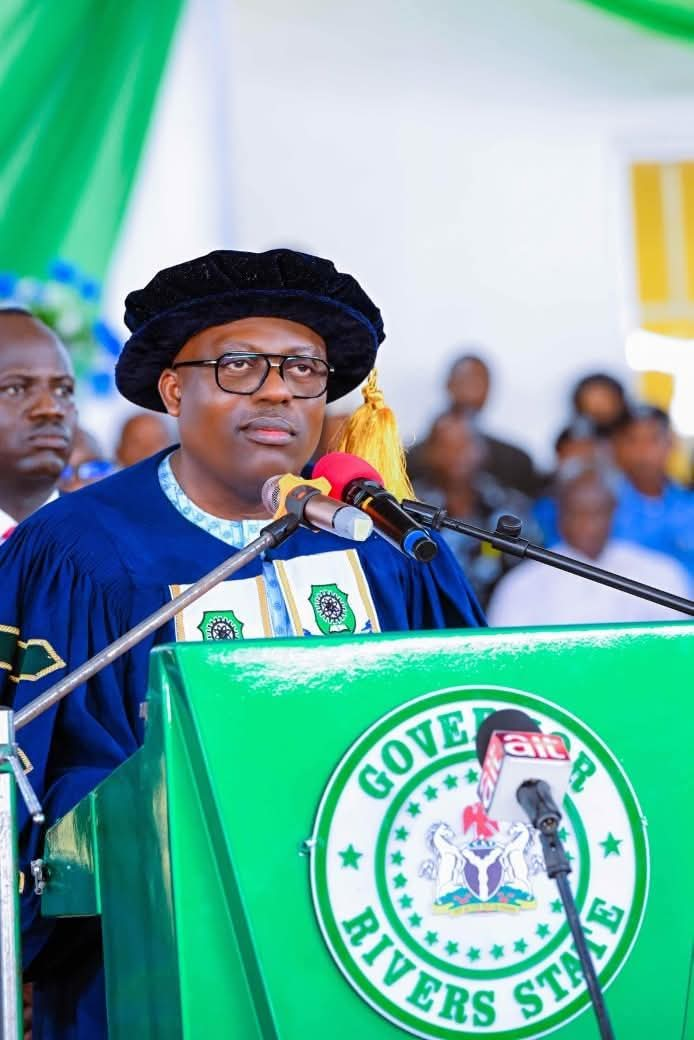
In the corridors of the Rivers State Government House, a heavy silence has replaced the usual end-of-year bustle. While other states are noisily engaging their legislative assemblies to pass supplementary budgets for the closing fiscal year or present appropriation bills for 2026, Rivers State Governor Siminalayi Fubara is moving with calculated stealth. But what Gov. Fubara avoided in refusing to present a Supplementary Budget soon after he resumed office in September, is brewing as the final dots get crossed in the 2026 Budget. The Governor is expected to present that to the Rivers State House of Assembly in a couple of days.
According to multiple government sources and legislative experts, including an independent source very close to the Governor, the Governor is engaged in a high-stakes strategic maneuver to secure a rancour-free passage of the 2026 Budget without triggering a fresh political detonation in the state. The objective is clear: secure necessary funding for the next fiscal year without walking into the “legitimacy trap” set by the Hon. Martin Amaewhule-led House of Assembly. The current crop of legislators loyal to Nigeria’s Federal Capital Territory, FCT, Nyesom Wike, sees Gov. Fubara as “a conquered” man who must dance to their music.
The supplementary budget trap

Though the ruling by Nigeria’s Supreme Court has handed over everything to the pro-Wike lawmakers, back-channel triggers were activated by the Wike men to trap Fubara in a new spider web – his expected presentation of a supplemental budget. They had assumed that with no money to work, Fubara would come cap in hand for a Supplementary Budget to run the state until the end of the year. Among their plan was to use it to further arm twist the Governor. Of course, they prepared for war but in a move that shocked the pro-Wike group, Gov. Fubara declined and pushed back every pressure mounted on him. The Governor reportedly said he would rather starve than go for a Supplementary Budget, vowing rather to use whatever was available to run the state “for the sake of peace”.
The Ghost of June
To understand Fubara’s current caution, one must look back to the battle for the Main 2025 Budget. That document, totaling ₦1.485 trillion, became the center of a legal and political firestorm. After being rejected by the pro-Wike lawmakers led by Amaewhule, and initially passed by the splinter faction led by Victor Oko-Jumbo, the impasse was only resolved when the National Assembly intervened.
In June 2025, the Nigerian Senate invoked the “Doctrine of Necessity,” taking over the legislative functions of the crisis-ridden state assembly to pass the budget. It was a lifeline that kept the state solvent. Now, as the administration seeks to tidy its books for the fiscal year ending December 31, 2025, Fubara faces a serious hurdle: how would the Rivers’ 2025 budget be properly “retired”. With his absence from the Office of the Governor for six months, and with a Sole Administrator expending bills from the budget as “passed” by the National Assembly, the disconnect between the state’s expenditure receipts for 2025 and next year grows thicker.
The 2026 fireworks
Having waited for a 2025 Supplementary Budget to no avail, the pro-Wike lawmakers are fuming for war. Knowledgeable sources told this medium that the lawmakers have booby-trapped expected proceedings for that shall lead to the passage of the budget. Their recent defection, it was gathered, formed a preparatory step for the budget war. While they were reported to have commenced lobbying and armtwisting Gov. Fubara for juicy allocations and what a source told The Neighbourhood Newspaper to be “compensation package”, the Governor was reported to still weighing possible windows to pacify them but not at a grave cost to the State. A source told this medium that “Governor Fubara is not interested in any confrontation with the State House of Assembly. He avoided presenting a Supplementary Budget and submission of new commissions-nominee to avoid walking into their trap. Instead he chose to work quietly, choosing to manage whatever funds he could lay his hands on”, an inside source told this medium.
The quiet strategy: The “Abuja Option”
Investigations reveal that Fubara’s “quiet efforts” involve a two-pronged strategy designed to bypass a direct confrontation in Port Harcourt.
1. The National Assembly route
Sources indicate that emissaries from the Rivers State Government have been holding back-channel talks with the leadership of the National Assembly in Abuja. The argument is that the conditions necessitating the Senate’s intervention in June—a divided and non-functional state assembly—persist.
“The Governor is building a case that the National Assembly should still intervene to have the 2026 Budget just as they passed by way of brokering ” says Dr. Chijioke Nwafor, a constitutional lawyer based in Port Harcourt. “It creates a legal shield. If the Senate approves it, the Amaewhule faction cannot easily declare the spending illegal without challenging the Federal Legislature.”
2. Executive Virement
Simultaneously, the state’s finance team is reportedly exhausting all avenues of “virement”—moving funds from one sub-head to another within the existing approved budget—to minimize the need for a large supplementary request. By keeping the request small and technical, the administration hopes to avoid the fanfare that usually accompanies budget presentations.
The Stakes
For the people of Rivers State, the stakes are tangible. A failure to pass the 2026 budget on time will stall ongoing projects, delay contractor payments, and affect civil service salaries. The interregnum of the emergency rule stalled critical projects across Rivers, including the Port Harcourt Ring Road, an ambitious project that brings the State capital into a capsheaf of road connections
As the clock ticks down to the end of 2025, Governor Fubara is playing a game of 4D chess: trying to fund his state while denying his opponents the battle they are desperate to fight.