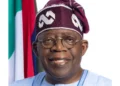
President Bola Tinubu has announced a new security and economic framework to unlocking Nigeria’s vast marine and aquatic resources under the blue economy.
The President unveiled the blueprint on Wednesday during a Presidential Parley with participants of Senior Executive Course 47 of the National Institute for Policy and Strategic Studies (NIPSS) at the Presidential Villa, Abuja.
Represented by Vice-President Kashim Shettima, he said the marine sector is one of the country’s most critical sectors for national transformation.

Tinubu directed relevant Ministries, Departments and Agencies (MDAs) to immediately review and implement recommendations by the NIPSS comprehensive study on blue economy development.
He said the administration is committed to converting Nigeria’s maritime potential into a major driver of economic diversification, job creation and long-term prosperity.
He added that “the blue economy offers strategic pathway for diversifying our revenue base, creating sustainable employment and revitalising the ecosystems that sustain national development.
“If properly harnessed, this sector could become an anchor of shared prosperity for generations.”
The president welcomed the findings of NIPSS study on Blue Economy and Sustainable Development in Nigeria.
Tinubu described it as “timely resource that outlines the opportunities we must seize, the challenges we must confront and the policies we must refine.”
The Nigerian leader commended the institute for sustaining what he called its tradition of analytical rigour, creativity and patriotic duty.
He noted that Nigeria’s marine endowments, including an 853-kilometre coastline, rich fisheries, extensive inland waterways and a strategic location within the Gulf of Guinea, placed the country in a strong position to build new growth avenues.
He said the administration is prioritising aquaculture expansion, port and maritime corridor modernisation, coastal tourism, marine biotechnology and renewable ocean energy.
“These opportunities lie within our grasp if we act with discipline and intentionality,” he said.
He highlighted the establishment of the Ministry of Marine and Blue Economy as critical step towards improving port management systems, strengthening maritime security operations and enabling private-sector growth.
He, however, acknowledged that more work lies ahead and directed relevant MDAs to immediately study and prepare to implement the NIPSS recommendations.
The president stressed that economic ambitions in the blue economy cannot be realised without a safe and stable environment.
While piracy has reduced through the Deep Blue Project, he warned that oil theft, illegal fishing, smuggling, vandalism and kidnapping still undermine national revenues and investor confidence.
“These threats are real, and this administration is taking decisive steps to address them,” he said.
Tinubu also assigned NIPSS an expanded national security mandate, ordering the institute to conduct a nationwide security diagnosis and develop actionable recommendations to guide reforms in Nigeria’s security architecture.
“The policy paper shall be submitted to my office within an agreed timeline, and it will receive the utmost attention,” he assured.
He described NIPSS as the intellectual engine of national transformation and urged the scholars to remain bold, solution-driven and rooted in the country’s realities.
Earlier, the Director-General of NIPSS, Prof. Ayo Omotayo, thanked President Tinubu for the support the institution received.
Omotayo also appreciated the Minister of Finance and Coordinating Minister of the Economy, Wale Edun, for providing funding for SEC 47.
He said that the team, which visited many states and 14 countries, were at the Presidential Villa to present their findings titled “Blue Economy and Sustainable Development in Nigeria: Issues, Challenges and Opportunities.”
Highlighting the contents of the report, Col. Muktar Dauda, the Monitor General of Course 47, said the Federal Government was already addressing systemic gaps in the blue economy.
He commended the president “for his visionary leadership in driving the economy.”
Among other issues, the report noted some challenges and emphasised opportunities available in Nigeria.