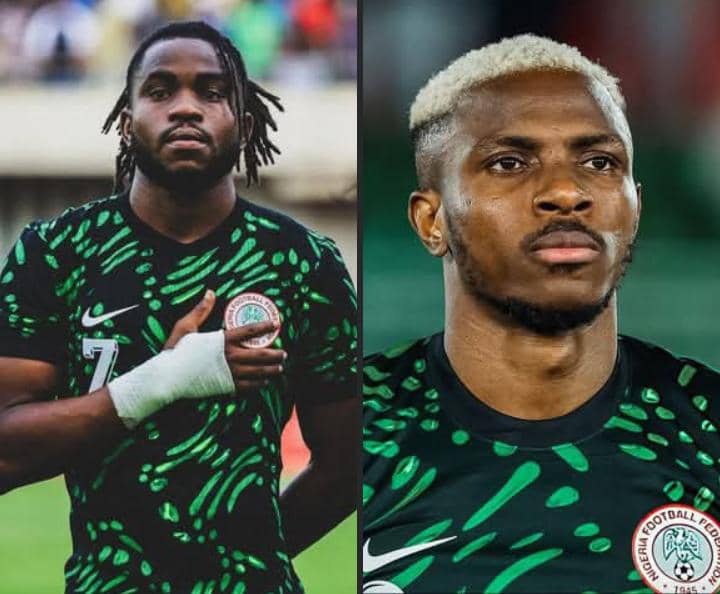
What happened between Victor Osimhen and Ademola Lookman did not start in this match; it has been noticeable in several games when both players are on the pitch. From repeated observation, Lookman often appears reluctant to pass to Osimhen when he believes he has a clear scoring opportunity himself. While this can sometimes be justified in fast-paced attacking situations, it became more visible and problematic in this match.
After Osimhen scored the first goal, Lookman increasingly bypassed him, opting either to play directly or recycle possession backward rather than combine with him. There was a particularly clear moment when a simple pass to Osimhen was available, but Lookman chose otherwise. Lookman appeared selfish… That moment seemed to trigger Osimhen’s reaction. Shortly after, his body language changed, his involvement dropped, and he appeared emotionally disengaged, eventually signaling frustration and wanting to be substituted.
Interestingly, Osimhen tends to combine more smoothly with Samuel Chukwueze, largely because he releases the ball early and consistently looks for Osimhen’s runs. This contrast highlights that Osimhen thrives on quick service and trust in movement, not isolation.


That said, Osimhen did not manage the situation well. He needs to be calming down. I know it’s his personality trait. But he needs to respect his teammates. His frustration was understandable, but public outbursts and visible withdrawal during the game only weaken team cohesion. Issues of this nature require calm, direct communication, either on the pitch or through the coaching staff, not emotional reactions. Lookman may be overplaying his individual instincts at times, but football remains a collective game, especially when goals are urgently needed.
The post-match behavior also raised concerns. Osimhen left the pitch without engaging teammates, which signals unresolved tension. This is where the coaching crew must intervene decisively. Both players are critical assets, and unresolved friction can damage overall team performance.
Over all, this is not about blame but balance. Talent must be aligned with communication, trust, and shared responsibility. If properly managed, this situation can strengthen the team rather than divide it.