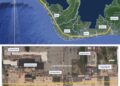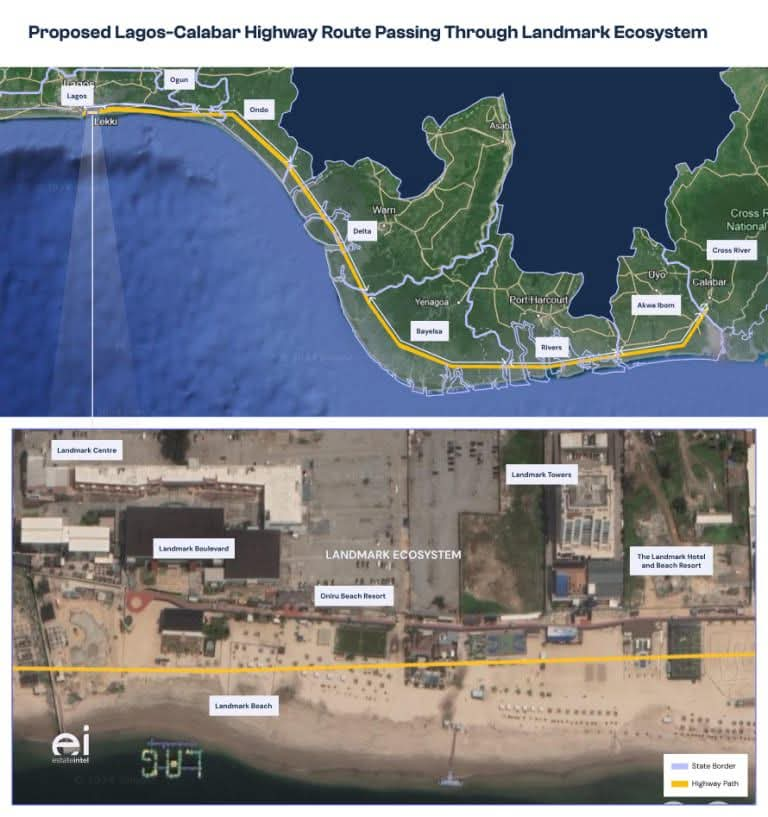
The Lagos–Calabar Coastal Highway was conceived as a bold and strategic national infrastructure corridor, one deliberately designed to trace Nigeria’s Atlantic coastline, stimulate coastal economies, enhance maritime-linked commerce, promote tourism, strengthen climate resilience and provide direct connectivity to historically underserved coastal communities.


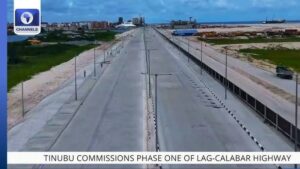
In its proper sense, a coastal highway is not merely a long-distance road that bears the word “coastal” in name alone. Rather, it is defined by an alignment whose engineering logic, economic purpose and socioeconomic impact are intrinsically connected to the coastline it is meant to serve.
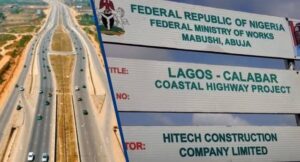
Measured against this standard, the western segment of the project, particularly the Lagos–Ogun axis, largely reflects the original vision. The alignment remains genuinely coastal, engaging the shoreline environment and delivering the expected environmental, economic and logistical benefits associated with a true coastal transport corridor.
Regrettably, the same cannot be said of the Akwa Ibom section of the Lagos–Calabar Coastal Highway currently under construction. Contrary to the project’s stated objectives, the Akwa Ibom alignment departs significantly from the coastline, veering far inland and away from the state’s coastal belt. This deviation fundamentally undermines the very essence of a coastal highway. A road that neither interfaces with the coastline nor serves coastal communities and industries cannot, by any reasonable or technical definition, be described as “coastal.”
What is being delivered in Akwa Ibom is, at best, a conventional inland highway misleadingly branded as a coastal one.
This troubling deviation raises critical and unavoidable questions:
1. Why should a project justified on the basis of coastal integration deliberately avoid the coastline in one of Nigeria’s most naturally endowed coastal states?
2. Why should communities that were intended to be direct beneficiaries of the project be excluded through an alignment that bypasses them entirely?
3. Why should the core objectives of national economic integration, maritime development, tourism promotion, and coastal resilience be selectively applied?
The answers to these questions appear to be less technical and more political.
The distortion of the Akwa Ibom section of Highway strongly suggests that what began as a well-intentioned and ambitious national infrastructure project has been subjected to unfortunate political manipulation. Instead of adhering to a consistent, purpose-driven design philosophy grounded in sound engineering and national development planning, the project appears to have been altered to accommodate narrow and parochial interests. Such interference undermines principles of equity, transparency and rational infrastructure development.
The implications of this unfortunate situation are profound and far-reaching. Coastal communities are denied access to infrastructure specifically intended to transform their livelihoods.
Opportunities for blue-economy growth and maritime-linked investments are forfeited. Environmental and climate-resilience planning becomes fragmented and incoherent. Most critically, public confidence in the integrity of national infrastructure projects is eroded.
Ultimately, Nigeria risks losing the full transformative value of what should have been a coherent, integrated coastal corridor of national significance.
If the Lagos–Calabar Coastal Highway is to retain legitimacy and faithfully deliver on its lofty original objectives, its alignment must be guided by principle, professional judgment and national interest, not by political expediency. A genuine coastal highway must be coastal in all its sections, not selectively so.
Anything less constitutes a betrayal of both the project’s founding vision and the people it was meant to serve.