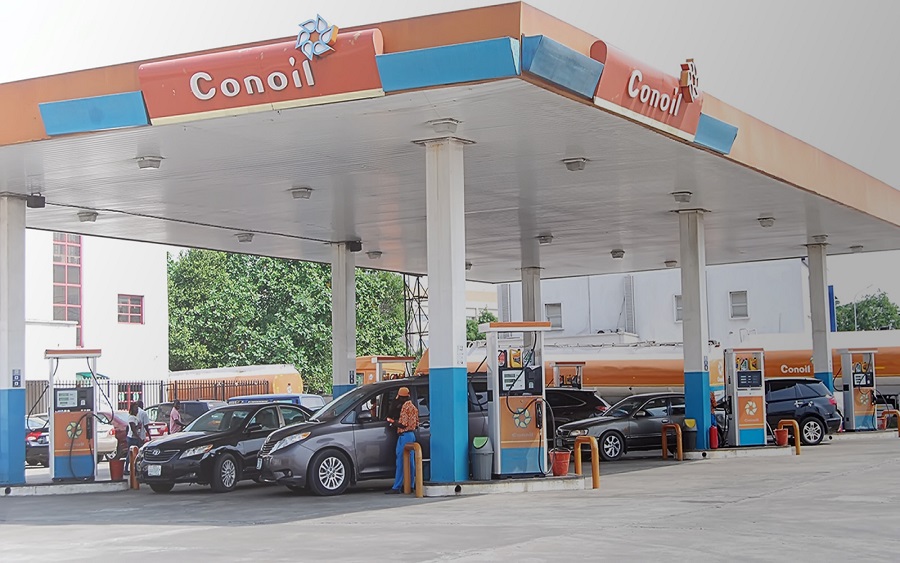
Conoil Plc slid to its weakest annual profit in four years in 2025, squeezed by falling fuel sales, rising borrowing costs and a balance sheet increasingly weighed down by short-term debt, highlighting how thinner margins are testing Nigeria’s downstream oil marketers.
Profit after tax dropped 77 percent to N2.01 billion in the year ended December, from N8.77 billion a year earlier, according to the company’s unaudited results. Earnings per share fell to 290 kobo from 1,264 kobo, while the board proposed no dividend, compared with a 350-kobo payout in 2024.
Revenue declined 6.6 percent to N301.7 billion as fuel volumes softened amid volatile pump prices and weaker consumer demand.

While the cost of sales also fell, the relief was limited. Gross profit slipped to N22.9 billion from N26.4 billion, leaving Conoil with less room to absorb operating and financing shocks.
The sharpest hit came from finance costs, which more than doubled to N10.4 billion, reflecting heavier reliance on bank borrowings to fund working capital.
Short-term borrowings surged 89 percent to N54.2 billion, pushing current liabilities to nearly N99 billion. As a result, profit before tax fell by 77 percent to N2.53 billion, despite lower distribution expenses and only a modest rise in administrative costs.
Cash flow trends underline the strain. Operating activities generated just N167 million in cash, down from N8.8 billion a year earlier, after a steep rise in receivables tied to credit sales and inventory movements.
Once capital spending and interest payments were factored in, Conoil ended the year with a deeper net negative cash position of about N41.2 billion, compared with N21.4 billion in 2024.
The company did increase investment in property, plant and equipment to N7.2 billion, nearly double the prior year’s level, lifting non-current assets to N12.4 billion.
Management said the cash squeeze was driven by the need to hold more inventory and extend credit to sustain sales, a common challenge in Nigeria’s downstream sector where marketers often finance supply gaps with expensive short-term loans.
Still, the balance sheet offers limited cushion. Shareholders’ funds edged down 1.1 percent to N39.1 billion, while retained earnings slipped after another year of dividend payments that exceeded net profit. Net asset value per share fell slightly to N56.30 from N56.91.
Conoil’s results mirror broader pressures across Nigeria’s fuel retail market, where deregulation, exchange-rate volatility and tight credit conditions have eroded profitability.
With finance costs now consuming a growing share of earnings, investors will be watching whether the company can stabilise cash flows, rein in leverage and rebuild margins in 2026—or whether the weakest profit in four years marks a more persistent downturn.