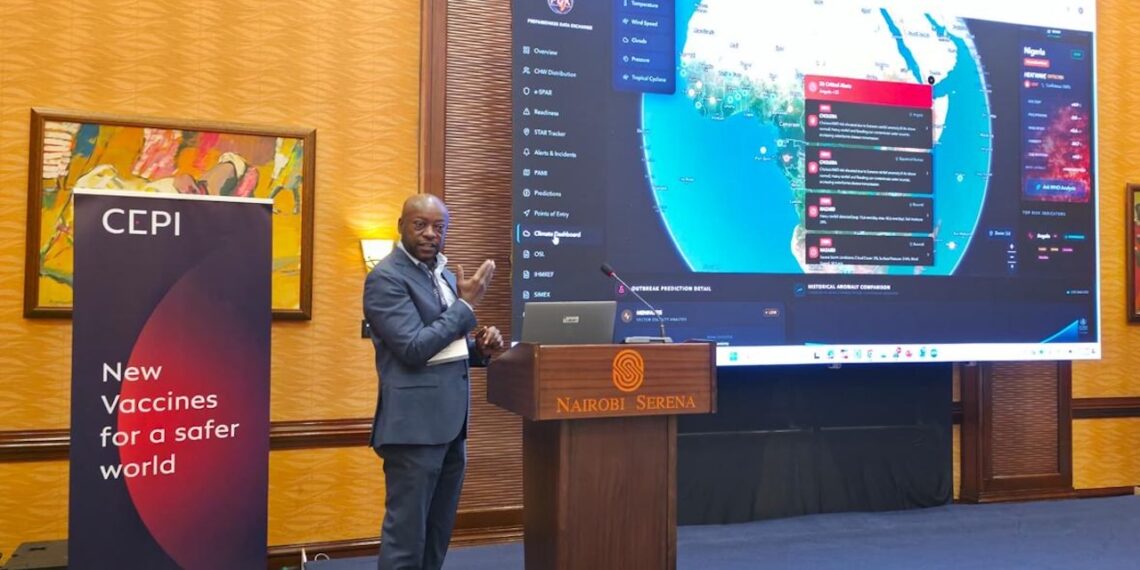
THE World Health Organisation’s Regional Office for Africa has launched a new artificial intelligence-powered intelligence platform designed to detect emerging health threats earlier and strengthen outbreak preparedness across the continent.
The system, known as the Preparedness Data Exchange (PDX), integrates multiple streams of health and risk information into a single analytical platform. By bringing together surveillance data, climate signals and health system indicators, the platform aims to provide public health authorities with a clearer picture of potential risks before crises escalate.


The WHO said the initiative is intended to reduce the time between the detection of potential health threats and the mobilisation of response measures, helping governments act more quickly to protect communities.
Public health surveillance in Africa has improved significantly over the past decade, with stronger monitoring networks and expanded reporting systems for epidemic-prone diseases. However, gaps remain when information from different sources is analysed separately.
According to the WHO Regional Office for Africa, the new PDX platform addresses this challenge by integrating diverse datasets into a single operational environment.
These include real-time risk scoring for health hazards, monitoring of International Health Regulations core capacities, primary health care readiness indicators, laboratory surveillance trends, workforce data and climate intelligence.
The system also incorporates emergency operations information and media monitoring to provide broader situational awareness.
Instead of analysing each data stream independently, the platform synthesises them to generate a unified risk profile that highlights vulnerabilities before they escalate into outbreaks or emergencies.
At the centre of the new system is an embedded artificial intelligence assistant that allows health officials to interact with preparedness data in real time.
Users can query the platform in plain language and receive responses based on validated WHO datasets. The system also provides traceable and source-referenced information to ensure transparency and accountability in decision-making.
Health officials say the technology is designed to support public health professionals rather than replace them.
Dr Marie Roseline Belizaire, Regional Emergency Director at the WHO Regional Office for Africa, said artificial intelligence can help public health leaders anticipate threats earlier.
‘When we speak about AI-enabled preparedness, we are not speaking about replacing epidemiologists or public health leaders,’ she said.
‘We are speaking about augmenting them, using federated learning, integrated surveillance and high-performance computation to move from reactive response to anticipatory intelligence.’
The WHO emphasised that the platform is designed to strengthen national health systems rather than substitute them.
Ministries of health and WHO country offices will be able to use the platform to monitor evolving risk conditions, analyse potential threats and guide preparedness measures.
These actions may include pre-positioning medical supplies, reinforcing laboratory capacity or deploying rapid response teams before outbreaks spread widely.
Epidemiologists, surveillance officers and national emergency teams will continue to interpret the data and lead response strategies.
African countries are increasingly dealing with overlapping health risks, including epidemic-prone diseases, climate-related disasters and humanitarian crises.
Although surveillance systems have expanded across the region, experts say the ability to rapidly integrate signals from different sectors remains a major challenge.
Climate alerts, laboratory reports and community-level surveillance may each point to heightened risk. Without rapid data integration, however, early opportunities to intervene can be missed.
Dr Dick Chamla, Team Lead for Emergency Preparedness and Response at the WHO Emergency Hub in Nairobi, said preparedness is increasingly becoming a continuous process rather than an episodic response to emergencies.
‘Preparedness is becoming a continuous discipline rather than an episodic activity,’ he said.
‘Integrated intelligence allows us to identify risk conditions early and act before disease transmission accelerates.’
The launch of the Preparedness Data Exchange reflects WHO Africa’s broader effort to modernise epidemic preparedness across the continent using advanced analytics and integrated data systems.
By linking governments, international partners and surveillance networks into a unified intelligence framework, the organisation hopes to improve coordination and strengthen early response capacity.
Health officials say the platform represents a shift towards anticipatory public health strategies, where early warning and preventive action play a central role in reducing the impact of future outbreaks.
As health threats become more complex and interconnected, integrated intelligence tools like the new AI-powered system could play a critical role in protecting populations across Africa.