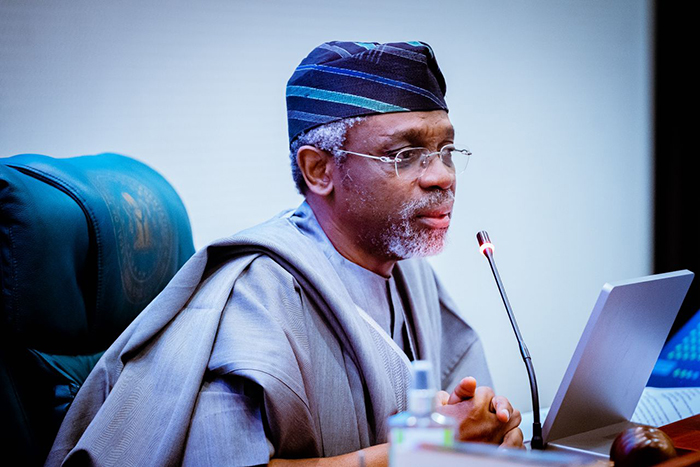
The Federal Government on Thursday commended the United Nations Development Programme (UNDP) for its longstanding developmental support and pledged deeper collaboration to advance Nigeria’s reform agenda.
The Chief of Staff to the President, Mr Femi Gbajabiamila, gave the commendation while receiving UNDP Resident Representative, Ms Elsie Attafuah, at the Presidential Villa, Abuja.


Gbajabiamila acknowledged the agency’s contributions across several sectors of the Nigerian economy.
He said: “UNDP has been in this country for long, and the things you have done across many areas are commendable.
“I want to thank you once again for supporting President Tinubu’s reform programmes.”
He cited the administration’s ‘Made-in-Nigeria’ policy as a key initiative aimed at strengthening domestic production and industrialisation.
“You mentioned the Made-in-Nigeria policy, which forms part of Mr President’s reform agenda and demonstrates strong commitment to industrialisation.
“Some call it Nigeria First. The President is very passionate about it,” he said.
Gbajabiamila said the initiative would expand local content beyond the oil and gas sector.
“How can we practicalise this and make it work across the value chain, including employment generation and economic growth?” he asked.
He urged the UNDP to support Nigeria in promoting greater female participation in politics and governance.
According to him, the agency’s experience in other countries could help Nigeria make progress without undermining cultural and religious sensitivities.
Gbajabiamila added that UNDP collaboration would also benefit poverty reduction, education, agriculture and the mining sector.
Earlier, Attafuah thanked Nigeria for its longstanding partnership with the UNDP and commended President Bola Tinubu’s leadership, describing it as transformative.
She said the UNDP remained committed to supporting Nigeria’s development initiatives and aspirations.
Attafuah explained that the agency was shifting from project-based interventions to a government-financed, long-term thematic development approach.
According to her, the shift became necessary following the withdrawal of many development donors globally.
Attafuah said the Made-in-Nigeria initiative could serve as a catalyst for job creation, innovation and economic competitiveness.
She also disclosed that the UNDP had launched a University Graduate Hub initiative.
Through the platform, graduates can upload product prototypes and innovations for potential investors and financing support.
Attafuah added that the UNDP was exploring further collaboration with Nigeria in the education and energy sectors.