

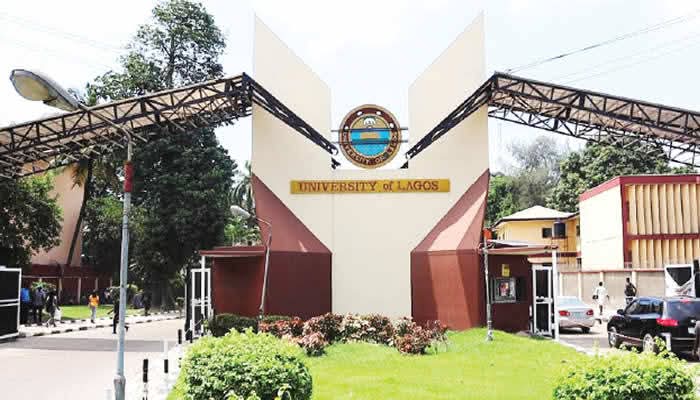
About 40 percent of university lecturers now sleep in their offices due to the country’s worsening housing crisis, Timothy Nubi, professor of estate management and sustainable housing advocate, has said.
Nubi disclosed this on Wednesday at the Film Screening and Conversation on Solidarity and Movement Building to Advocate for Inclusive Housing for the Urban Poor, held at the University of Lagos (UNILAG).


The event was organised by the Heinrich Boll Foundation, in collaboration with the Centre for Housing and Sustainable Development (CHSD), the African Cities Research Consortium (ACRC) and Rethinking Cities.
Speaking during the session, Nubi said the rising cost of accommodation around major urban centres, particularly Lagos, has pushed many academics into desperate living conditions.
“I stand here to tell you today that almost 40 per cent of lecturers in universities sleep in their offices,” he said.
“They sleep in their offices. You see them taking baths around the faculty every morning. That is the state of the country.”
The professor explained that the situation reflects the growing pressure the housing crisis is placing on Nigerians who traditionally belonged to the middle class.
According to him, the cost of renting even modest accommodation around the University of Lagos has risen beyond what many academics can reasonably afford.
Nubi cited a recent case in which a two-bedroom apartment around the Akoka area was rented for N3.5 million per year, noting that such prices are far beyond the reach of many professors.
“No professor will conveniently afford to pay N3.5 million for accommodation. That is about seven months of salary,” he said.
The don added that the challenge is not limited to lecturers but reflects a broader national housing crisis affecting millions of Nigerians.
Nigeria’s housing deficit, he noted, has grown dramatically over the decades. While the shortfall was estimated at about five million housing units years ago, it is now believed to be between 17 million and 22 million units.
“Instead of the problem reducing, the problem keeps increasing,” he said.
He explained that the Centre for Housing and Sustainable Development, was created partly to address this gap by producing empirical research to guide housing policy and build capacity among policymakers.
Beyond Nigeria, Nubi said history shows that societies that fail to address housing inequality risk social instability. He cited the Great Fire of London in the early 17th century, which led to the Poor Relief Act, a system where property owners contributed funds to support housing for low-income residents.
He said the policy later evolved into public housing schemes and mixed-income communities designed to ensure that the poor were not segregated from the rest of society.
“In some countries today, when developers build housing estates, they are required to allocate a percentage of the units for teachers, drivers and other workers who cannot afford market rents,” he said. “That is how mixed communities are built.”
Nubi stressed that inclusive housing policies remain essential for social stability, warning that neglecting the housing needs of low-income residents could have far-reaching consequences.
He called for stronger collaboration among researchers, policymakers and civil society groups to develop practical solutions to Nigeria’s housing crisis.
Civil society organisations and housing rights activists at the event also criticised the forceful evictions and demolition of homes in several Nigerian cities, citing recent incidents in the Makoko and Oworonshoki communities in Lagos State as examples of actions that have worsened housing insecurity for low-income residents.
Buhle Booi, a South African housing activist, highlighted the creative advocacy strategies adopted by the “Reclaim the City” movement in Cape Town. He explained that the campaigns were designed to push for the recovery of public land for the development of affordable housing.
According to Booi, sustainable solutions to housing displacement require legislative backing and strategic engagement with government institutions, rather than reactive measures alone.
He also stressed the importance of transitional housing schemes to reduce the immediate impact of evictions, while underscoring the responsibility of the state to provide alternative accommodation for displaced residents.
Temilade Sesan of the African Cities Research Consortium (ACRC) examined Lagos’ housing challenges within a broader African context.
Sesan compared the Lagos situation with experiences from Cairo in Egypt and Nairobi in Kenya, outlining policies and approaches that have produced varying results.
She noted that Nairobi has made notable progress in recent years, particularly through the enactment of an Affordable Housing Act, which defines housing affordability using the minimum wage of domestic workers as a benchmark.




