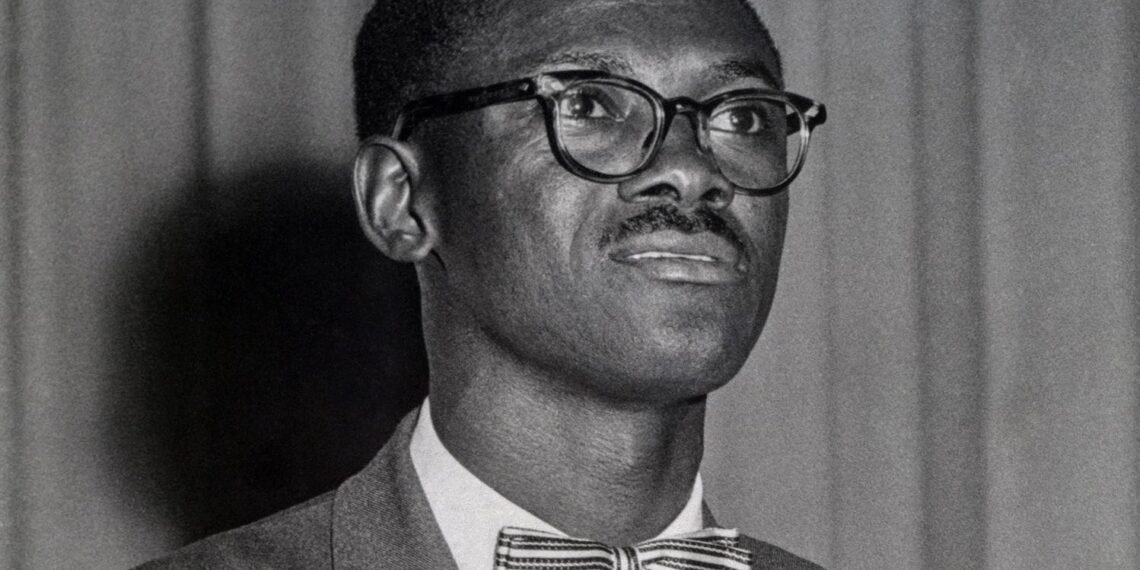
A Brussels court has ordered a former Belgian diplomat to stand trial over the 1961 assassination of Congolese independence leader Patrice Lumumba, marking a historic breakthrough in a decades-long push for colonial-era accountability.
The accused, Etienne Davignon, is the only surviving figure among a group of Belgian officials implicated by Lumumba’s family in the assassination, according to AFP.


The decision marks the first time a Belgian official will face trial over Lumumba’s killing, more than six decades after the assassination that reshaped Congo’s post-independence trajectory.
The case has become a focal point in broader debates about colonial accountability, historical justice, and Europe’s role in shaping post-independence African political crises. It also reflects growing pressure across Africa and Europe to revisit unresolved legacies of empire, including calls for reparations and restitution, as highlighted in recent Africa Briefing coverage on colonial justice movements.
Lumumba, a fierce critic of Belgian colonial rule, became the Democratic Republic of Congo’s first prime minister following independence in 1960. His tenure was short-lived.
His outspoken independence speech, delivered at the moment of sovereignty, sharply criticised colonial exploitation and set the tone for his confrontational relationship with Belgium.
Within months, he was ousted in a coup amid Cold War tensions and deteriorating relations with both Belgium and the United States. On January 17, 1961, he was executed in the mineral-rich Katanga region with the backing of Belgian-linked forces.
His body was later dissolved in acid, leaving no grave — a fact that has amplified the symbolic weight of the case for generations.
Allegations and defence
Belgian prosecutors accuse Davignon of ‘participation in war crimes’, including involvement in Lumumba’s unlawful detention, transfer, and alleged mistreatment.
Davignon, who later rose to become a senior European Commission figure, has denied all charges. His legal team argued during a closed-door hearing in January that too much time had passed to justify prosecution.
Lumumba’s family disagrees, insisting that the passage of time should not shield those linked to one of Africa’s most consequential political assassinations.
‘We are counting on the Belgian justice system to do its job and shed light on history,’ Yema Lumumba, a granddaughter of the late leader, told AFP.
Belgium’s long shadow in Africa
The case is the latest chapter in Belgium’s gradual reckoning with its role in Lumumba’s death. In 2022, Belgian authorities returned a tooth — the only known remains of Lumumba — to the Democratic Republic of Congo during an official ceremony, a moment widely seen as symbolic but incomplete justice.
That development echoes broader debates about restitution of cultural artefacts and historical accountability, including earlier Africa Briefing reporting such as South Africa’s call for the return of looted heritage.
Belgium had already acknowledged its role decades earlier. A parliamentary inquiry concluded the state bore ‘moral responsibility’ for Lumumba’s killing, leading to formal apologies from Belgian leaders.
Yet critics argue that symbolic gestures have not been matched by legal accountability.
Lawyers for Lumumba’s family describe Davignon as ‘a link in the chain’ of what they call a broader state-backed operation tied to colonial interests and Cold War geopolitics.
The court’s ruling on whether the case proceeds to trial is subject to appeal, meaning any legal process could extend well beyond this initial decision. If approved, a trial could begin as early as 2027.
For many observers, however, the significance lies less in timing and more in precedent. A trial would signal that historical crimes linked to colonial rule can still be scrutinised within modern legal systems.
For the Democratic Republic of Congo, where Lumumba remains a national symbol of sovereignty and resistance, the case continues to resonate as part of an unfinished historical narrative — one that continues to shape political discourse across Africa today. (Africa Briefing)