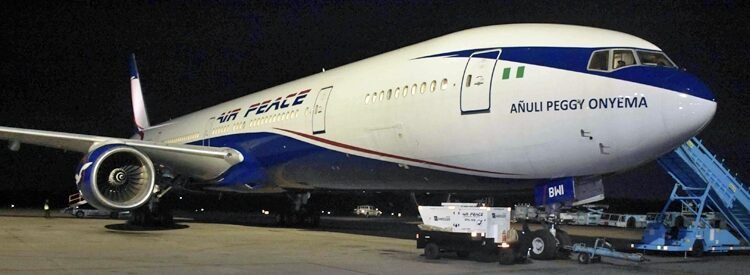
Air Peace has resumed its Lagos–Caribbean route via Antigua, reviving one of the few direct air links between West Africa and the Caribbean and targeting growing demand from diaspora and leisure travellers.
The move reflects a broader push to unlock Africa–Caribbean connectivity, a historically underserved corridor, with implications for tourism, trade, and diaspora engagement as airlines search for new long-haul growth markets.
Air Peace’s resumed service connects Lagos to Caribbean destinations including Antigua and Barbados, using Antigua as a transit hub for onward travel.


The route remains one of the few direct aviation links between West Africa and the Caribbean, a corridor long constrained by indirect routing through Europe or North America despite deep historical ties.
Air Peace’s international expansion builds on milestones such as its Heathrow breakthrough, which secured six weekly Lagos–London slots and marked a major step in its long-haul growth strategy.
‘This route represents an important step in connecting Africa more directly with the Caribbean and its diaspora communities,’ the airline said in a statement on the service.
Industry observers say the airline is targeting a niche but expanding market, particularly among Afro-Caribbean travellers seeking more direct access to West Africa.
Central to the airline’s strategy is heritage tourism, a segment gaining traction as diaspora communities increasingly seek to reconnect with ancestral roots.
Travel operators are already developing multi-stop packages linking Nigeria, Ghana and Caribbean destinations, reflecting a broader shift towards culturally driven travel.
‘We are seeing increasing interest in travel that connects people with their cultural and historical origins,’ a travel industry operator familiar with the route said.
Early operations of the route indicated strong interest, with flights carrying a mix of leisure travellers, diaspora passengers and organised tour groups.
Despite its strategic promise, the Lagos–Caribbean route has faced operational constraints.
Initial services have typically operated on limited frequency, reflecting both demand uncertainty and the logistical complexity of long-haul intercontinental routes.
Air Peace appears to be adopting a phased expansion model—testing demand, refining operations, and gradually scaling frequency based on passenger uptake.
Part of a broader expansion strategy
The Caribbean service forms part of Air Peace’s wider international growth agenda.
In recent years, the airline has expanded beyond West Africa into long-haul markets while strengthening regional connectivity.
Air Peace is positioning itself as a bridge between Africa and global travel markets, leveraging Nigeria’s large population and diaspora footprint
The resumed flights carry significance beyond commercial aviation.
Direct connectivity between Africa and the Caribbean has historically been limited, constraining tourism, trade, and cultural exchange.
The renewed link aligns with a broader political and historical shift, including coordinated efforts by African and Caribbean states to push for global recognition and justice, as reported in Africa and Caribbean backing of the UN reparations resolution.
This builds on parallel economic engagement, including CARICOM’s push to deepen trade ties with Africa, signalling a multi-layered partnership spanning aviation, trade, and diplomacy.
‘Improved connectivity could play a key role in strengthening economic and cultural ties between the two regions,’ an aviation analyst said.
By offering a more direct alternative, Air Peace’s service could unlock new opportunities in heritage tourism, business travel, and cultural diplomacy.