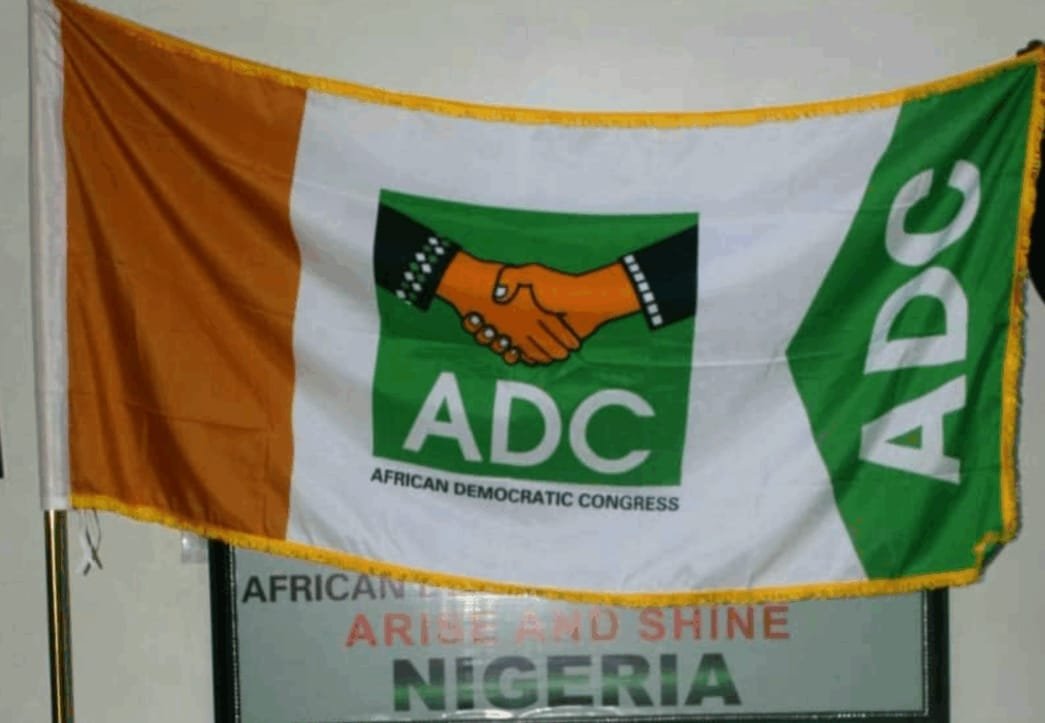
The African Democratic Congress (ADC) has strongly criticised the Chairman of the Independent National Electoral Commission (INEC), Professor Joash Amupitan, over what it described as “legal and factual misrepresentations” in his recent public remarks.
In a detailed response, the opposition party said the INEC chairman’s comments, delivered during a recent interview, revealed a “fundamental misapplication” of constitutional principles and judicial directives, particularly regarding the ongoing dispute within the party.


The ADC argued that INEC’s repeated reliance on Nigeria’s multi-party system as evidence of neutrality fails to address the core issue—whether the Commission’s actions are undermining the ability of opposition parties to function effectively.
According to the party, “the question is not whether Nigeria remains a multi-party state in theory, but whether regulatory actions in practice are weakening democratic participation.”
On the controversial Court of Appeal directive, the ADC faulted Amupitan’s interpretation of the doctrine of status quo ante bellum, insisting that preservation orders are meant to maintain the subject matter of litigation—not to halt the internal operations of a political party.
The party maintained that defining the “status quo” is strictly a judicial responsibility, not an administrative one, warning that INEC lacks the authority to impose its own interpretation on such matters.
The ADC also rejected INEC’s position that holding congresses or conventions could render court proceedings ineffective, describing the claim as an overreach. It argued that internal party processes conducted in line with the law do not invalidate ongoing litigation and should continue unless expressly prohibited by a competent court.
“There is no explicit court order stopping the party from conducting its congresses or national convention,” the statement noted.
Addressing INEC’s claim that it is restrained from monitoring party activities due to an injunction, the ADC clarified that the Commission’s monitoring role is statutory and does not determine the legality of party processes.
The party accused INEC of “conflating its monitoring function with the validity of internal processes,” warning that such a stance effectively grants the Commission powers beyond its legal mandate.
The ADC further dismissed INEC’s justification that conflicting communications from rival factions within the party warranted inaction, stating that internal disputes are a normal feature of democratic systems and do not strip a party of its constitutional rights.
It also criticised the chairman’s reference to past electoral precedents such as the Zamfara case, describing the comparison as misplaced and speculative.
While INEC has defended its position as a precaution to avoid future legal complications, the ADC insisted that “administrative caution cannot override constitutional freedoms.”
Reaffirming its stance, the party declared that its right to organise congresses and hold a national convention remains intact and has not been legally suspended.
“The interpretation advanced by INEC risks setting a dangerous precedent where regulatory caution becomes a tool for democratic suppression,” the statement concluded.