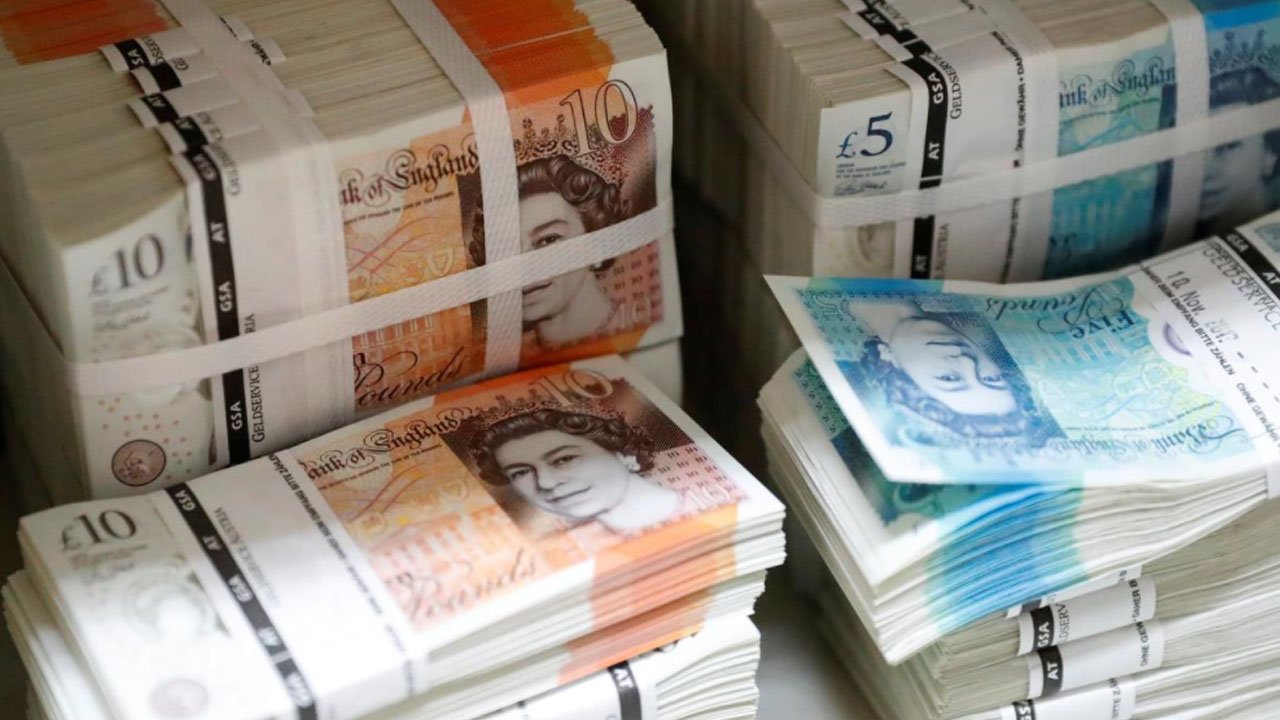
Most recent market activity has revealed that, despite rising demand for assets denominated in naira and weak UK economic performance, the Naira was stable versus the British pound in the Nigerian foreign exchange market.
The official market saw the naira settle at N1,862/£1 on Thursday, April 9, 2026.
The Nigerian Naira faces immediate resistance at N1,816.7/£1.


The pair will probably test the 1,800/£1 psychological floor, which corresponds with the historical low of N1,799/£1, if this level is breached.
The N1,854/£1 mark is the first significant obstacle to a bearish trend. A breakout above this could lead to a return to the N1,900/£1-point range.
The Naira has gained about 7.5 percent against the Pound this year. The GBP/NGN pair is currently in a neutral-to-bearish consolidation phase on the daily charts after peaking at N1,853.9/£1 on April 7th
In addition, Nigeria’s high-interest-rate environment is giving the Naira “carry trade” support because of the historically high MPR (Monetary Policy Rate), which has been between 26 and 27 percent in recent cycles.
Fundamentally, this is limiting the Pound’s capacity to maintain long-term rallies.
Market action at NFEM indicated that the local currency’s psychological “break” below N1,900/£ has raised the spirits of NGN bulls, given that the naira has maintained most of its gains against the British pound this year
The Nigerian currency traded around N1,919/£1 at Nigeria’s black market. Currently, the difference between the official foreign exchange rate and the “black market” is less than 5%.
The increased (or even unrestricted) access provided to Bureau De Change (BDC) operators, which has successfully demystified access to foreign exchange for retail traders, is probably the reason for the market alignment.
The CBN placed a higher priority on currency stability than aggressive appreciation in an effort to lower volatility and boost market confidence.
Although the British Pound is a major international reserve and trade currency, the value of the Naira is primarily determined by local factors like oil production, fiscal policy, foreign exchange inflows, and the success of local monetary reforms.