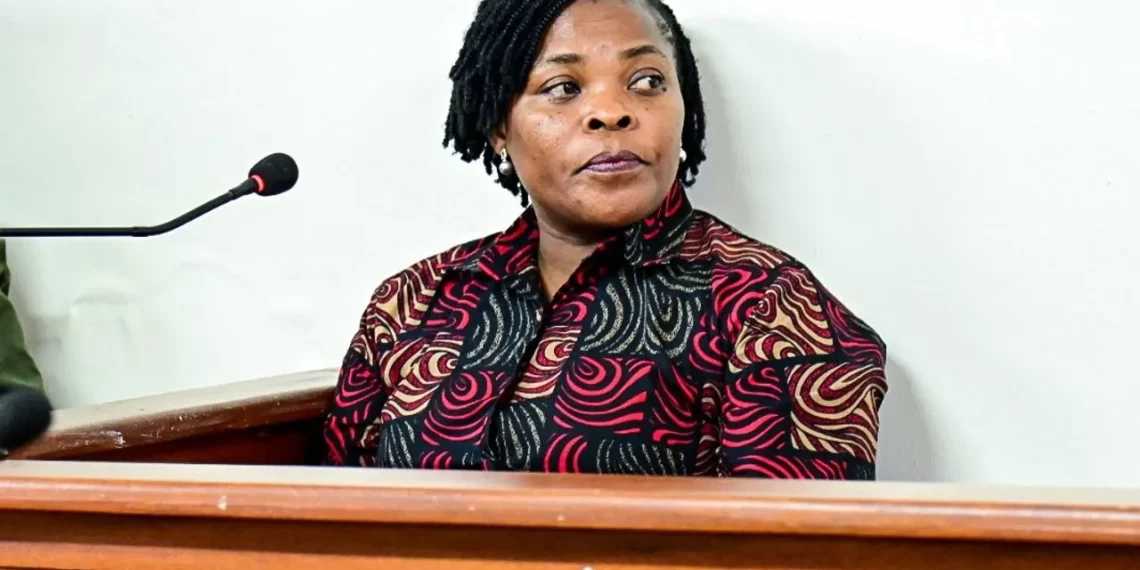
A Ugandan court has jailed former state minister Agnes Nandutu for four years on Friday after being convicted of stealing government iron sheets meant for vulnerable communities in Karamoja.
The ruling marks one of the most prominent convictions tied to a 2022 corruption scandal in which around 14,500 iron sheets intended for poor households were diverted by senior officials.
According to court findings cited by AFP, Nandutu unlawfully took 2,000 of the sheets for personal use. She was also banned from holding public office for 10 years.

The case has become a key test of anti-corruption efforts under President Yoweri Museveni, after a wider scandal involving the diversion of aid meant for one of Uganda’s poorest regions. The controversy has drawn international scrutiny, with Britain targeting senior Ugandan officials in a case detailed in UK sanctions Ugandan parliament speaker for corruption.
In her ruling, Judge Jane Okuo Kajuga rejected a financial penalty, stating that a fine—capped at about USh3.2 million (under $1,000)—would not reflect the seriousness of the offence.
‘It is important to send the message that corruption does not pay,’ she said, stressing the need to deter abuse of public resources.
The court noted that Nandutu’s apology served as her ‘saving grace’, though it did not reduce the custodial sentence.
The scandal has also triggered action from Washington, with several Ugandan officials—including Nandutu—facing sanctions over corruption and governance concerns, as detailed in US sanctions five Ugandan officials for corruption, rights abuses.
The ruling has also triggered debate within Uganda’s legal and political circles. Following the verdict, Nandutu’s lawyer described the sentence as harsh given her admission of wrongdoing and said an appeal was under consideration.
Prosecutors, however, called the ruling ‘just and proportionate’, citing the seriousness of the offence and the responsibility attached to public office.
The case is part of a broader investigation into the diversion of materials meant for Karamoja, a northeastern region bordering Kenya and Sudan that faces chronic poverty, drought and food insecurity.
For many communities in the region, the missing materials meant continued exposure to harsh weather conditions, deepening already difficult living conditions.
The loss of aid intended for struggling households has intensified scrutiny of public officials and government programmes.
Nandutu, also a ruling party lawmaker, had already faced political fallout. She was placed in pre-trial detention in 2023 and later dismissed from her ministerial role.
President Museveni had pledged that all those involved would be held accountable, amid mounting pressure from civil society and the public.
Public frustration has at times spilled into protests, with authorities warning demonstrators against escalation, as highlighted in Museveni warns anti-corruption protesters ‘playing with fire’.
The conviction underscores persistent concerns about corruption in Uganda’s public sector, particularly in programmes targeting vulnerable populations.
Analysts say the outcome may signal a tougher stance by authorities, though questions remain over whether all those implicated in the wider scandal will face similar consequences.