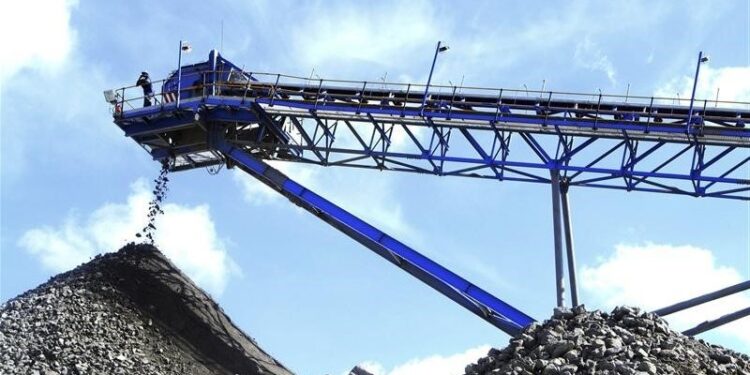
From the highway west of Harare, Darwendale feels unremarkable — low hills, thin trees and a horizon that shimmers in the heat. Yet beneath that quiet landscape lies a metal prize that Zimbabwe’s leaders believe could reshape the country’s economic fortunes.
State-owned Mutapa Platinum Group has launched a determined search for private partners to co-finance and develop its planned $500 million Darwendale mine, a strategy officials say is essential to accelerate production, crowd in investment and position Zimbabwe as a leading player in the global platinum market.


Bloomberg has reported that Mutapa’s chief executive, Munashe Shava, is in advanced discussions with established miners and institutional investors about a joint approach to the project. The overture marks a clear shift from a purely state-led model towards a blended financing structure that mixes public ownership with private expertise.
The Darwendale site in Mashonaland West province, roughly 65 kilometres from Harare, is estimated to contain about 44 million ounces of platinum-group metals (PGMs). That scale places it among the most significant undeveloped deposits in southern Africa — a region already synonymous with platinum production.
Shava has described the process as deliberately collaborative, stressing that Mutapa wants partners who can bring engineering capability, operational know-how and credible financing. While no suitors have been named publicly, industry insiders see existing Zimbabwe operators such as Zimplats, Impala Platinum and Sibanye-Stillwater as logical contenders.
Zimbabwe holds the world’s third-largest PGM reserves, yet has long struggled to translate geological abundance into consistent economic gains. Financing constraints, infrastructure gaps and policy uncertainty have slowed progress. Darwendale is being pitched as a turning point.
Planned as an open-pit operation with an initial lifespan of seven to ten years, the mine could generate thousands of jobs, deepen local supply chains and deliver much-needed export revenues. In government circles, platinum is framed not merely as a commodity, but as a bridge to industrial modernisation and green technologies, including catalytic converters and hydrogen applications.
The timing of the push is delicate. Global platinum prices have been volatile after recent highs, creating both opportunity and risk. For Mutapa, partnering spreads financial exposure while improving technical delivery — a pragmatic response to market swings.
Beyond the pit itself, the project depends on reliable roads, power and water — the quiet scaffolding that determines whether big mining plans succeed or stall. Mutapa says it is refining its capital budget and logistics blueprint to ensure Darwendale can move from paper to production.
Darwendale is as much a governance story as a geological one. Securing reputable partners would signal growing confidence in Zimbabwe’s investment climate and regulatory stability. Conversely, prolonged delays would revive familiar doubts about the country’s ability to execute mega-projects.
For now, Harare is signalling intent: Zimbabwe wants to mine smarter, partner wider and compete harder. Darwendale is the proving ground for that ambition.