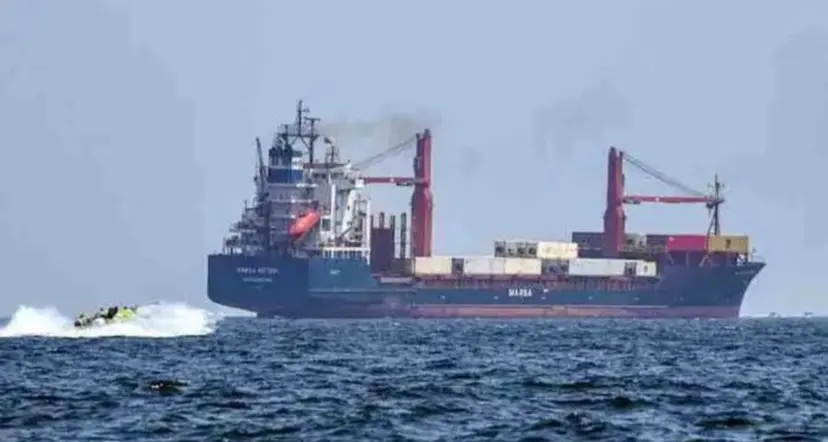
According to reports, the Iranian government has commenced the collection of a transit fee of $2 million from merchant ships wishing to pass through the Strait of Hormuz, with this move being justified by the Iranian government as a means to assert its sovereignty over this troubled region.
In a report by Iran International, Alaeddin Boroujerdi, a member of the Iranian parliament’s national security committee, justified this move on Iranian state television, citing the financial cost of the conflict. Boroujerdi characterised the fees as a demonstration of Iran’s “strength” and “authority” in the region.
This development poses a significant legal and operational headache for global shipping firms, given that any direct financial transaction with Iranian entities could trigger severe international sanctions. The Strait of Hormuz, through which approximately a fifth of the world’s oil and liquefied natural gas flows, has been effectively paralysed since early March. The resulting bottleneck has caused global fuel prices to spike, heightening the economic stakes of the current war between Iran and the joint front of Israel and the United States.


Evidence suggests that Tehran is enforcing this blockade selectively. Foreign Minister Abbas Araghchi recently clarified that the waterway remains closed specifically to “enemies and those supporting their aggression.” This flexible approach was underscored by his suggestion to the Kyodo news agency that Japan-related vessels might be permitted passage, alongside reports that several Indian-flagged LPG carriers and a Pakistani tanker have successfully negotiated transit.
Tensions reached a breaking point last Saturday when US President Donald Trump issued a 48-hour ultimatum demanding the total reopening of the strait, threatening strikes on Iranian power plants if Tehran failed to comply. Iran has been just as belligerent, with Iran’s Parliament speaker, Mohammad Baqer Qalibaf, stating that Iran will launch retaliatory strikes at Middle Eastern oil infrastructure, with the Iranian Revolutionary Guard stating that if Iran’s power plants are attacked, they will close the strait entirely.
The unstable nature of the conflict has been highlighted by a recent attack in Iraqi waters, with explosive-laden boats igniting fires on two fuel tankers, which has resulted in the death of an Indian crew member. As the deadline looms and rhetoric escalates, maritime traffic in one of the world’s most vital shipping lanes is at a near standstill.