The United States is pressing the Democratic Republic of Congo (DRC) to accept deported migrants under a controversial third-country policy, signalling a sharp escalation in Washington’s effort to expand removals beyond migrants’ home countries.
According to a Reuters report, the proposal forms part of a broader strategy to relocate migrants to third countries as deportations accelerate.
If agreed, the deal would pull Congo into a widening US-led deportation system that is reshaping global migration control. It raises urgent questions about sovereignty, legal protections and Africa’s growing role as a destination for displaced migrants.


Sources familiar with the discussions say negotiations remain at an early stage, with no formal agreement yet reached. However, the talks reflect a broader US push to bypass legal and diplomatic barriers that have slowed deportations to migrants’ home countries.
Several African states, including Ghana, Cameroon, Equatorial Guinea and Eswatini, are already receiving deportees from the United States under similar arrangements, as seen in cases such as Ghana’s contested deportation deal and Eswatini’s ongoing migrant transfers, signalling a shift in how Washington is leveraging partnerships across the continent.
This evolving approach sits alongside wider US engagement in Africa, reflecting shifting diplomatic and economic priorities and reinforcing the depth of Washington’s influence across the continent.
The policy also reflects a broader trend in which African states are increasingly drawn into global migration management, highlighting the continent’s growing role in international migration arrangements.
Critical details of the proposed Congo agreement have yet to be defined. Officials say there is no clarity on how many migrants could be transferred, their nationalities, or when any arrangement might take effect.
Some sources suggest the deportees could include individuals from Latin America, particularly Venezuela, underlining the global reach of the policy.
It also remains unclear what Congo would gain in return. Similar agreements elsewhere have involved financial incentives or broader diplomatic cooperation, but no such terms have been publicly outlined in this case.
The opaque nature of the talks has prompted concern among observers, especially given the limited public scrutiny surrounding such negotiations.
Migration experts warn that third-country deportations could challenge international legal norms, particularly where individuals are sent to countries with no prior connection.
There are concerns that such transfers may undermine asylum protections or expose migrants to uncertain conditions in host countries.
These debates echo broader governance pressures across Africa, where external partnerships increasingly intersect with domestic policy constraints and growing demands for sovereignty and strategic control.
The talks come amid intensifying US interest in Central Africa, particularly in securing access to critical minerals such as cobalt, essential for global clean energy and technology supply chains.
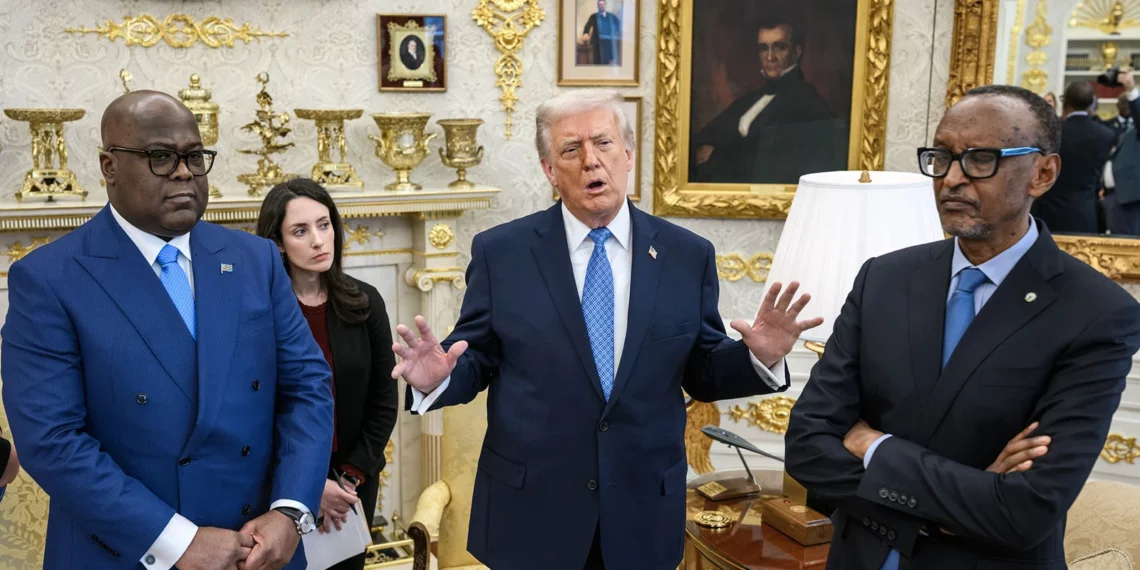
The talks also come as Washington deepens engagement in Central Africa amid competition over strategic minerals and regional stability, reflecting growing global competition for the continent’s critical resources.Washington has also been engaged in diplomatic efforts to stabilise relations between Congo and Rwanda, underscoring the region’s geopolitical importance.
Analysts say migration negotiations are increasingly intertwined with these broader strategic interests, reflecting a more transactional phase in US–Africa relations.
For Congo, the potential agreement carries significant domestic implications. Accepting deported migrants could place additional strain on already stretched administrative systems, while raising political sensitivities around sovereignty and national responsibility.
There are also questions about the country’s capacity to integrate or manage individuals with no social, legal or economic ties to the region—an issue likely to fuel debate within government and civil society.
The proposed deal highlights Africa’s growing role in global migration governance, often shaped by a mix of diplomatic pressure, economic incentives and strategic alignment.
Whether Congo accepts the proposal could signal how far African governments are willing to go in supporting Western migration priorities—and how global powers are increasingly shifting the burden of border control beyond their own frontiers.