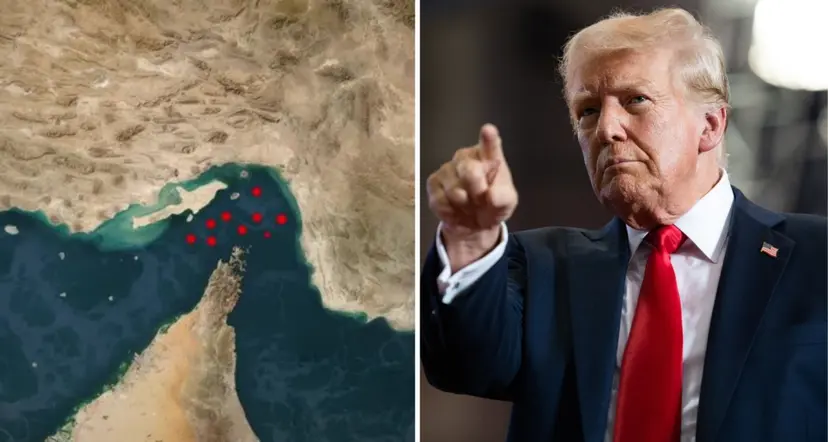
The United States sharply escalated its posture in the Gulf on Monday, with President Donald Trump warning that Iranian vessels approaching a US naval blockade in the Strait of Hormuz would be “immediately eliminated”, even as global tensions rose following failed ceasefire talks with Tehran.
In a post on Truth Social, Trump said Iran’s navy had been “completely obliterated” and cautioned that any remaining “fast attack ships” would face “quick and brutal” action if they neared US positions.
US announces Hormuz blockade

The warning came days after negotiations led by US Vice-President JD Vance with Iranian officials in Islamabad ended without a breakthrough, effectively stalling diplomatic efforts to halt the conflict.
US Central Command later clarified that the blockade would target vessels entering or leaving Iranian ports, while allowing transit between non-Iranian ports, a partial rollback from Trump’s earlier suggestion of a full blockade of the strategic waterway.
Shipping through the Strait of Hormuz, a key artery for global oil flows, appeared to slow sharply, with reports indicating traffic disruptions as markets reacted to the escalating standoff.
European Commission President Ursula von der Leyen said the European Union’s fuel import bill had surged by over $25 billion since the conflict intensified, warning that energy disruptions could persist.
Russia also cautioned that any blockade would destabilise global markets, with Kremlin spokesperson Dmitry Peskov flagging uncertainty over the unfolding situation.
No Gulf port will be safe if our ports targeted: Iran
Iran issued a sharp warning amid the US blockade threat, saying that if its own ports are attacked, “no port in the Persian Gulf or the Sea of Oman will be safe,” signalling a potential widening of the conflict across Gulf nations. Iran signalled defiance, with its Revolutionary Guard asserting the strait remained under its “full control” and warning of a “forceful response” to military threats. Iranian Parliament Speaker Mohammad Bagher Ghalibaf said, “If you fight, we will fight.”
Officials in Tehran dismissed the US blockade threat as “bluffing”, while the Quds Force chief Esmail Qaani said Washington would leave the region “empty-handed”. Iranian Foreign Minister Abbas Araghchi held calls with counterparts in Qatar and Saudi Arabia to discuss the failed talks, signalling continued diplomatic engagement despite rising tensions.
Military ops to continue in Lebanon: Netanyahu
Amid the standoff, Israeli Prime Minister Benjamin Netanyahu said military operations in Lebanon would continue, with forces expanding beyond previously held positions to establish a deeper security zone.
Israel has backed Washington’s stance on Iran, including the demand that Tehran dismantle its nuclear programme.
Vatican rebukes Trump; Pope calls war ‘madness’, urges peace
A diplomatic rift deepened between Washington and the Vatican, with Pope Leo XIV pushing back against criticism from US President Donald Trump and reiterating calls for “peace and reconciliation”.
Speaking amid the escalating conflict, the Pope said the Church’s position was rooted in the Gospel and insisted that “God does not bless any conflict”, describing the war as “madness” and warning against the use of religion to justify violence.
Despite Trump attacking him as “weak on crime” and criticising his stance on the Iran war, the Pope said he would continue to speak out against violence and advocate dialogue, adding that he does not fear the US administration.
The clash reflects a widening divide between Washington’s military posture and the Vatican’s push for de-escalation, with the Pope emerging as one of the strongest global voices urging restraint.
War toll crosses 5,000; thousands injured
The conflict, now in its seventh week, has killed over 5,000, with thousands more injured across Iran, Lebanon and other parts of the region, according to multiple estimates.
Broader assessments suggest casualties could be significantly higher when including military and civilian losses across countries, underlining the scale of the humanitarian crisis.
The rising toll, coupled with disruptions to global energy supplies and shipping routes, has intensified international concern.