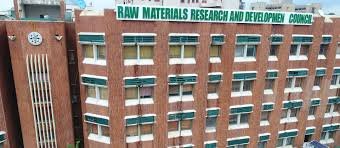
The Raw Materials Research and Development Council (RMRDC) on Tuesday unveiled the Nigerian Information Statistical System for Raw Materials and Products (NISSRAMP).
It said during the unveiling in Abuja that the platform would afford investors and stakeholders accesses to data-based information on Nigeria’s raw materials.
Director-General of RMRDC, Prof. Nnanyelugo Ike-Muonso, said the innovative platform promised to redefine how data on Nigeria’s vast natural resources was collected, managed and utilised.


While reiterating the council’s renewed drive to becoming a continental leader in the raw materials research, he said the platform was borne out of the need to bridge critical data gaps.
“NISSRAMP comes as a breath of fresh air for investors, policymakers and industry operators who until now navigated a fragmented landscape with no unified repository of information.
“Before this initiative, stakeholders operated in the dark, there was no single source of truth regarding the availability, location, production capacity, or quality of raw materials across the country.
“Decision-making was often based on incomplete or outdated information, hindering investment and slowing industrial growth,’’ he said.
The D-G said that the RMRDC’s NISSRAMP was more than just a database, adding that it was a strategic tool for national development.
“It provides real-time information on profiling, production capacity, location and availability,” he said.
Ike-Muonso further said the platform would empower government officials, researchers and investors to make informed decisions, spot investment opportunities and formulate policies that were grounded in facts.
He said the system was also designed to be robust, unified, scalable, user-friendly, as well as and integrated various modules covering pricing, value chain analysis, capacity utilisation and fabricators’ data.
Dr Cypril Chinweyi, Deputy-Director, Statistics and Data Analysis, RMRDC, said that the integration of technologies and collaboration was critical in any nation’s development efforts.
“By linking databases from the Central Bank of Nigeria, Nigerian Geological Survey Agency, the Customs and over 16 other institutions, NISSRAMP creates a holistic view of the raw material ecosystem.
“This dynamic approach replaces the old static methods, ensuring data is always current and compliant with global HS Codes and Nigerian raw material standards,” he said.
He further said that one of the standout features of the NISSRAMP was its role in ensuring compliance and promoting local value addition.
According to him, the platform is designed to help enforce Federal Government’s policy of 30 per cent value addition, while also ensuring that raw materials are processed locally, before export.
“It will help ensure compliance with the 30 per cent value addition requiremen0; this is crucial for retaining wealth within the economy and creating jobs,’’ he said.
He further said that NISSRAMP was not just for the government or big corporations, but was open to the public and provided statistical information that would help in pricing decisions, research and general business planning.
“It is accessible, easy to use and promises to foster inclusive industrial growth,’’ he said.
Chinweyi further said that as Nigeria positioned itself as an industrial hub, initiatives such as NISSRAMP had proven that data was the new oil.
Abidemi Adesina, the consultant who designed the platform said NISSRAMP was built on available data and analytics.
According to him, it is open for collaboration and leverages Artificial Intelligence (AI) to ensure features such as privacy, trust and futurism are embedded.
“By turning information into actionable insight, the RMRDC has laid a solid foundation for a more transparent, efficient and prosperous future,” he said.