

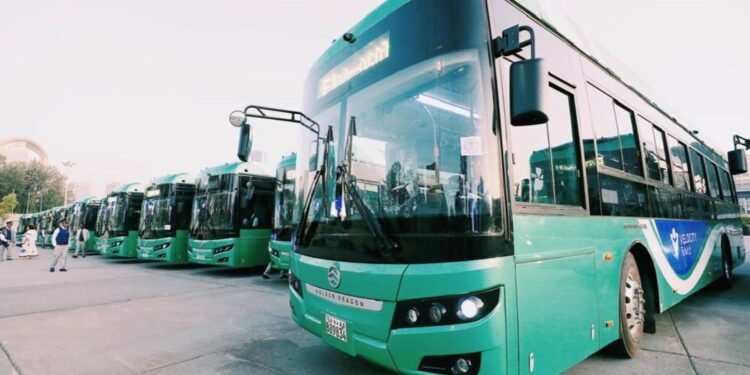
Ethiopia has banned the import of petrol and diesel vehicles and is accelerating its transition to electric mobility, targeting up to 500,000 electric vehicles (EVs) by 2030 in one of Africa’s most far-reaching transport policy shifts.
The policy, introduced in 2024, is already reshaping urban transport in Addis Ababa, where electric buses are replacing diesel fleets. Industry data cited by Bloomberg indicates EV imports have surged sharply since the restriction took effect, signalling early behavioural change in the vehicle market.
Ethiopia’s strategy is not just environmental — it is economic and strategic. The country spends billions annually on fuel imports, placing sustained pressure on foreign exchange reserves.


According to ClickPetróleo e Gás, citing Ethiopian officials, the policy aligns transport reform with domestic energy capacity. This builds on earlier ambitions outlined in Ethiopia’s EV rollout strategy targeting over 439,000 vehicles, where incentives and infrastructure planning were already central to policy design.
With a revised target of 500,000 EVs by 2030, Ethiopia is moving beyond gradual adoption toward system-wide transformation.
Electric buses reshape Addis Ababa transport
More than 100 electric buses are already operating across Addis Ababa, transporting tens of thousands of passengers daily while reducing both emissions and operating costs.
Authorities say the shift is improving urban air quality and lowering fuel dependence, while also modernising public transport systems in one of Africa’s fastest-growing cities.
A defining feature of Ethiopia’s EV strategy is its energy mix. Around 97 percent of electricity is generated from renewable sources, primarily hydropower, allowing electrification without increasing carbon emissions.
Central to this transition is the Grand Ethiopian Renaissance Dam, which is expected to significantly expand generation capacity and stabilise supply for industrial and transport use.
The vehicle import ban is also a response to macroeconomic strain. Ethiopia has historically spent an estimated $3bn–$5bn annually on petroleum imports, a major drag on foreign currency reserves.
By pivoting to EVs, policymakers aim to reduce this burden while building a domestic manufacturing base. Multiple EV assembly plants are already operating, with plans to scale production significantly before 2030.
This aligns with broader continental momentum, as highlighted in Africa’s accelerating shift to electric transport, where governments are exploring industrial policy alongside energy transition.
Analysts note that if scaled effectively, Ethiopia’s EV push could generate jobs, stimulate local supply chains, and position the country as a regional manufacturing hub.
Ambition meets infrastructure constraints
Despite early momentum, Ethiopia’s transition faces structural challenges.
Charging infrastructure remains limited and concentrated in urban centres, while grid reliability — though improving — still varies across regions. Electric vehicles also remain significantly more expensive than conventional cars, limiting widespread adoption.
Analysts warn the policy risks outpacing infrastructure capacity, raising the possibility that supply, affordability, and access could lag behind government targets without sustained investment.
How Ethiopia compares across Africa
While several African countries are exploring electric mobility, Ethiopia’s approach stands out for its scale and speed.
Kenya has focused on electric motorcycles and private-sector innovation, while Rwanda has prioritised pilot programmes and regulatory incentives.
Elsewhere, progress remains incremental. For instance, Burkina Faso’s launch of its first domestic EV model reflects a more gradual, industry-led pathway.
Ethiopia’s outright ban on fuel-powered vehicle imports places it in a distinct category — a high-stakes policy experiment with continental implications.




