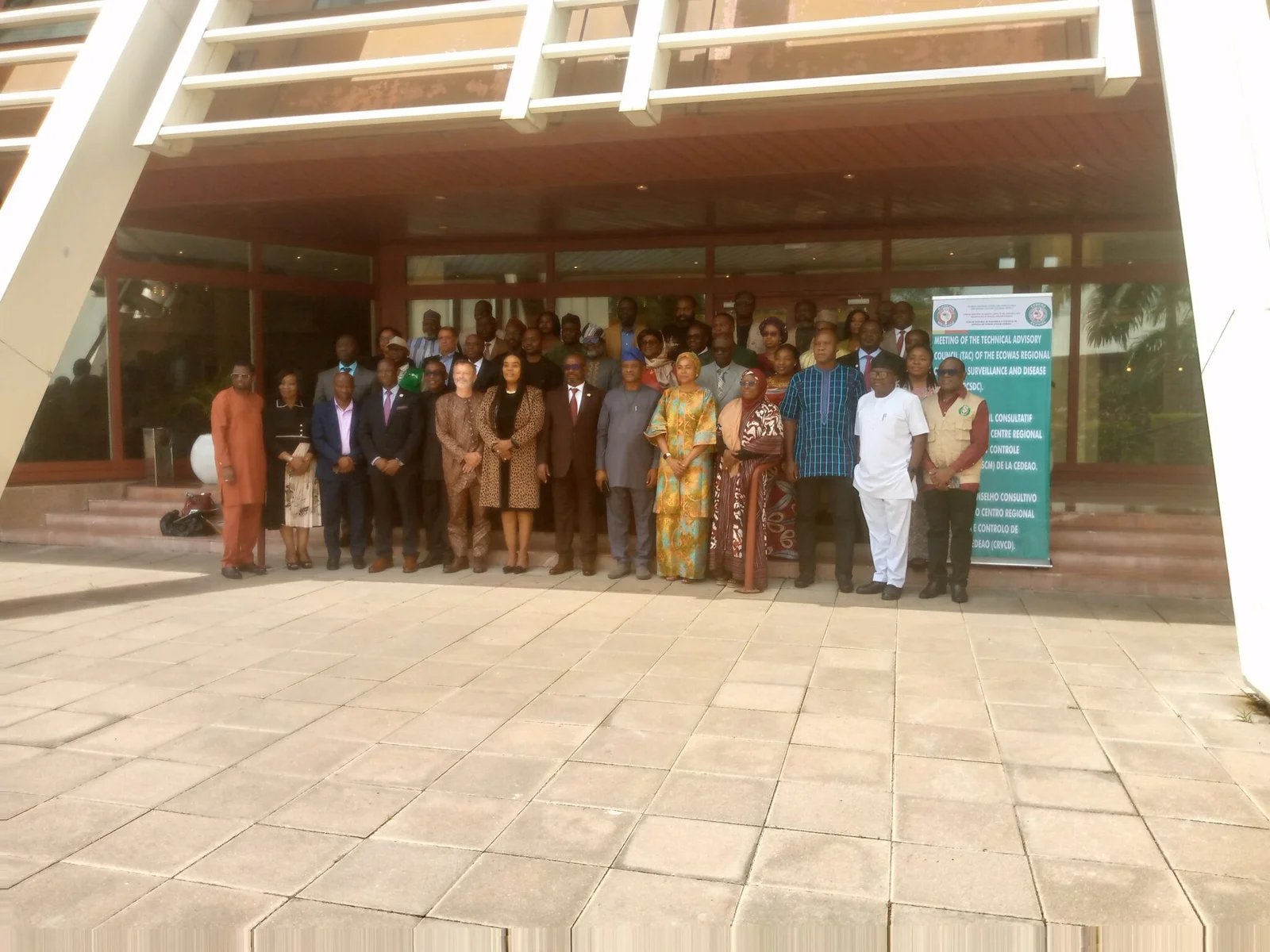
The Federal Government on Wednesday in Abuja commended the West African Health Organisation (WAHO) and the Economic Community of West African States (ECOWAS) for their commitment to strengthening regional health security across member states.
Minister of State for Health and Social Welfare, Dr Iziaq Salako, gave the commendation at the Technical Advisory Council meeting of the ECOWAS Regional Centre for Surveillance and Disease Control (RCSDC) in Abuja.
Salako was represented by Dr Ovuoraye John, Director of Health Planning, Research and Statistics in the ministry.


He said West Africa continued to face complex and evolving health challenges, including emerging and re-emerging infectious diseases requiring coordinated regional responses.
Salako said those threats highlighted the need for stronger surveillance systems, improved data sharing, and cross-border collaboration, emphasising that no country could effectively address such challenges in isolation.
According to him, the establishment of the RCSDC reflects a shared commitment to building resilient and well-coordinated regional health security architecture among ECOWAS member states.
Salako said the council provided a platform for technical cooperation, policy harmonisation and operational coordination, aimed at strengthening disease surveillance and response systems across the sub-region.
He reaffirmed Nigeria’s commitment to RCSDC objectives, saying the country would continue to support initiatives that enhanced early warning systems and emergency preparedness capacity in West Africa.
Acting Director of ECOWAS Early Warning Directorate, Dr Constance Onwuka, said the council’s expertise remained vital in navigating the region’s increasingly complex risk environment.
She said recent outbreaks had shown that health crises were regional threats with socio-economic and security implications, not isolated national events.
“The lessons of recent outbreaks have reinforced a critical truth: health crises are not isolated events, they are regional threats with far-reaching socio-economic and security implications,” she said.
Onwuka emphasised the need to integrate early warning systems with public health surveillance to improve detection and response to disease outbreaks across the region.
She also called for stronger data integration among member states, saying timely and accurate information was essential for effective disease prevention and control.
“The council must continue to break institutional silos and ensure that epidemiological intelligence feeds directly into regional early warning frameworks,” she said.
Onwuka urged a whole-of-system approach involving health, security, humanitarian and governance sectors to improve preparedness and coordinated response.
She further called for investment in community-level resilience, noting that communities remained the first line of disease detection and response.
Earlier, RCSDC Executive Director, Dr Mamadu Diarrassouba, said the council provided technical and scientific guidance to ensure excellence in regional health security operations.
He said the three-day meeting would review the 2025 annual report, regional epidemiological situation, strategic plans, funding opportunities, antimicrobial resistance efforts and revival of the ECOWAS AMR Technical Working Group.