

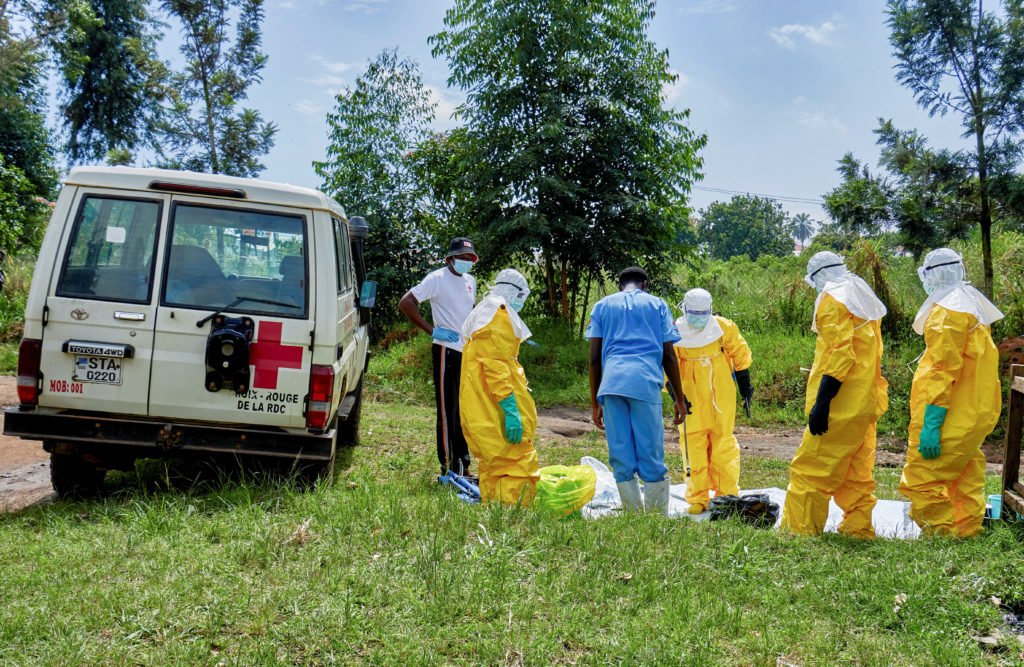
The United Nations Office for the Coordination of Humanitarian Affairs has allocated up to $60 million from its emergency response fund to support efforts aimed at containing the ongoing Ebola outbreak linked to the rare Bundibugyo virus strain in Central Africa.
This was disclosed on Friday, May 22, 2026, by Tom Fletcher, the UN Under-Secretary-General for Humanitarian Affairs and Emergency Relief Coordinator, in a post shared on X.
The emergency allocation comes five days after the World Health Organization declared the outbreak a Public Health Emergency of International Concern (PHEIC), warning that there is currently no approved vaccine or specific treatment for the Bundibugyo strain spreading across parts of Central Africa.


Fletcher said the UN was moving quickly to stay ahead of the outbreak and strengthen containment efforts across affected countries.
“We need to get ahead of this Ebola outbreak. I am allocating up to $60 million from the United Nations Central Emergency Response Fund to accelerate the response in the Democratic Republic of the Congo and the wider region,” he said.
He added that beyond the financial support, additional personnel from UN agencies and humanitarian partners were being deployed to reinforce response operations in the Democratic Republic of the Congo, Uganda and South Sudan. Fletcher also commended local communities and frontline humanitarian workers involved in efforts to contain the outbreak.
The UN humanitarian chief further noted that the response operation was being carried out in difficult conditions marked by armed conflict and heavy population movement, factors he said could complicate containment efforts.
According to him, humanitarian agencies are working to secure safe and uninterrupted access for frontline responders, including in areas controlled by armed groups.
“We are applying lessons from previous outbreaks. Containment depends on fast, coordinated action at community level. We need strong communication with governments, and effective early warning and detection systems. Community trust is essential,” Fletcher said.




