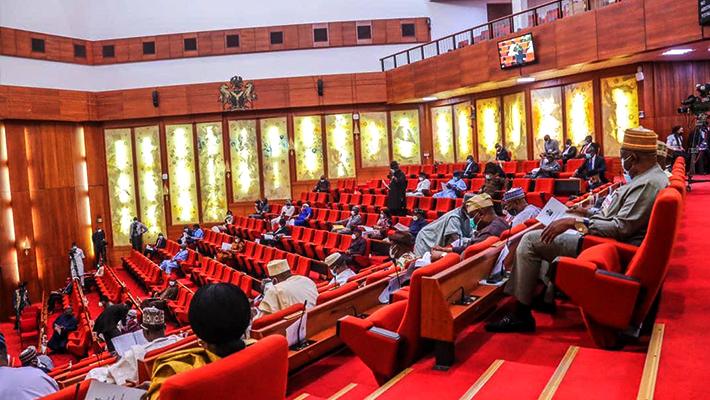
Senate has again approved a three-month extension implementation period for capital component of the 2025 Appropriation Act from June 30 to Sept 30.
This followed the adoption of a motion moved by Senate Chief Whip, Mohammed Monguno (APC- Borno) at plenary on Thursday.
Monguno, moving the motion, said the extension became necessary given the unutilsed substantial funds released to Ministries, Departments and Agencies (MDAs) for implementation of projects under the 2025 budget.


According to him, delays caused by procurement processes, project implementation challenges and administrative procedures had slowed the execution of several critical government projects.
Monguno said many strategic projects across key sectors of the economy were already at advanced stages of completion and required additional time for execution, certification and payment.
“Failure to extend the implementation period of the 2025 Appropriation Act may result in the abandonment of critical projects, the wastage of already committed public resources and the disruption of ongoing government interventions,” he said.
He argued that some allocations contained in the budget might not be accommodated in subsequent appropriation cycles if the implementation window expired.
This , he said would create funding gaps and ultimately undermine development objectives.
He said that extending the validity period of the budget would improve budget performance, facilitate the efficient utilisation of released funds and support economic growth.
“Granting a further extension of the implementation period is in the national interest and will ensure value for money in public expenditure,” he said.
Chairman, Senate Committee on Appropriations, Sen. Solomon Adeola (APC-Ogun), supporting the motion, explained that the extension was specifically targeted at the capital component of the budget.
According to him, when President Bola Tinubu presented the 2025 budget to the National Assembly, there is an understanding that 30 per cent of the budget implementation will be completed by March 31, while the remaining 70 per cent will be rolled into the 2026 budget.
Adeola said that the implementation timeline was not fully achieved, prompting the National Assembly to earlier extend the budget’s lifespan to June 30.
“While we were passing the 2026 budget, due to the non-implementation of that promise, we were forced to extend the budget to June 30,” he said.
He said although payments had commenced, significant obligations remained outstanding.
“There is a need to extend this budget beyond June 30 to September 30, by then, we are hopeful that the outstanding 30 per cent will have been paid in full, while implementation of the components transferred to the 2026 budget can commence.”
Adeola urged senators to support the extension to ensure proper implementation of projects and prevent disruptions to government programmes.
Sen.Victor Umeh (NDC-Anambra), who seconded the motion cited the need to sustain the execution of projects captured under the 2025 Appropriation Act.
“In view of the need to sustain the continued execution of the projects covered in the 2025 Appropriation Act, as amended, I hereby second the motion,” Umeh said.
Following deliberations, Senate President Akpabio put the proposal to a voice vote and it was overwhelmingly adopted by the lawmakers..
Akpabio in his remarks said the decision was necessary to prevent interruptions in payments and project execution.
“The payment would have stopped halfway if this was not done,” he said.
The Senate President commended the Chairman of the Appropriations Committee and other lawmakers involved in handling the matter.
He directed that the Senate’s resolution be transmitted to the executive for implementation.
“Accordingly, the resolution of the Senate is being communicated to the Executive that the 2025 Appropriation Act has been extended to Sept 30.
themomentng recalls that the National Assembly had earlier extended the implementation period of the 2025 budget to June 30, following delays in the release and utilisation of capital funds.
Senate, thereafter, adjourned plenary to July 7.