

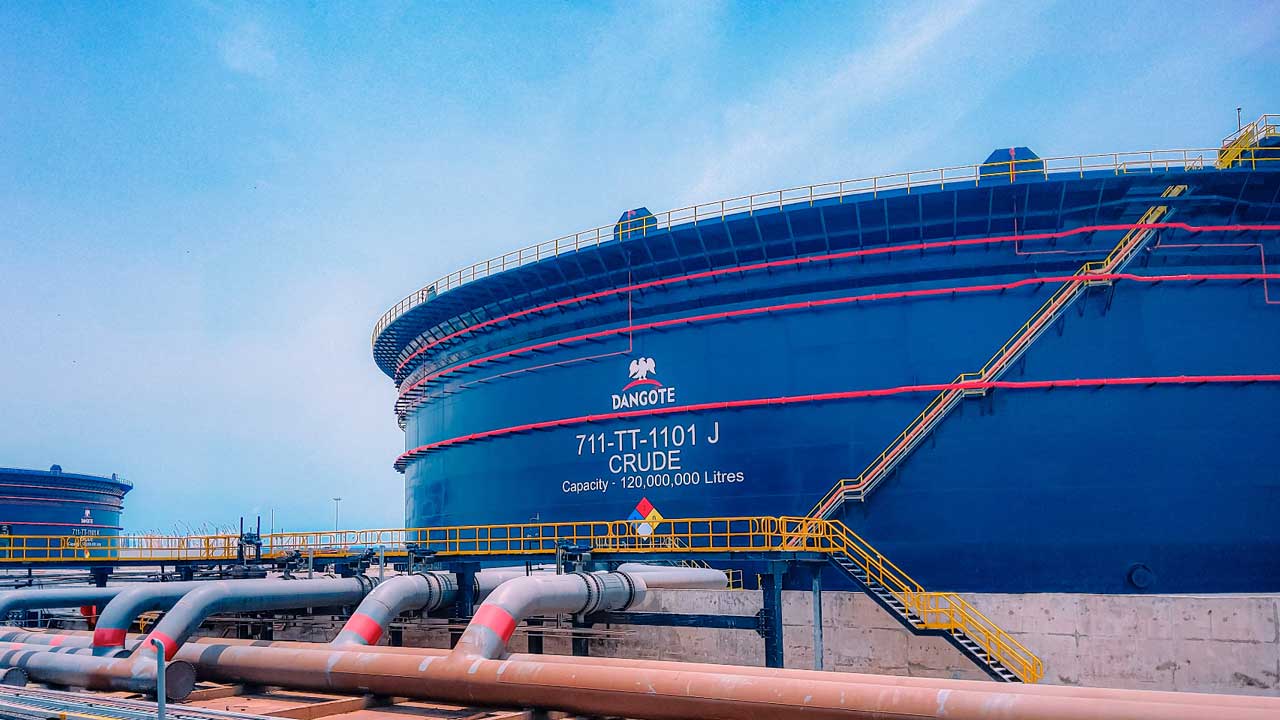
The hearing of a suit filed by Dangote Petroleum Refinery against the Federal Government over the alleged issuance of fuel import licences to some petroleum marketers was on Monday stalled following the absence of the presiding judge, Justice Chukwujekwu Aneke of the Federal High Court in Lagos.
Also affected by the suit are the Nigerian National Petroleum Company Limited (NNPC Ltd) and petroleum marketers including NIPCO, AA Rano, Matrix, Shafa, Pinnacle and Bono, who allegedly benefited from the import licences.
In the suit, marked FHC/L/CS/857/2026, Dangote Petroleum Refinery is asking the court to invalidate fuel import licences allegedly issued or renewed in favour of the marketers and NNPC Ltd.


The refinery’s application, brought pursuant to Sections 6, 36(1) and 287 of the 1999 Constitution (as amended); Order 26 Rules 1 and 2 of the Federal High Court (Civil Procedure) Rules 2019, and the court’s inherent jurisdiction, seeks an order setting aside all import licenses issued and/or renewed on or about May 6, 2026.
Dangote contends that the issuance of the licenses violated an earlier order made by the court on April 29, 2026, directing all parties to maintain the status quo as it existed on April 2, 2026.
When the matter came up for hearing on Monday, counsel and parties were informed that Justice Aneke was indisposed.
Consequently, the case was adjourned until October 7 for hearing.
Meanwhile, the Nigerian National Petroleum Company Limited has urged the court to dismiss the suit, arguing that the Petroleum Industry Act (PIA) and the Federal Government’s Backward Integration Policy empower regulators to issue fuel import licences where necessary.
In its statement of defence, NNPC maintained that there is no blanket prohibition on fuel imports, particularly where imports are required to guarantee supply security.
It accused Dangote Refinery of attempting to monopolise Nigeria’s downstream petroleum market through the litigation.
According to NNPC, the Nigerian Midstream and Downstream Petroleum Regulatory Authority (NMDPRA) acted within its statutory powers in issuing the disputed licences, stressing that the law permits the issuance of licences to companies with local refining capacity or an established track record in petroleum trading.
The company argued that the Petroleum Industry Act does not mandate a total ban on fuel imports except where there is a verified domestic supply surplus. It maintained that fuel importation remains a lawful mechanism for stabilising product availability and prices.
Dangote Refinery, however, argued that the continued issuance and renewal of import licences undermine local refining and violate Section 317(9) of the Petroleum Industry Act, which it interprets as restricting imports to situations where there is a proven shortfall in domestic supply.
The refinery told the court that, with its installed refining capacity of about 650,000 barrels per day, Nigeria has sufficient domestic refining capacity to meet local demand. It relied on regulatory data, which it said showed that daily production of petrol and diesel now exceeds national consumption.
Dangote also maintained that the refinery was built to satisfy Nigeria’s refined petroleum requirements while generating export surpluses, describing the project as a strategic national investment expected to create a multi-billion-dollar market for Nigerian crude oil.
However, NNPC disputed the refinery’s claims, arguing that Dangote had failed to present credible and verifiable evidence demonstrating that it could independently guarantee the country’s fuel supply.
The dispute has widened following an application by the Nigerian Midstream and Downstream Petroleum Regulatory Authority (NMDPRA) to join the proceedings, transforming the case into a broader legal challenge over Nigeria’s fuel import policy and the regulation of the downstream petroleum sector.
Dangote further alleged that the NMDPRA, the Nigerian Upstream Petroleum Regulatory Commission (NUPRC), and NNPC have created a hostile operating environment by continuing to issue import licenses despite what it described as the absence of any domestic supply shortfall.
The refinery also accused NNPC of failing to supply it with sufficient crude oil, claiming it receives only about five crude cargoes monthly instead of the 13 cargoes required to operate at full capacity, forcing it to source crude from the international market at higher costs.
NNPC denied the allegation, insisting that crude oil allocation is determined by operational, commercial, security, and logistical considerations, and not by any attempt to frustrate Dangote Refinery’s operations.
The state oil company warned that restricting fuel import licences could expose Nigeria to supply disruptions, price volatility, and threats to national energy security, while Dangote maintained that continued imports would undermine local refining, discourage investment, and frustrate Nigeria’s long-term objective of achieving energy self-sufficiency.
In addition to its substantive claims, Dangote is seeking an interim injunction restraining the Attorney-General of the Federation and relevant regulatory agencies from issuing or renewing import licences for Premium Motor Spirit (PMS), Automotive Gas Oil (AGO) and Jet A1 pending the determination of the suit, arguing that it stands to suffer irreparable financial and operational losses if the licences continue to be issued.




