One of my hobbies is reading the autobiographies and biographies of great men and women, and the more I read them, the more I realise that one thing they have in common is that they always refuse to allow themselves to be imprisoned by hate. One such great biography I read voraciously every day is the Bible, the biography of the Lord Jesus Christ. And let me be very clear on one point, please.
My allusion to the Bible here is not in the hypocritical and self-serving paradigm in which our common humanity is lost on the altar of bigotry, creed, doctrine, and dogma, which have, more than anything else, contributed to the loss of the social redeeming importance of religion in lifting the human soul from the thralldom of hate, petty jealousy, and the blurred vision that sees life only through the prism of self.


To be sure, most of the problems that men think require difficult solutions are better solved by simple and elementary therapies. A foray into the study of politics and strategic studies would reveal a lot of complicated theories, theses, and paradigms on how to bring peace and good governance to the world.
One such theory is the thesis of deterrence and the principle of reciprocity, which tell you that if you want peace, you prepare for war. In the contemporary history of mankind, Ronald Wilson Reagan of the United States was one such man who understood how the acquisition of power, both military and economic, could secure capitulation from a would-be adversary without firing a shot. Through the deployment of some sophisticated weapon systems, he taught Muammar Gaddafi a big lesson on the stupidity of radical religious terrorist doctrine. In concert with other Western leaders like Margaret Thatcher of Britain, Brian Mulroney of Canada, Helmut Kohl of West Germany, and others, he brought the Soviet Empire to its knees. But did all of these bring peace to the West, the United States, and the world? Certainly not. The world is more embroiled in conflict and crisis now than when he left office in 1989. And why? The premises of his thoughts and actions were inherently faulty and suffered from a credibility deficit.
Again, when Muhammadu Buhari shot his way to power in 1983 in a messianic, corrective, and puritanical military coup, the whole world shouted that the great Daniel had come to judgment. In 2015, when the APC brought an end to the PDP’s sixteen-year rule and Muhammadu Buhari was elected president of Nigeria, very many Nigerians (including Wole Soyinka) thought that the saviour of Nigeria had come to power. But today they know better, as things are far worse today than they were in 2015. And let it be stated here, and let it ring and resonate from eternity to eternity, that things will never change until those principles that make for progress and development are imbibed by men and become the spiritual and moral compass for humanity. But what are these principles?
Before I answer this question, I would like to quote the comments of one of my former postgraduate students, Sani Abdullahi, on my article, ‘Professor Wole Soyinka on Nigeria’s Tenuous Unity,’ on my internet page, International Relations and Political Science Scholars, this week.
Sani Abdullahi:
“Professor, sir, it’s true that in this modern age of efficiency, productivity, and accountability in governance, the talk about restructuring the humongous nature of the Nigerian federation built on the ideals of colonial administration is long overdue. But, looking at some of the failed attempts in the past, people have every cause to be skeptical about the agitation because here, the more things change, the more they remain the same. We changed from 3 regions to 19 states, then 29, and now 37, including the FCT. We changed the nation’s capital from Lagos to Abuja to avoid the chaos that characterised the former capital. We changed from parliamentary to presidential and from military to civilian rule, and, politically, we changed from PDP to APC. In all the changes that took place here, it was the same Nigerian elites who were driving the changes, yet nothing has changed fundamentally, and the quest for change is continuing. To me, we have not yet developed the true mindset that makes effective change or restructuring possible because, so long as the concerned elites are not being methodical, scientific, visionary, and value-free, with their eyes on tomorrow and not on what’s in it for them, it would only be agitation to change the nomenclature of the benefiting elites.
After 60 years of independent rule, can any Nigerian tell us on which nationalistic values this nation is being driven? For people to talk about patriotism, there must be an underlying value to which every citizen is committed and for which they are ready to sacrifice, even pay the supreme price. Tell me, where are Nigerians united in pursuing such values? Every day we talk about corruption as if corruption were itself an independent element in governance. Meanwhile, the perpetrators of the same corrupt practices are the same ruling elites who create the laws, the courts, the police, and other paraphernalia of power, which, if supervised well by the political elites, are enough to make the environment hostile to such activities. But look at the level of lip service to the issue. To me, so long as the ruling elites, who have the historical responsibility to organise society through reform and restructuring backed by their consensual values, have not agreed on any such values that can drive this nation effectively and for which they can mobilise the common people (the masses), but are just complaining about the national failures, whatever change or restructuring takes place under these conditions would just be the circulation of the same elites from one point to another, and things would not really change but remain the same. So, while change or restructuring is where the world is going, let it not appear that effecting those changes in the way they are being discussed in Nigeria would automatically create the utopian conditions that have been eluding the people. Thank you, Professor Sir, for continually putting the nation and your former students on reflection through your write-ups. We appreciate it!”
Sani, thank you too. You are so right. This desired change can only come through pure love and selflessness.
Then, I would like to briefly look at the lives of three great men. The first two are Mahatma Gandhi and the late Martin Luther King Jr. These men attempted to proffer solutions to human problems through the instrumentality of love and peace.
They refused to hate and embraced love. Today, Gandhi is venerated and highly respected as the founding father of modern India. Today, the birthday of Martin Luther King Jr. is a public holiday across the length and breadth of the United States, a rare honour in that great country. Oh yes, both of them were assassinated, but their names are written in gold and engraved on the hearts and minds of men, and this will always be the case for all eternity. The eternal Madiba, Nelson Mandela, is in the company of these great men who rose above hate and used the power of love to defeat those who jailed him for twenty-seven long years. And mark you, from generation to generation, Madiba will always live in the throbbing heart of humanity, and he will always touch the realms of divinity forever.
Do not think for one split second that if you climb the ladder of success today or you are making spirited efforts to make a little difference in the world, very many people will celebrate you and mount the rooftops to announce your success. No, that would be against human nature. They will rather wait until you lose your wife or mother to show you how much they love you. But do you succumb to their cold, tight, small hearts heavily tainted by hate and petty jealousy? No, never, and not by a long shot. The Lord Jesus Christ did not teach us that way. He told us to love our enemies. And that was exactly what Vanessa Williams did in the 1980s when she was stripped of her Miss America crown after some jealous folks released some of her nude pictures to the public. Rather than succumb to defeat and inertia, she worked so hard and earned a much greater honour.
When she was asked by the press what her response would be to those folks who had caused her to lose her Miss America crown, she simply smiled and said, “There is no need to hate; success is the best revenge.”
Oh yes, in the face of hate, petty jealousy and ill feelings, success will always be the best revenge. And you must go a step further: refuse to hate, put all your resources and the gifts and talents that God has endowed you with to work, stretch yourself to your very limits and work extremely hard to leave a lasting legacy for humanity. This is how not to die.
Tomorrow is another day. Certainly, the best is yet to come.
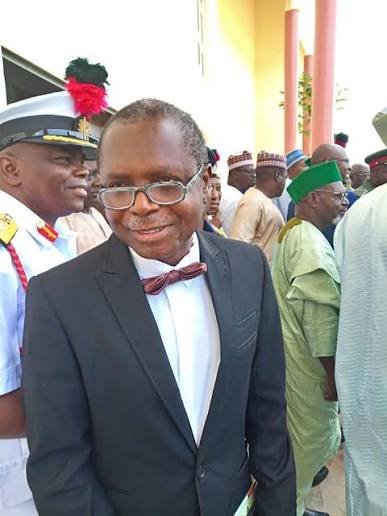
Toba Alabi is Professor of political science, defense, and security studies. (08036787582)