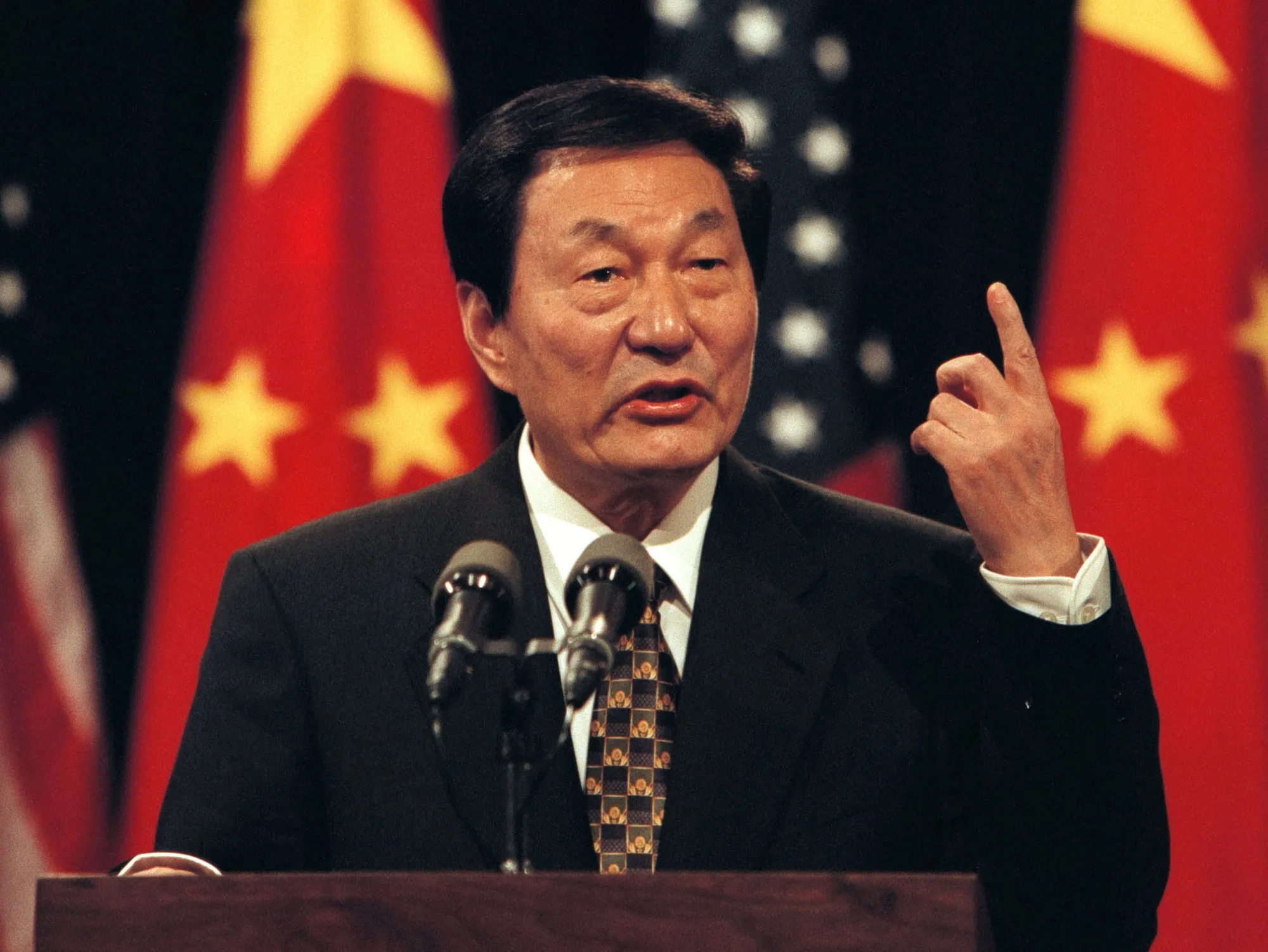
Former Chinese Premier Zhu Rongji, one of the central figures behind the economic reforms that helped transform China into a global economic powerhouse, has died in Beijing. He was 97 by international age reckoning, although Chinese official reports gave his age as 98.
China’s official Xinhua news agency said Zhu died from illness at 11:06 a.m. on Wednesday, August 12, 2026, in Beijing. The former premier served from 1998 to 2003 after spending much of the previous decade overseeing economic policy as vice premier.
Zhu became widely known as China’s economic reformer and a tough technocrat who pushed through difficult changes as the country moved away from rigid central planning towards what Beijing described as a “socialist market economy.”


Among his major reforms were an overhaul of the taxation system, restructuring of state-owned enterprises, changes to housing ownership and efforts to curb inflation and excessive lending. The restructuring of state companies was particularly painful, resulting in millions of workers losing their jobs as inefficient enterprises were closed, merged or privatised
His most internationally significant achievement was overseeing negotiations that culminated in China’s admission to the World Trade Organization. One correction is necessary in the CNN copy supplied to Newspot Nigeria: China formally joined the WTO on December 11, 2001, not in 2002. Zhu played a major role in securing the agreement despite significant opposition within China to concessions made during the negotiations.
The WTO accession accelerated China’s integration into global markets, bringing a surge in trade, manufacturing investment and foreign capital that helped underpin rapid economic expansion in the following years.
Before becoming premier, Zhu served as mayor of Shanghai and later as vice premier, where he gained recognition for combating inflation and helping stabilize the Chinese economy during a period of rapid expansion. He also helped steer China through the 1997 Asian financial crisis.
Zhu’s political career was shaped by China’s turbulent modern history. A graduate of Tsinghua University, he was criticised and politically sidelined during the Mao Zedong era before being rehabilitated following Mao’s death. He later rose through economic and administrative positions before reaching the country’s highest levels of government.
Known for his blunt language and willingness to confront officials, Zhu developed a reputation as an uncompromising administrator. His speeches frequently attacked corruption, waste and incompetence within government and state institutions.
His economic legacy, however, remains debated. Supporters credit him with helping lay the institutional foundation for China’s dramatic economic rise, while critics point to the social costs of state-sector restructuring and job losses.
Zhu nevertheless remains closely associated with one of the most consequential periods in China’s economic history, when the country accelerated its integration into the global trading system and emerged as a major manufacturing and commercial power.