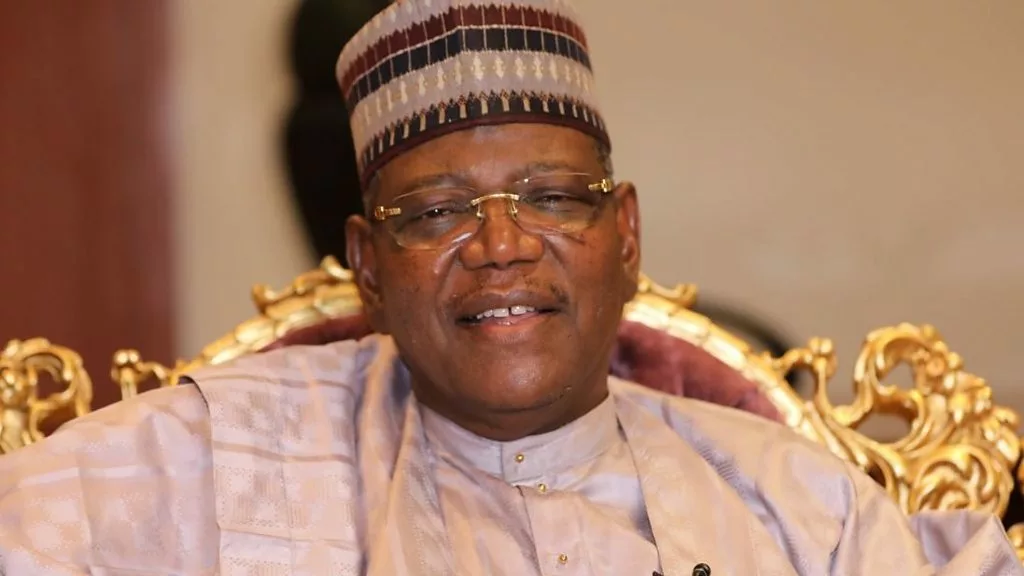
Two defence witnesses in the ongoing trial of former Gov. Sule Lamido of Jigawa, his two sons and others by the Economic and Financial Crimes Commission (EFCC) testified on Monday in the Federal High Court in Abuja.
Led in evidence by the defence counsel, Joe Agi, SAN, before Justice Ijeoma Ojukwu, the witnesses revealed what transpired between the state government and their companies while Lamido served as governor.
The EFCC charged Lamido (1st defendant) and his two sons—Aminu and Mustapha who are 2nd and 3rd defendants—with money laundering to the tune of N1. 35 billion.


Others named in the charge are Aminu Wada Abubakar, Bamaina Company Nigeria Ltd, Bamaina Aluminium Ltd, Speeds International Ltd and Batholomew Darlington Agoha as 4th to 8th defendants respectively.
The EFCC, in the 37-count charge, accused Lamido of abusing his position as governor between 2007 and 2015.
The EFCC alleged that he laundered sums of money received as kickbacks from companies that were awarded contracts by the Jigawa State Government under his leadership.
When the case was called on Tuesday , Agi called the 3rd defence witness (DW-3), Mr Odunayo Emasealu, the Managing Director of Interior Woodwork Ltd.
Emasealu told the court that he had known Mustapha, Lamido’s son, since year 2000 in Kano as a friend before his father became a governor.
He said he bought a Range Rover car from Mustapha for N16 million and also loaned him N48 million which was part of the subject of the trial.
The withess said he gave a soft loan of N48 million to Mustapha when he approached him and said that he wanted to assist someone who was ill.
He admitted that though his company, Interior Woodwork, did a contract with the state government, the contract was not awarded to him by the ex-governor.
According to him, the contract was awarded to him by the state government.
When he was asked if there was any negotiation between him and ex-Gov. Lamido at the time of the award, he said, “No, there was none because by then, I did not know him.”
When Agi asked him if the friendly loan he allegedly gave to Mustapha was meant for the former governor, the witness responded in the negative.
“So that N48 million wasn’t a gratification for Alhaji Sule Lamidi,” the lawyer asked.
“It wasn’t,” Emasealu responded.
The witness said the N48 million had since been repaid to him.
Under cross-examination, the EFCC’s lawyer, Chile Okoroma, SAN, asked the witness if there was any written agreement on the N48 million loan and he said there was none.
He, however, said that the loan was paid to Mustapha through bank transfer.
He admitted that the loan was paid from Interior Woodwork account to Bamaina’s account.
“Being from the Interior Woodwork Ltd account, that will be a loan from Interior Wood to Bamaina?” Okoroma asked.
“Yes, it was but through me,” Emasealu responded.
When the lawyer asked the time the loan was granted, the witness said on February 7th, 2012.
When EFCC’s lawyer asked if the disbursment of the loan was captured in the Interior Woodwork’s audited and financial statement for 2012, the witness said, “Yes, it was captured as director’s loan.”
“So was it captured?” the lawyer asked again.
“I can’t remember,” the witness said.
The second witness, Mr Joerg Adelt, a former finance director with Dantata and Sawoe, testified as DW-4 through zoom from Germany.
Led in evidence by Agi, he said he worked with the company between 2007 and 2021.
Adelt, who said he lives now in Germany, said he was invited by the anti-graft agency in 2015.
“Yes, I was there for three days and there were three statements I made,” he said.
He said the statements were made on June 24, 2015; June 25, 2015 and June 29, 2015.
The witness, who identified his signature on the statements, said: “I stand by the statements.”
He admitted that contracts were given to Bamaina Holdings Ltd, Gada International Ltd and Speeds International Ltd at various time to supply diesel and bitumen.
He confirmed all the invoices issued by Bamaina, Gada and Speeds Ltd, including the corresponding cheques for payment running into millions of naira and other documents which carried his signature, as genuine.
“The EFCC alleged that the payment was not for contract but for a bribe for Lamido. Can you confirm this,” the defence lawyer asked.
The witness told tye court that all the monies paid to the companies were either for the supply of diesel or bitumen.
“Did you tell the EFCV what you are telling the court now?” Agi asked.
“Yes, in my statements, I made it,” he responded.
The witness disagreed that all the payments made to the companies were for money laundering.
“The payments are made for products supplied and not for any other purpose,” he insisted.
“I will ask you a global question. In all the computer printouts you brought, did you only capture Bamaina, Speeds and Gada or there are other contractors in the documents,” Agi asked him.
Responding, the witnesd said “there are invoices from other companies as well and payment correspondence.”
He said contracts were also given to Honeywell, Coinoil, Total, Eternal Oil and that the supply was duly executed.
When the lawyer asked him when all the documents were prepared, Adelt said they were prepared before the EFCC’s investigation began.
“We sent you the counts. Confirm that all these allegations in various counts were not for bribe,” the lawyer asked.
“The payments were for corresponding materials and not for any other purpose,” the witness responded.
“Were these supplies given to these companies because of Alhajj Sule Lamido,” Agi asked.
“No, they were not given because of Alhaji Sule,” he responded.
He said most of the documents carrying his signature before the court were official documents from Dantata and Sawoe submitted to EFCC.
Under cross-examination, the witness said he worked for 15 years with Dantata.
“When did you start executing contract for Jigawa state government?” he asked.
He said he started in 2007.
He said as financial controller of the company, he managed the financial aspects of the company which included several aspects of the company.
He, however, said it did not include bidding for a contract.
“That was not part of my port folio,” he said.
“What is the procedure for receiving correspondence while you were in Dantata,” Okoroma asked.
“It is addressed to the highest authority which is the chairman. It is received at the head office in Abuja,” the witness responded.
He said he worked at the head office in Abuja.
“When a letter is received, the stamp, signature of the receiver and date are put,” Okoroma asked and he responded affirmatively.
“It is minuted from one person to another until the instruction is carried out,” the lawyer asked again.
“Dantata is a private company and there is no procedure for all that,” he said.
The witness maintained that there was no written standard procedure to his knowledge
When some of the letters were shown to the withess, he admitted there was no company’s stamp on them and endorsement by the receiever.
Okoroma then sought an adjournment to continue with the cross-examination, and Justice Ojukwu said a date would be communicated to parties on Tuesday.