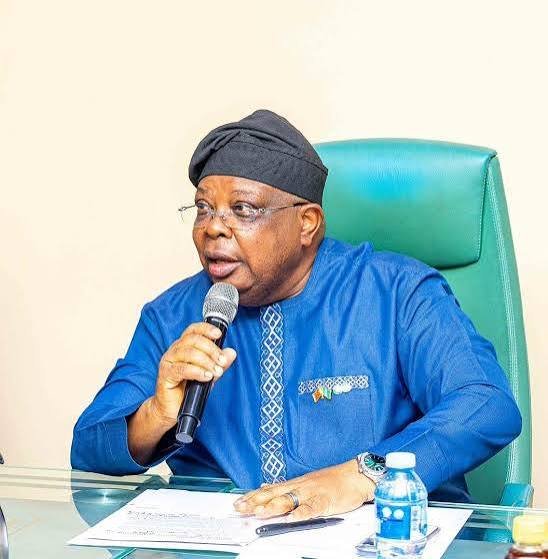
The Federal Government plans to phase out electricity subsidies from 2027 as part of efforts to address mounting liabilities in Nigeria’s power sector.
Minister of Power, Joseph Tegbe, disclosed this on Wednesday while inaugurating a 3MW solar hybrid power project at Yakubu Gowon University, Abuja.
Tegbe said the government had been mandated by President Bola Tinubu to clear legacy debts in the electricity market and establish a sustainable funding structure that would prevent new liabilities from accumulating.


“We have the mandate of Mr President to clear the legacy debt and come up with sustainable structures to make sure this doesn’t pile up any more,” the minister said.
“I promise you, next year, by God’s grace, we will put a stop to this so-called subsidy in the power sector. Mr President, we will not deprive Nigerians of anything. We’ll make sure Nigerian consumers continue to have power and improve power services.”
The planned phase-out follows growing concerns over the financial burden of electricity subsidies. In the first quarter of 2026 alone, the Federal Government was reported to have covered ₦358.32bn of electricity generation costs.
Tegbe had previously said the government would phase out the subsidy while ruling out an immediate increase in electricity tariffs.
The government has also been working to address legacy debts across the electricity value chain as part of efforts to improve the sector’s financial sustainability.
The subsidy reform comes amid continuing concerns over household living costs following the removal of petrol subsidy in 2023.
The World Bank’s October 2025 Nigeria Development Update projected that persistent inflation, particularly food inflation, could push Nigeria’s poverty rate to 62 per cent in 2026, representing about 141 million people.
The bank, however, said Nigeria had made progress in stabilising its economy through recent reforms but noted that the gains had yet to substantially improve living standards. It called for measures to reduce food inflation, improve public spending and strengthen social protection.
Tegbe said the government’s objective was to end the subsidy regime while ensuring that Nigerians continued to have access to reliable electricity and improved services.