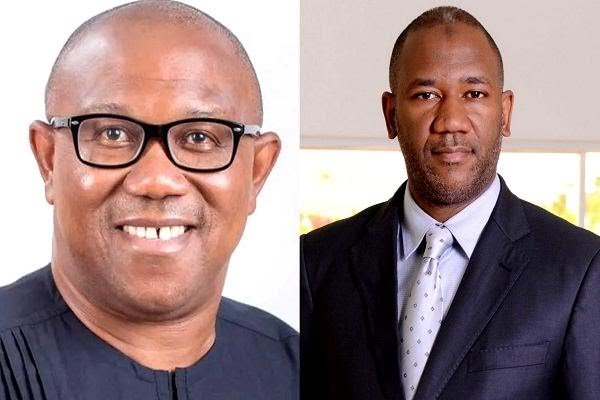
Former Labour Party vice-presidential candidate Datti Baba-Ahmed has said he remains satisfied with his decision to support Peter Obi during the 2023 presidential election.
Baba-Ahmed said on Monday that his decision to run alongside Obi was based on his belief in national unity, forgiveness and mutual trust among Nigerians.
He spoke while delivering a keynote address at the second Bala AbdulKadir Mohammed Colloquium at the Ahmadu Bello International Conference Centre in Bauchi.
The event was organised to mark the 68th birthday of Bauchi State Governor Bala Mohammed.
Speaking about the 2023 election, Baba-Ahmed said his participation was also driven by questions surrounding Nigeria’s leadership and the future of its democracy.
He maintained that Obi had the constitutional right to seek the presidency and said supporting him was, in his view, a decision taken in the interest of national unity.
Baba-Ahmed said, “Up till today, I have no regrets supporting Peter Obi. Fundamental questions were answered. He is a Nigerian, he is in the constitutional line to sit. That is the doctrine.
“I stood for Nigeria in 2023 to need to show forgiveness, and unity, and trust in each other.”
The former LP vice-presidential candidate also called on Nigerians to speak against oppression and injustice rather than remain silent in the face of wrongdoing.
According to him, recognising political leaders should go beyond praising them or satisfying their egos. He said attention should instead be given to qualities that could encourage responsible leadership.
“There is a duty in appreciating leaders. Why you appreciate leaders is not to massage their ego. What is even more important is to educate others to appreciate, understand, see, and imbibe those single qualities. Nigeria is in need of leaders,” he said.
Baba-Ahmed also raised concerns about Nigeria’s democratic institutions, particularly the relationship between the executive and legislative arms of government.
He argued that the principle of separation of powers had weakened, affecting the ability of the National Assembly to carry out its constitutional duties effectively.
He urged citizens to take a greater interest in holding public officials accountable and to challenge a political system in which, according to him, a small number of powerful people exercise significant influence.
“Why can’t the Nigerian people unite? Why can’t the Nigerian people work together? Why can’t the Nigerian people not stand for themselves, stand for themselves, fight for themselves?” he asked.
Baba-Ahmed also criticised what he described as the increasing acceptance of oppression, bullying and injustice in the country.
He said leaders and ordinary citizens had roles to play in resisting such practices.
“The point is that we detest oppression. We detest cheating. We hate bullying. We need leaders that will stop it. Because now, oppression is getting into the DNA of Nigeria. Accepting oppression is getting into the DNA of Nigerian people,” he said.
He further called on Nigerians to support public officials who are prepared to challenge injustice and defend citizens’ rights, including in situations where taking such positions could put their political interests at risk.