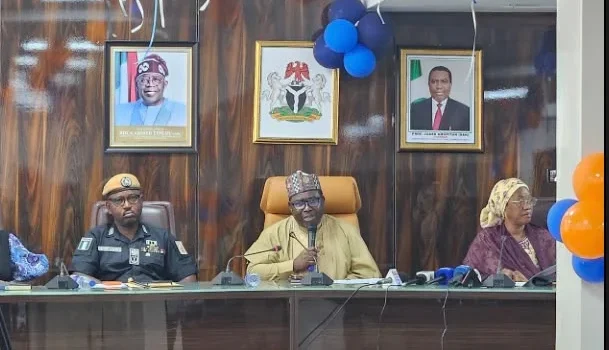
The Independent National Electoral Commission (INEC) has inaugurated a dedicated committee to coordinate the transportation, storage and distribution of election materials ahead of Nigeria’s 2027 general elections.
The Electoral Logistics Committee (ELOC), chaired by National Electoral Commissioner retired Rear Admiral Jamila Abubakar-Sadiq, is expected to develop strategies to ensure the timely and secure movement of sensitive and non-sensitive materials across the country.
Speaking during the inauguration at INEC’s headquarters in Abuja, the commission’s chairman described logistics as a critical component of election administration, noting that delays in delivering materials to polling units could affect voters’ ability to participate in the electoral process.
He said the committee’s establishment was intended to address the logistical challenges associated with Nigeria’s diverse terrain, including riverine communities, remote settlements and areas facing security concerns.
According to INEC, the committee will assess the logistical requirements for the elections and develop plans covering the storage, distribution, deployment and retrieval of election materials.
It will also inspect the readiness of warehouses, vehicles, airports, seaports and other transportation facilities needed for election operations.
Other responsibilities include identifying operational gaps, monitoring compliance with deployment schedules and developing contingency measures to address transportation delays, shortages and security threats.
In her remarks, Abubakar-Sadiq said effective logistics planning was fundamental to electoral integrity and public confidence.
She explained that the committee would draw lessons from previous elections to identify weaknesses and improve coordination among the institutions responsible for moving election materials.
Its responsibilities will include planning air cargo operations, coordinating road and maritime transportation, mapping difficult terrain and identifying locations vulnerable to security threats.
She added that the committee would recommend suitable transportation and security arrangements for high-risk areas and submit a comprehensive report outlining proposed actions and implementation timelines.
Abubakar-Sadiq also proposed specialised subcommittees to oversee air transportation, road movement, maritime operations, storage and security, where necessary.
The Central Bank of Nigeria is expected to play a role in receiving, storing and distributing sensitive election materials through its nationwide branch network.
INEC also plans to work with government agencies, state offices, transport unions and other stakeholders to improve coordination throughout the logistics chain.
The inauguration attracted representatives of the military, police, immigration service, civil defence corps, aviation authorities, airport management and port authorities, alongside road transport and maritime sector representatives.
The Inspector-General of Police, Olatunji Rilwan Disu, was represented by Commissioner of Police Dr Abayomi Shogunle.
The committee’s inauguration marks another step in INEC’s preparations for the 2027 general elections, with the commission seeking to prevent logistical failures from disrupting voting or limiting access to polling units.
Its effectiveness will depend on how well the proposed plans translate into timely deployment, coordinated operations and reliable delivery of election materials across the country.