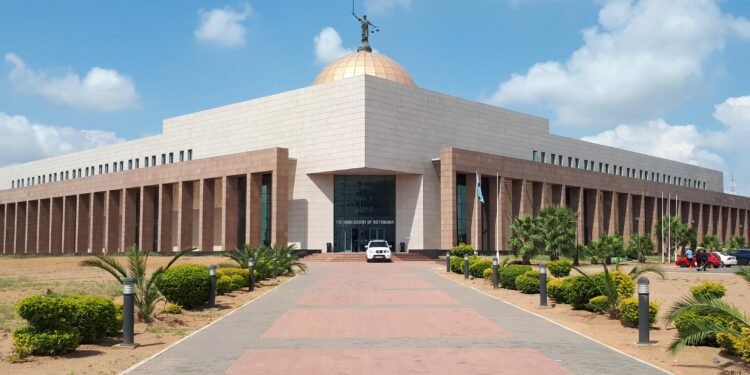
Botswana High Court is hearing a landmark challenge to the country’s marriage laws on Thursday, as two women fight for the right to marry in a case that has brought deeply held religious beliefs and constitutional protections into direct confrontation.
The proceedings in Gaborone, scheduled for October 22 and 23, come seven years after Botswana’s courts decriminalised consensual same-sex relationships. Now, judges are being asked to confront a question that ruling left unanswered: whether the law can protect same-sex relationships while denying those couples the right to marry.
A couple’s dream becomes a court battle


For Bonolo Omphile Selelo and Tsholofelo Seele Kumile, this was never supposed to become a national legal battle.
They wanted to get married.
The couple became engaged in March 2024, celebrated with their families and began preparing for a future together. But when they approached Botswana’s Department of Civil and National Registration in April 2025, they discovered that taking the next step would not be straightforward.
Officials told them the law did not recognise marriages between two women.
A letter dated May 8, 2025, formally refused to register and publish the banns for their intended marriage.
According to the Southern Africa Litigation Centre’s account of the case, an official suggested they consider marrying in neighbouring South Africa, where same-sex marriage has been legal since 2006.
They chose a different path. Rather than leave Botswana to marry, they decided to challenge the law at home.
In a May interview with The Guardian, Selelo, a lawyer, spoke about the importance of ensuring that Kumile would have legal protection if anything happened to her.
It is an everyday concern for many married couples. For Selelo and Kumile, it has become part of a constitutional fight.
What the law says — and what is disputed
At the centre of the case is Section 10(2) of Botswana’s Marriage Act, which uses terms including ‘bride’, ‘bridegroom’, ‘husband’ and ‘wife’.
The government argues that the wording reflects Parliament’s intention to recognise marriage between a man and a woman.
It maintains that registration officials acted lawfully when they rejected the couple’s application because the existing legislation does not permit same-sex marriages.
They argue that denying them access to civil marriage violates constitutional protections, including fundamental freedoms and protection against discrimination.
Their lawyers are asking the High Court to interpret the Marriage Act in a way that allows same-sex couples to marry. If the judges find that the legislation excludes them, the applicants want that exclusion declared unconstitutional.
The case also challenges the government’s original refusal on administrative-law grounds.
For the couple, the argument is about more than obtaining a marriage certificate.
Marriage provides legal recognition that can affect inheritance, property, maintenance, family responsibilities and decisions made on behalf of a spouse.
Without that recognition, same-sex couples may face uncertainties that married heterosexual couples do not ordinarily encounter.
Religious groups resist the challenge
The case has drawn opposition from three religious and cultural organisations: the Evangelical Fellowship of Botswana, the Dingwetsi Association of Botswana and the Botswana House of Prayer and Transformation.
All three have been admitted as respondents.
Their opposition reflects concerns about changing an institution they believe should remain a union between a man and a woman.
During earlier proceedings, representatives raised objections based on Christian beliefs and Setswana cultural traditions.
As AFP reported in July, the Dingwetsi Association warned about the possible cultural consequences of recognising same-sex marriage, while the Evangelical Fellowship said such recognition conflicted with its members’ religious convictions.
For these organisations, the case raises difficult questions about the place of religion and tradition in Botswana’s legal system.
For marriage equality campaigners, the central issue is whether constitutional rights should depend on the religious or cultural beliefs of others.
Those competing positions now form part of the dispute before the judges.
The couple have the backing of LEGABIBO, Botswana’s leading LGBTQ+ rights organisation, which was admitted as a third applicant on September 4.
The organisation argues that the case affects more than one couple because the outcome could determine whether other same-sex partners can obtain the legal protections associated with marriage.
University of Botswana legal scholar Dr Onthatile Olerile Moeti has also been admitted as amicus curiae, or friend of the court, to provide independent legal assistance.
The participation of these additional parties has turned a rejected marriage application into a broader examination of the relationship between individual rights, government authority and Botswana’s social traditions.
Botswana has faced a defining legal battle over same-sex relationships before.
In June 2019, the High Court struck down colonial-era criminal provisions targeting consensual same-sex sexual activity.
The Court of Appeal upheld that decision in November 2021, marking a major victory for campaigners who had spent years challenging laws that criminalised private relationships.
But the judgment did not legalise same-sex marriage.
That distinction matters today.
Although consensual same-sex relationships are no longer criminalised under those provisions, couples such as Selelo and Kumile still cannot obtain the same civil marriage recognition available to heterosexual partners.
The present case asks whether that difference is constitutionally permissible.