The World Health Organization (WHO) says more than 10,000 Ebola cases and 5,000 deaths have been reported in the Democratic Republic of the Congo (DRC), as new hotspots emerge in spite of slowing transmission in some areas.
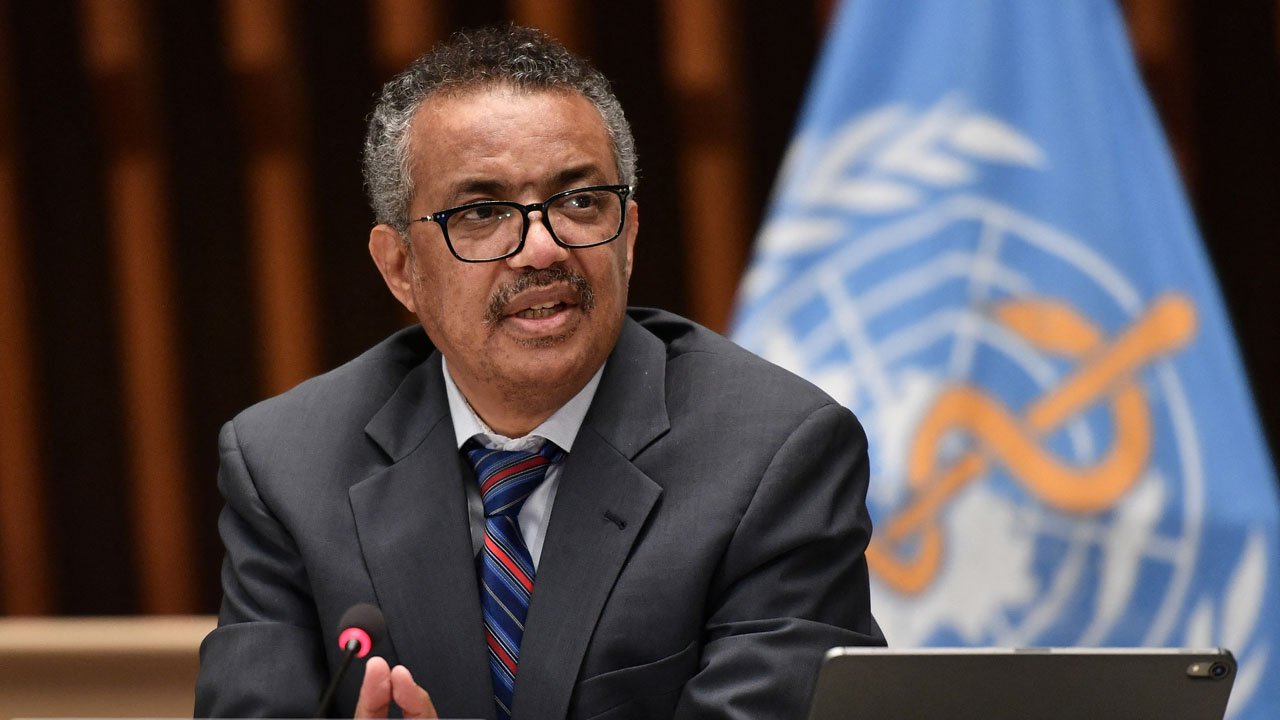
WHO Director-General, Dr Tedros Ghebreyesus, said this during a news conference on Wednesday, saying displacement, rainy weather, attacks on healthcare facilities and difficulties accessing remote communities were complicating response efforts.
He said Kenya had reported nine Ebola cases, including two deaths, while Nigeria had confirmed one case, commending both countries for their rapid responses and transparency in reporting imported infections.


Ghebreyesus urged countries that imposed travel restrictions to lift them, warning that such measures punished countries for transparency, discouraged timely reporting and undermined international efforts to contain the outbreak.
He said WHO was supporting countries neighbouring the DRC to prepare for possible imported cases while helping the affected country strengthen its response through research and vaccine development.
“WHO experts have recommended adding two Bundibugyo-specific vaccine candidates, ChAdOx1 BDBV and Moderna’s mRNA-1469, to an ongoing clinical trial in the DRC.
“The candidates were developed by the University of Oxford in partnership with the Serum Institute of India and Moderna, respectively, to provide protection against the Bundibugyo virus,” Ghebreyesus said.
He said the trial, led by the DRC’s National Institute for Biomedical Research, followed the commencement of another trial in October using Ervebo, a vaccine approved against the Zaire Ebola virus.
Ghebreyesus emphasised that vaccines alone could not stop the outbreak, urging continued emphasis on early treatment, contact tracing, isolation, safe burials and community engagement in affected communities.
On climate change, Ghebreyesus said six proven climate and health interventions could prevent 1.6 million deaths annually while generating trillions of dollars in economic and fiscal benefits worldwide.
He said this ahead of the United Nations Climate Change Conference, COP31, scheduled to take place in Türkiye next week, where WHO would advocate stronger recognition of climate change as a health crisis.
He said climate change was already fuelling disease outbreaks, increasing heart and lung diseases, cancer and asthma, while making healthy diets less affordable for vulnerable populations worldwide.
“Proposed interventions included heat-health warning systems, climate-resilient water and sanitation services, cleaner household energy and efficient fossil fuel pricing policies.”
“Implementing the measures globally can generate an estimated 3.9 trillion dollars in economic welfare benefits and another 5.4 trillion dollars in fiscal benefits annually,” he said.
Ghebreyesus described climate action as an investment in healthier people, a healthier planet and stronger economies, urging governments to prioritise measures that protect public health and livelihoods.
The WHO boss said only 14 per cent of adolescents globally achieved its recommended daily physical activity level, while one in four reported having no active day weekly.
“This is in new global estimates released on Wednesday, showing that physical inactivity among adolescents has remained virtually unchanged over the past 15 years,” he said.
He said WHO recommends that children and adolescents aged 11 to 17 engage in at least 60 minutes of physical activity daily, on average, to maintain good health.
According to him, girls continue to face greater barriers to physical activity than boys in almost every country and region, highlighting persistent inequalities in opportunities for exercise.
He urged governments to invest in safe schools, public spaces, walking and cycling routes, supportive transport policies and affordable sporting and recreational facilities to encourage active lifestyles among young people.
He said physical activity helped prevent heart disease, some cancers and diabetes, while promoting healthy weight and mental wellbeing across different age groups and communities.
The WHO boss also said 63 countries had eliminated at least one Neglected Tropical Disease (NTD) by June 2026, reflecting progress towards global elimination targets set for 2030.
Ghebreyesus announced this while presenting the organisation’s midterm evaluation of its global NTD roadmap, which also showed a 19 per cent reduction in people requiring interventions since 2020.
He said only 10 cases of Guinea worm disease were reported in 2025, describing the progress as encouraging despite persistent funding challenges and unequal achievements across countries.
The WHO chief, however, warned that funding cuts had disrupted programmes and services, while dependence on a small number of donors threatened the sustainability of interventions.
He urged governments and partners to increase domestic financing, sustain external support and integrate NTD services into primary healthcare and universal health coverage to improve access and sustainability.
“NTDs comprise 21 diseases that predominantly affect poor and marginalised populations in tropical and subtropical regions, often worsening existing health and socioeconomic inequalities.”
“The WHO roadmap, adopted by the World Health Assembly in 2020, targets the elimination of at least one NTD in 100 countries and a 90 per cent reduction in people requiring interventions by 2030.”
Ghebreyesus said he would launch a global initiative, Together for Science and Health, next Tuesday to strengthen public trust in science and tackle misinformation and disinformation affecting health decisions.
He said the initiative would be inaugurated ahead of World Science Day for Peace and Development, marked annually on November 10, to promote stronger connections between science, society, policy and communication.
He warned that misinformation and disinformation had become systemic public health risks, distorting decisions on vaccination, treatment, disease prevention and healthcare while undermining emergency responses worldwide.
According to him, the initiative will go beyond countering false claims by improving access to reliable evidence, strengthening information integrity and building public trust through transparency and community engagement.
He called on governments, institutions, civil society organisations, media, technology companies and communities worldwide to support the initiative and promote credible scientific evidence in health-related decisions.