The Executive Chairman of the Economic and Financial Crimes Commission, EFCC, Mr. Ola Olukoyede, has described Nigeria’s commitment to the fight against corruption as its strongest diplomatic statement to the rest of the world about its commitment to transparency and accountable conduct.
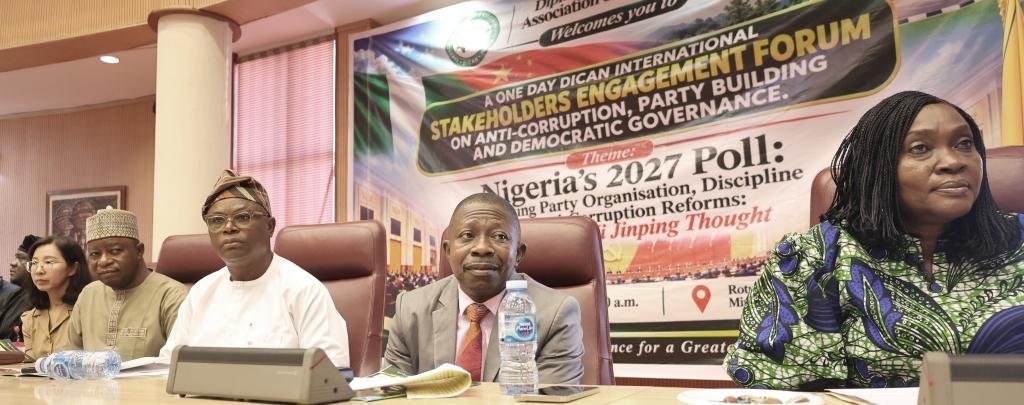
He stated this in a Goodwill Message on Wednesday, November 18, 2026 at the International Stakeholders Engagement Forum on Anti-Corruption, Party Building and Democratic Governance organised by the Diplomatic Correspondents Association of Nigeria, DICAN, in Abuja.



The EFCC’s boss, who spoke through the Commission’s Spokesperson and Head of Media and Publicity, Deputy Commander of the EFCC, DCE Dele Oyewale, stressed that the anti-corruption fight remained the most credible window of respectability to the rest of the world.

“The best diplomatic statement that we can make to the rest of the world is our commitment to the fight against corruption. And the best export that we can make to the comity of nations is what we are doing with the issue of corruption,” he said.
The EFCC Chairman said the fight against corruption should not be left to law enforcement agencies alone, stressing the need for Nigerians to take collective ownership of the campaign to address the country’s socio-economic challenges.

According to him, Nigeria’s efforts to strengthen democracy, tackle insecurity, and address poverty and unemployment would remain constrained without a collective commitment to fighting corruption.

Olukoyede identified kidnapping, banditry, insecurity, poverty and low life expectancy among the challenges linked to corruption, stressing that tackling the menace was critical to national development.

He called for greater public participation in the anti-corruption campaign, saying its impact on different aspects of national life made it a collective responsibility.

“One important thing that we need for our democracy to move forward as a nation, is public ownership of the fight against corruption. We are saying that everybody should see the fight as his own fight. Because corruption is affecting all of us together; the issue of unemployment, inflation, poverty, homelessness and other challenges are affecting all of us. “You cannot be indifferent; you cannot be an onlooker,” he said.

Olukoyede also urged stakeholders to adopt fresh approaches to tackling corruption, warning that continuing with existing strategies without improvement would not produce different results.
Highlighting the Commission’s achievements under his leadership, Olukoyede disclosed that the EFCC secured 10,872 convictions and recovered N1.23trillion within 34 months.
He said the recovered funds had been returned to their lawful owners, including individuals, institutions and the Federal Government, for reinvestment in the economy and institutional development.
In his keynote address, the Minister of State for Foreign Affairs, Ambassador Sola Enikanolaiye, identified anti-corruption and party building as critical pillars of democratic governance, noting that both were essential to strengthening democratic institutions and sustaining public confidence in government.
Enikanolaiye, who was represented by the Ministry’s Assistant Director, Administration, Mahmud Aliyu, explained, “I wish to highlight anti-corruption and party building as fundamental pillars of democratic governance, essential for strengthening democratic institutions, ensuring inclusive political participation, upholding the rule of law, promoting transparency and accountability, and fostering public trust in governance. Together, they contribute to the consolidation of democracy and the promotion of responsive, transparent, and accountable leadership.”
Also speaking, the representative of the Embassy of the People’s Republic of China in Nigeria, Counsellor Dong Hairong, highlighted China’s experience in party discipline and anti-corruption reforms, describing internal accountability as essential to effective governance.
Hairong said China’s experience could offer useful lessons to developing countries seeking to strengthen governance and public institutions, while acknowledging that countries had different political histories and systems.
The diplomat also expressed China’s readiness to deepen cooperation with Nigeria on anti-corruption and inter-party relations.
Earlier, the DICAN Chairman, Idehai Frederick, said the forum was organised to promote constructive engagement on strengthening democratic institutions and political party organisation ahead of the 2027 general elections.
Fredrick said democracy required more than periodic elections, noting that accountable leadership, disciplined political parties, transparency and respect for the rule of law were essential to its sustenance.