

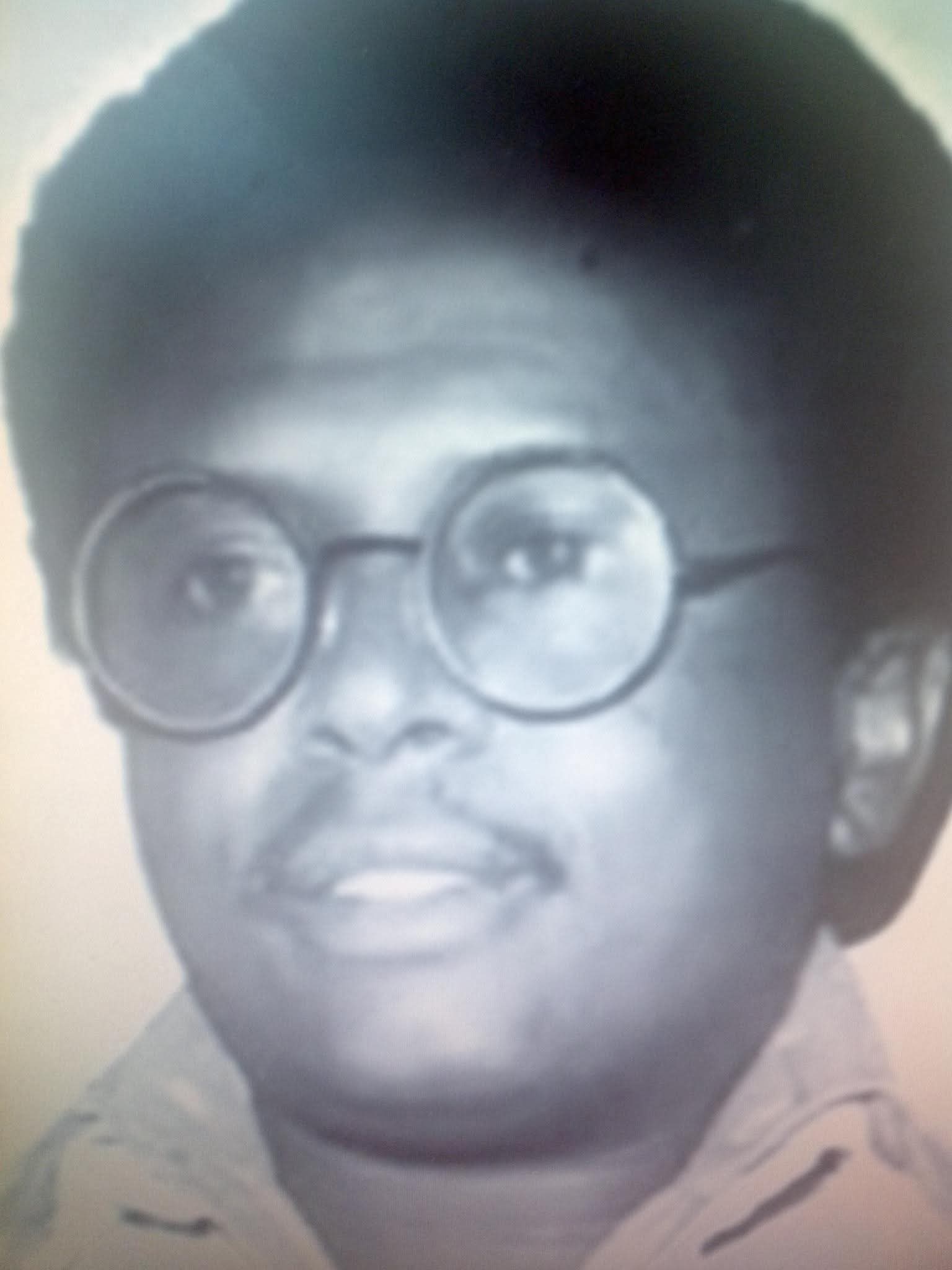
A life shaped by public service, democratic ideals, and the Awolowo political legacy
Oluwole Awolowo occupies a distinct place in Nigerian political history, not only as a legislator during the Second Republic but also as a direct heir to the ideological and moral tradition of Chief Obafemi Awolowo, one of Nigeria’s foremost nationalists and statesmen. Though he lived largely outside the glare that followed his father, Oluwole Awolowo pursued public service with quiet commitment, particularly within Lagos State politics between 1975 and 1983.

His life reflects the challenges and expectations placed on the children of Nigeria’s founding figures, especially during a period marked by fragile democratic institutions, military interventions, and intense political contestation.
Early Life and Family Background
Oluwole Awolowo was born on 3 December 1942 in Ibadan, in present-day Oyo State, Nigeria. He was the third child and second son of Chief Obafemi Awolowo (1909–1987) and Chief (Mrs) Hannah Idowu Dideolu Awolowo (1910–2015).
The Awolowo household was deeply rooted in education, discipline, nationalism, and public service. Growing up in such an environment exposed Oluwole early to political organisation, intellectual debate, and the values of integrity and social responsibility that came to define the Awolowo political tradition.
Education
Oluwole Awolowo began his formal education in Nigeria, attending Ibadan Grammar School, one of the country’s most prestigious secondary institutions and a notable training ground for Nigeria’s political and intellectual elite.
He later proceeded to Leighton Park School, Reading, Berkshire, England, a Quaker-founded institution known for its emphasis on ethical leadership and global citizenship. This phase of his education broadened his worldview and placed him within the tradition of overseas-trained Nigerians who later contributed to public administration and governance at home.
For tertiary education, Awolowo attended the Leeds College of Commerce in the United Kingdom, where he studied Business Studies, graduating in the early 1960s. His academic training provided him with practical exposure to administration, finance, and organisational management—skills that later informed his political and legislative work.
Entry into Politics
Oluwole Awolowo formally entered elective politics in 1975, during the local government reforms of the military era, when he was elected as a Councillor representing Apapa in the Lagos City Council.
Apapa, being Nigeria’s busiest port district and a key commercial hub, posed complex governance challenges involving urban planning, infrastructure, trade, and municipal services. Awolowo served on several city council committees, where contemporary accounts suggest he earned a reputation for diligence, competence, and accessibility.
Although his surname naturally attracted public attention, his rise within the council was largely attributed to his performance rather than mere political inheritance.
Lagos State House of Assembly (1979–1983)
With the return to civilian rule in 1979, Nigeria entered its Second Republic, and political parties re-emerged. The Unity Party of Nigeria (UPN)—founded on Chief Obafemi Awolowo’s progressive ideology—became a dominant force in the South-West.
When it became time to select a candidate for the Lagos State House of Assembly to represent Apapa Constituency, Oluwole Awolowo faced minimal opposition within the party. His grassroots work, council experience, and familiarity with Apapa’s administrative needs positioned him as a natural choice.
He won the election by a landslide victory and served as a Member of the Lagos State House of Assembly from 1979 until 1983.
Legislative Role and Political Climate
Awolowo’s tenure coincided with a turbulent period in Nigerian politics marked by economic strain, federal–state tensions, and ideological rivalry between the UPN and the National Party of Nigeria (NPN). Within the Assembly, UPN legislators focused on:
Education and social welfare
Urban development and housing
Public accountability
Progressive taxation and governance reforms
While Oluwole Awolowo was not known for flamboyant rhetoric, he was regarded as a steady party loyalist who supported the UPN’s legislative agenda in Lagos State.
End of Legislative Career
Oluwole Awolowo’s time in the Lagos State House of Assembly came to an abrupt end in August 1983, following the military coup that overthrew Nigeria’s Second Republic and brought Major-General Muhammadu Buhari to power.
Like many civilian politicians of the era, his legislative career was cut short by the return of military rule, marking the second collapse of democratic governance in Nigeria since independence.
There is no verified evidence that he returned to elective political office after 1983.
Later Life and Death
Details of Oluwole Awolowo’s professional and public engagements after the military takeover remain limited in verifiable public records. This relative absence from the public spotlight stands in contrast to the prominence of his family name but underscores his generally private disposition.
Oluwole Awolowo died in 2013, at the age of 70.
Legacy and Historical Significance
Oluwole Awolowo’s legacy is best understood within the broader narrative of Nigeria’s Second Republic and the Awolowo political tradition. He represents:
A second-generation progressive politician
A bridge between local government administration and state-level legislation
An example of public service pursued without flamboyance despite a famous lineage
Though he did not dominate national politics, his career reflects the everyday legislative work that sustained democratic institutions during one of Nigeria’s most ambitious civilian experiments.
References
Unity Party of Nigeria (UPN) archival records
Contemporary Nigerian newspaper reports (1975–1983)




