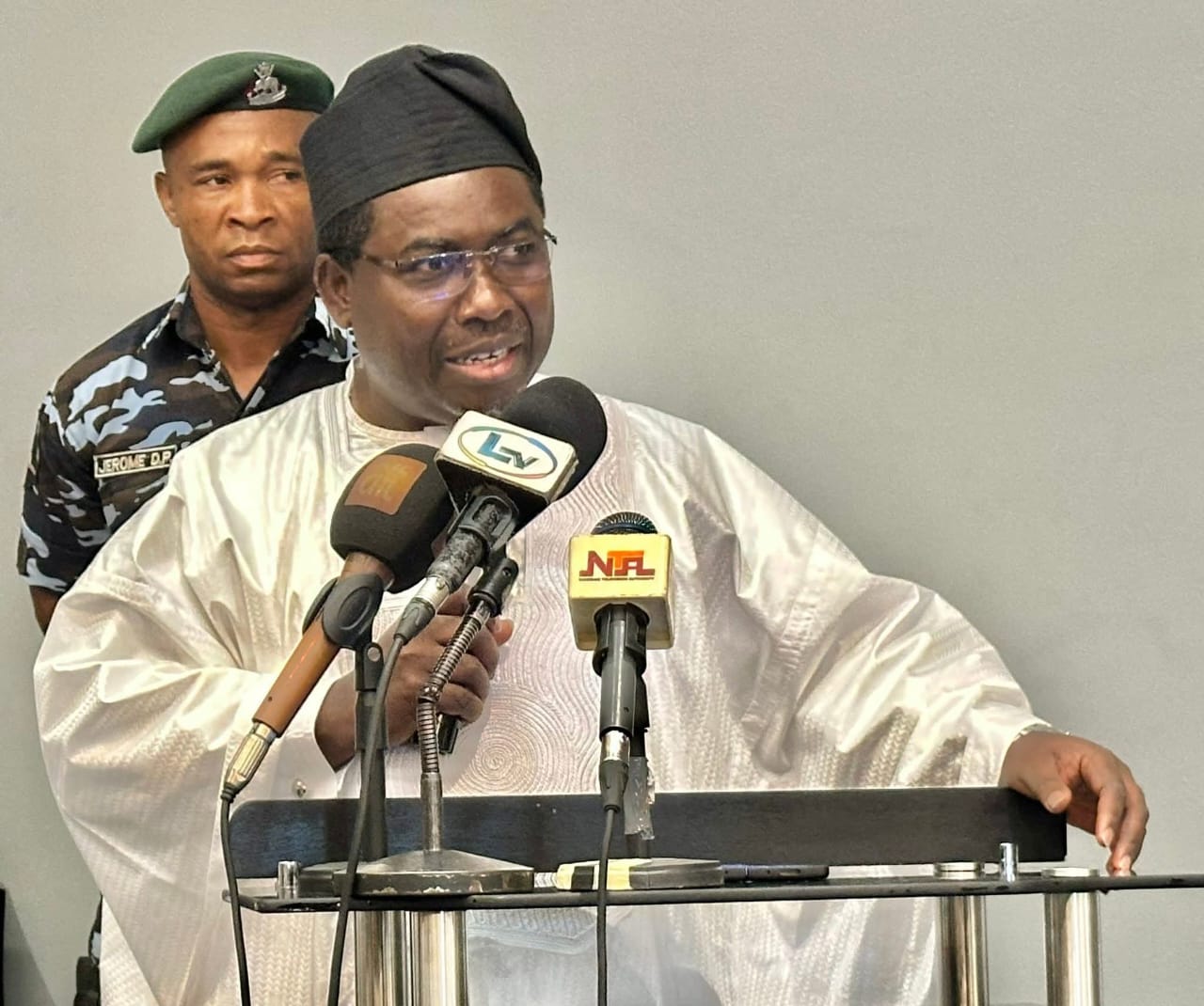
The Independent National Electoral Commission (INEC) has kicked off a crucial phase of preparations for the 2027 General Election with a two-day Induction and Strategic Retreat for its newly appointed leadership, holding from 9th to 10th, 2026 at the Radisson Blu Hotel, Ikeja, Lagos State.
The host Resident Electoral Commissioner (REC) for Lagos State, Prof. Ayobami Salami, in his remarks said the retreat brought together the Honourable Chairman of INEC, Prof. Joash Amupitan, SAN, National Commissioners, Resident Electoral Commissioners (RECs), Directors and top management staff of the Commission.


Welcoming participants, Prof. Salami described Lagos Nigeria’s commercial nerve centre and one of its most politically vibrant states—as a fitting venue for the retreat at “a defining moment in the Commission’s institutional journey.” He noted that the engagement marked a significant milestone for reflection, strategic alignment and institutional consolidation, stressing that public expectations of the electoral process have never been higher.
“As we advance towards the 2027 General Election, early planning, strategic coordination and institutional cohesion cannot be overstated,” Salami said, adding that the retreat would strengthen leadership capacity, deepen institutional understanding and enhance operational preparedness.
In his opening address, INEC Chairman Prof. Joash Amupitan, SAN, underscored the historic responsibility placed on the Commission, describing participants as “custodians of the will of the Nigerian people.”
He emphasised that strategy must be matched with capable people and sound execution.
Reflecting on his assumption of office on October 23, 2025, the Chairman commended INEC staff nationwide for the successful conduct of the Anambra State off-cycle Governorship Election of November 8, 2025, describing it as a strong signal of the Commission’s readiness for future challenges.
While the 2027 General Election remains the ultimate goal, Prof. Amupitan highlighted key milestones along the way, including the FCT Area Council Elections in February 2026 and upcoming off-cycle governorship elections in Ekiti and Osun States. According to him, these elections will serve as testing grounds to fine-tune INEC’s processes, from voter registry management to the deployment of the Bimodal Voter Accreditation System (BVAS).
The Chairman reaffirmed INEC’s commitment to what he described as five non-negotiable pillars: free, fair, credible, transparent and inclusive elections. He placed special emphasis on the growing population of young, tech-savvy voters, noting that winning their trust through transparency and technological integrity is vital to Nigeria’s democratic future.
“The rule of law is not a suggestion; it is our operating system,” he declared, pledging strict adherence to the 2022 Electoral Act and subsequent amendments.
Over the course of the retreat, participants are expected to deliberate on 17 critical thematic areas, including logistics, personnel management, Continuous Voter Registration (CVR), election security, inter-agency collaboration, political party regulation and internal democracy.
Earlier, the Director of Planning and Monitoring, Mrs. Helen Omozua Ajayi, outlined the objectives of the retreat, which include inducting new Commission members into INEC’s institutional framework, familiarising them with the legal and administrative architecture of elections, and providing a platform for experience-sharing among implementers of electoral policies at state level.
As the sessions unfold, Prof. Amupitan charged participants to see the retreat as an opportunity to break silos, foster unity and build a globally respected electoral institution.
“Our goal is not just to conduct elections, but to make INEC the best Election Management Body in Africa—a beacon of integrity, technological efficiency and democratic values,” he said.