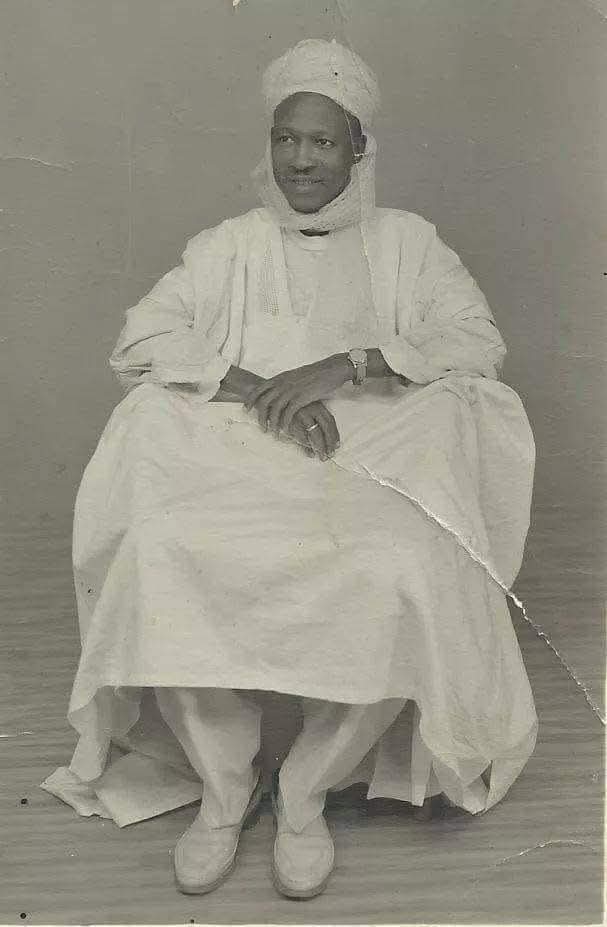
Malam Abubakar Zukogi stands as one of the notable yet often understated figures in the political and administrative history of Northern Nigeria and the First Republic. His life and career reflected the complex transition from colonial administration to nationalist politics and post independence governance, a journey taken by a generation of Nigerians who combined public service with political activism.
Born in 1917 in Bida, within the Nupe Kingdom, Abubakar Zukogi came from a background that valued leadership, discipline and service to society. His early education and exposure to colonial administration prepared him for a career in public service at a time when educated Northerners were increasingly being drawn into government roles. He began his professional life as a Forestry Officer, a position of responsibility within the colonial civil service. Forestry administration was crucial to economic planning and environmental management, and his work placed him among the technically trained officers entrusted with safeguarding public resources.


Zukogi’s transition from civil service into politics was shaped by the growing demand for social justice and political inclusion in Northern Nigeria. In the late 1940s and early 1950s, dissatisfaction with indirect rule and elite domination gave rise to reformist movements. It was within this atmosphere that he became actively involved in the Northern Elements Progressive Union, widely known as NEPU. Founded in 1950, NEPU emerged as the first mass based political party in Northern Nigeria, championing the rights of the common people and advocating democratic reforms.
As Secretary of NEPU, Abubakar Zukogi played an important organisational and ideological role. The party challenged colonial policies and traditional authority structures, calling for accountable governance, social equality and political participation. NEPU leaders often faced intimidation and repression, yet their activism helped to reshape political consciousness in the North and contributed to the constitutional developments that preceded independence. Zukogi’s involvement placed him among the progressive voices that broadened political debate during this formative period.
Following independence, his experience in both administration and politics led to further national responsibilities. He served as Executive Director of Nigeria Airways during a period when the airline was a key symbol of national sovereignty and modern statehood. His role involved overseeing strategic operations at a time when Nigeria was expanding its international presence and building vital institutions.
Zukogi also held cabinet level responsibilities as Commissioner for Trade and Industry, as well as Establishment and Cabinet Matters in the Northwest. In these roles, he contributed to policy formulation, industrial development and administrative coordination. His appointments reflected confidence in his capacity to manage complex governmental structures and to balance political considerations with administrative efficiency.
Remembered as a First Republic politician of repute, Malam Abubakar Zukogi represented a blend of principled activism and practical governance. His career illustrates how early Nigerian leaders navigated the demands of nationalism, public administration and regional politics. Although his name may not feature prominently in mainstream historical narratives, available historical accounts and political studies acknowledge his contributions to democratic struggle institutional development and public service.
Malam Abubakar Zukogi’s legacy lies in his commitment to reform, his service within key national institutions and his role in the political awakening of Northern Nigeria. His life offers valuable insight into the experiences of those who laboured quietly yet decisively to shape Nigeria’s early political and administrative foundations.