

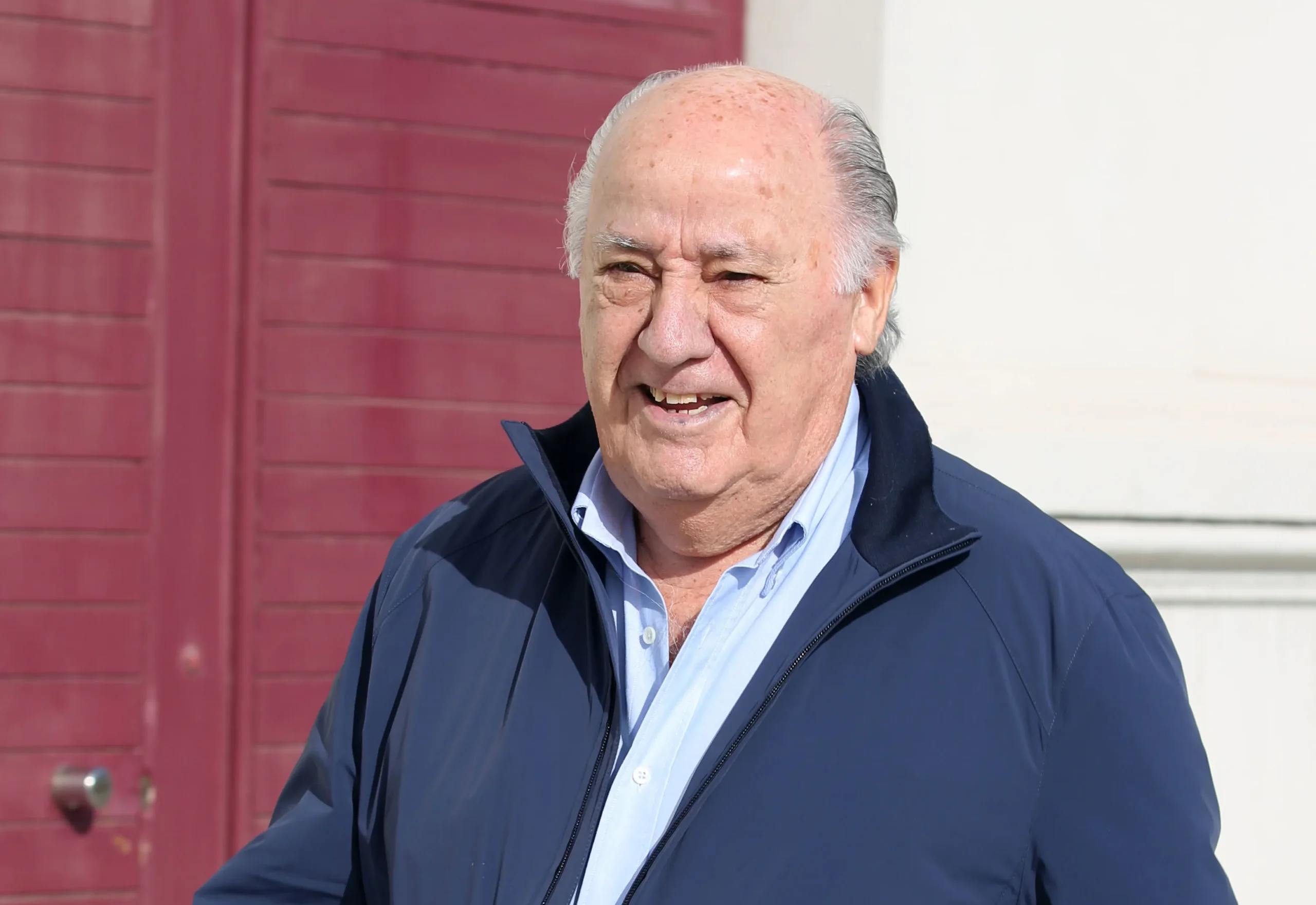
Spanish billionaire Amancio Ortega has quietly built the largest real estate fortune globally, with a property portfolio estimated at $25 billion.
This spans more than 200 assets across 13 countries, reinforcing his position as the world’s richest real estate investor, according to Forbes estimates.
The 90-year-old founder of Zara and its parent company Inditex has steadily expanded his holdings through his investment firm Pontegadea, deploying billions into premium office buildings, hotels, logistics assets and infrastructure in key global cities.


In 2025 alone, Ortega invested over $3 billion across 10 cities in eight countries, including a record-breaking $850 million acquisition of the historic Canada Post building in Vancouver, now a major tech hub leased to Amazon.
The purchase marked his 13th property deal within the year and set a new benchmark for office transactions in Canada.
Data compiled from corporate filings and real estate databases show Ortega has invested approximately $24 billion in property since taking Inditex public in 2001, acquiring 216 assets while selling fewer than a dozen.
His portfolio now surpasses those of leading global property developers, including Australia’s Harry Triguboff and U.S.-based Donald Bren.
Ortega’s investment strategy is distinct for its conservative, long-term approach. Industry sources indicate that Pontegadea typically acquires “trophy assets” in prime urban locations through all-cash transactions, avoiding debt and focusing on stable, long-term rental income rather than speculative gains. The firm’s 2024 accounts show liabilities of just $390 million, roughly 2% of total assets, and an unusually low leverage level in commercial real estate.
Key assets in the portfolio include landmark properties such as the Torre Picasso skyscraper in Madrid, Devonshire House in London, the Troy Block office complex in Seattle, and Toronto’s Royal Bank Plaza.
Many of these assets are leased to blue-chip tenants including Apple, Meta, Nike and Spotify, ensuring consistent cash flow and reduced vacancy risk.
Reports note that Ortega’s preference for high-quality, irreplaceable assets in major cities positions his portfolio defensively amid ongoing volatility in global commercial real estate markets, particularly within the office segment.
Beyond investment strategy, tax efficiency has played a significant role in the expansion of Ortega’s real estate empire. Spain’s wealth and solidarity tax regime, imposing up to 3.5% annually on assets, creates incentives for billionaires to reinvest capital into active business holdings rather than holding idle cash.
By channeling dividends from Inditex into real estate and infrastructure through Pontegadea, Ortega is estimated to have saved roughly $800 million in wealth taxes over the past 25 years.




