Togo is pushing for a United Nations vote to replace the Mercator projection, arguing it distorts Africa’s true size — shrinking a continent that is in reality about 14 times larger than Greenland.
Backed by the African Union, the proposal is part of a broader campaign to correct what critics describe as a long-standing misrepresentation of Africa, one that has shaped global perceptions across education, media and policy.
Lomé takes campaign to United Nations


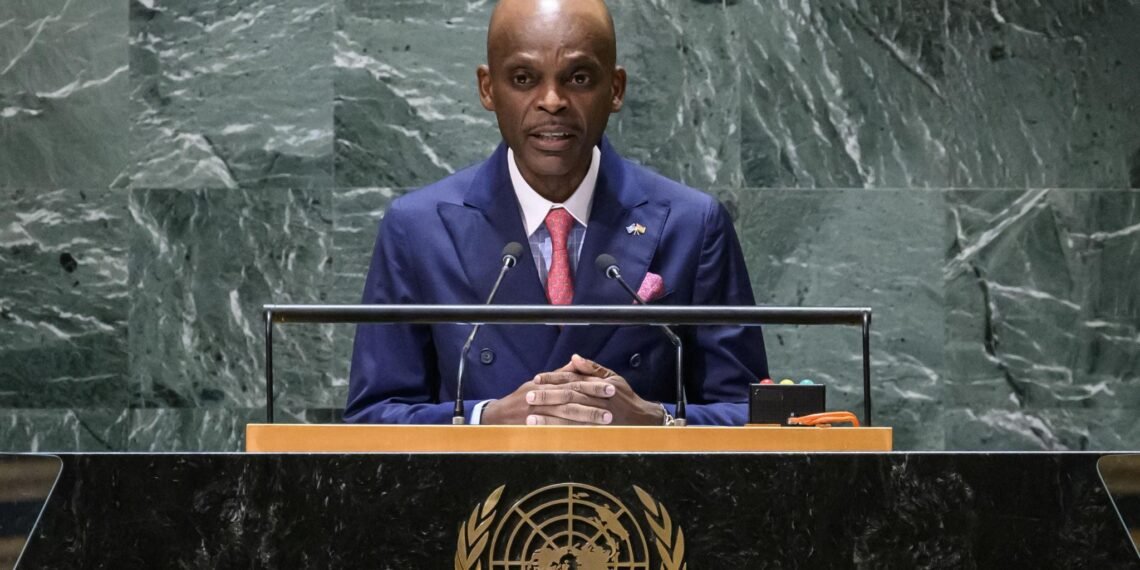
Togo’s Foreign Minister Robert Dussey confirmed that a draft resolution is being prepared ahead of the next session of the United Nations General Assembly in September.
Speaking to Reuters, Dussey said the initiative is aimed at correcting a fundamental inaccuracy in how the world visualises Africa.
‘The size we see of the African continent on the globe is geographically inaccurate,’ he said, calling for a shift towards ‘scientific truth’.
If adopted, the resolution would encourage governments, schools and international organisations to abandon the Mercator projection in favour of more accurate alternatives.
Why the Mercator projection is contested
The Mercator projection, developed by Gerardus Mercator in the 16th century, remains widely used despite longstanding criticism.
It distorts the size of continents by enlarging regions closer to the poles while shrinking those near the equator. As a result, Africa appears far smaller than it actually is — a misconception explored in analysis on how global maps misrepresent Africa’s scale.
Critics argue that these distortions have had real-world consequences, shaping how Africa is perceived in classrooms, policy circles and international media.
AU backs ‘Correct The Map’ campaign
The African Union has tasked Togo with advancing the ‘Correct The Map’ campaign, working alongside advocacy groups Africa No Filter and Speak Up Africa.
The campaign promotes the Equal Earth projection, introduced in 2018 as a more accurate representation of global landmass proportions.
Supporters say the issue goes beyond geography and into global power dynamics — a theme echoed in Africa’s growing push for influence in global decision-making.
Moky Makura, executive director of Africa No Filter, said: ‘Accurate representation is not just about maps — it is about agency, progress, and ensuring the world sees Africa as it truly is.’
Diplomatic test at UN General Assembly
Earlier this year, the African Union adopted a resolution encouraging its 55 member states to move away from the Mercator projection.
Dussey said African countries are broadly aligned behind the initiative, but a global vote would test international support.
‘How countries vote will reveal their true colours,’ he said, signalling that the issue could become a wider diplomatic marker of global attitudes towards equity and representation.
The move follows a wave of Africa-led initiatives at the United Nations, highlighting the continent’s increasingly assertive role in shaping global norms.