

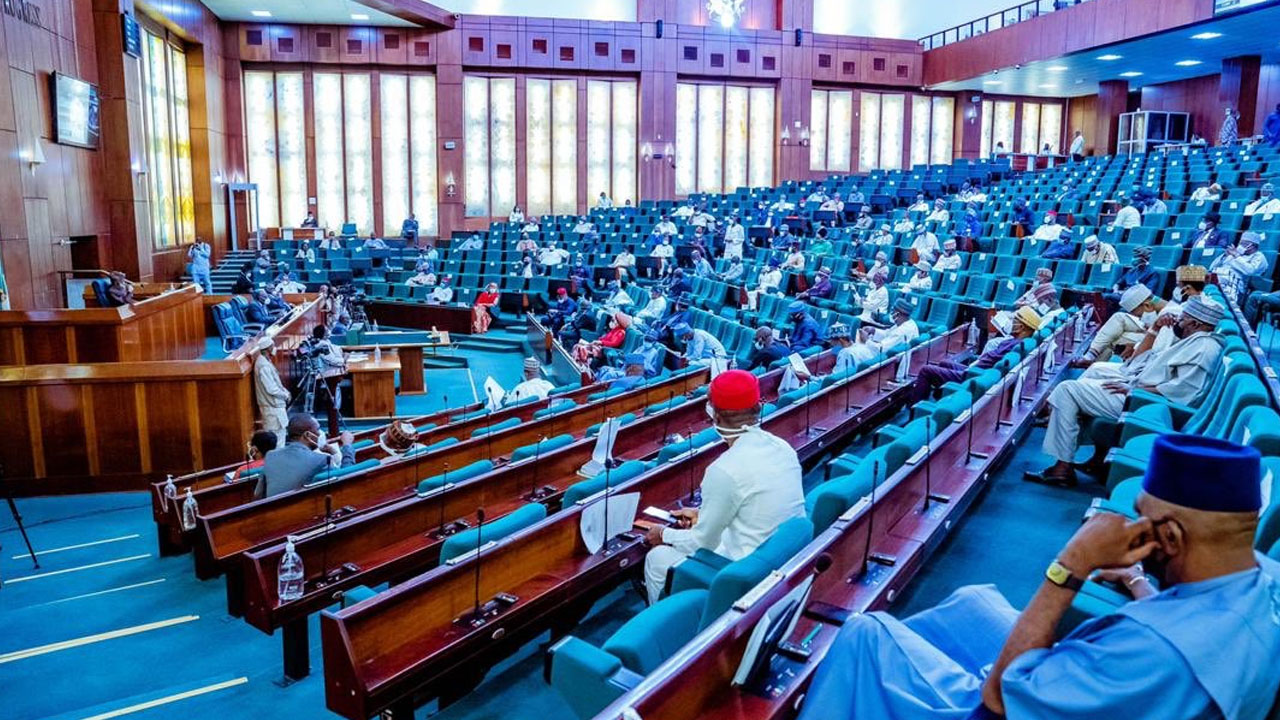
The House of Representatives has called on the 36 State Houses of Assembly to support and pass the Special Seats for Women Bill as part of the ongoing constitutional amendment process aimed at widening political inclusion.
The resolution followed the adoption of a motion of urgent public importance moved by the lawmaker representing Lagos State, Jesse Onuakalusi, at Thursday’s plenary, presided over by the Speaker, Tajudeen Abbas.
Titled “Urgent need to pass the Special Seats for Women Bill as a critical step towards inclusive governance, democratic legitimacy and national development,” the motion stressed the need for deliberate legislative measures to address gender imbalance in Nigeria’s political system.


Onuakalusi described the proposed legislation as a pivotal moment for the country’s democracy, noting that its passage would expand representation and strengthen governance outcomes.
Providing an overview, the lawmaker noted that women account for nearly half of Nigeria’s population and play critical roles across economic, social and political spheres, yet remain largely excluded from decision-making positions.
He, however, lamented that despite their numerical strength and contributions, “women remain grossly underrepresented in elective and appointive positions across all tiers of government, with representation persistently below 5% in elective offices – one of the lowest globally.”
He said, “The House observes that this persistent underrepresentation constitutes a fundamental democratic deficit, depriving governance structures of diversity, inclusivity, and balanced policy formulation.
“We are aware that the proposed Special Seats for Women Bill seeks to introduce constitutionally backed affirmative action to boost representation through the creation of additional seats for women in the National Assembly and State Houses of Assembly, as a temporary corrective mechanism.”
The lawmaker pointed to examples from other African countries where affirmative action measures have significantly improved women’s participation in politics, including Kenya, South Africa, Burundi, South Sudan and Uganda.
Onuakalusi further argued that failure to act decisively would have broader consequences for governance and development.
“Failure to take deliberate legislative action to address gender imbalance in political representation undermines Nigeria’s democratic credibility, weakens institutional legitimacy, and limits socio-economic development outcomes,” he said, adding that increasing women’s participation improves outcomes in healthcare, education, social welfare and economic growth.
The motion received overwhelming support from lawmakers when put to a voice vote.
Following its adoption, the House urged state legislatures to “demonstrate equal commitment by preparing to expedite concurrence upon passage by the National Assembly in line with constitutional requirements.”
It also mandated its Committees on Constitutional Review, Women Affairs and Electoral Matters to harmonise and fast-track work on the bill within a defined legislative timeline.
The House warned that failure to pass the legislation would continue to entrench exclusion and weaken Nigeria’s obligations under international and regional frameworks.
The push for special seats for women in Nigeria has gathered momentum in recent years, driven by advocacy groups, civil society organisations and development partners concerned about the country’s persistently low female representation in politics.
Despite multiple democratic transitions since 1999, Nigeria has remained among the countries with the lowest proportion of women in elective office globally. Efforts to improve inclusion through party-level quotas and policy commitments have yielded limited results, often undermined by high nomination costs, political violence and entrenched cultural barriers.
Previous attempts to introduce gender-focused constitutional amendments—particularly during earlier National Assembly reviews—failed to secure the required support from state assemblies, effectively stalling reforms.
The current proposal for special seats is framed as a temporary affirmative action measure designed to accelerate inclusion while broader structural barriers are addressed. Proponents argue that without such intervention, progress will remain slow and uneven.
The campaign has also drawn strength from Nigeria’s commitments under international frameworks such as the Convention on the Elimination of All Forms of Discrimination Against Women and regional instruments like the African Union’s gender equality protocols, which encourage member states to take concrete steps to boost women’s participation in governance.
Advocates maintain that beyond equity, greater inclusion of women in political leadership has been linked to more responsive policymaking, particularly in areas such as healthcare, education and social protection.




