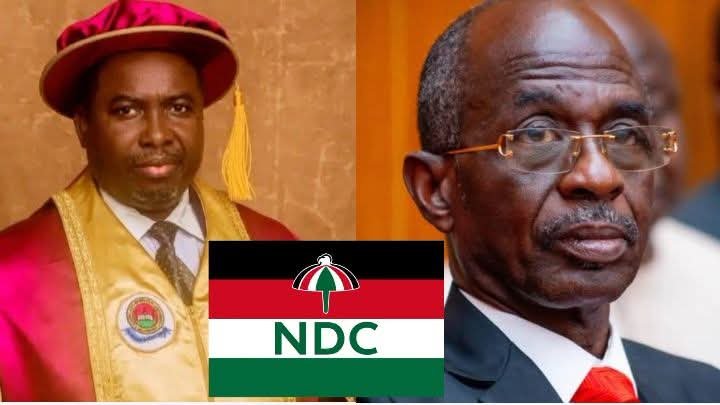
The emergence of the National Democratic Congress (NDC), reportedly under Seriake Dickson, has allegedly sparked a direct confrontation with the All Democratic Alliance (ADA), which is now preparing legal action against the Independent National Electoral Commission (INEC). What should have been a routine administrative procedure has escalated into a critical test of the integrity of Nigeria’s electoral system.
Dr. Umar Ardo has voiced a blunt claim: a party that allegedly did not apply, was not shortlisted, and did not undergo verification has somehow obtained a registration certificate. If even partially true, this represents more than a procedural lapse—it suggests a structural breach.

According to the timeline ADA presents, out of 171 associations, INEC shortlisted 14, with only eight advancing to verification. ADA maintains that they followed all rules, attended the required stages, yet were excluded.
Meanwhile, the NDC, they assert, was absent from this process entirely.
INEC’s defense—that the registration was issued under a court order—is now under intense scrutiny. Court orders require proper filings, representation, and justification. If any of these elements are missing or unclear, both the process and its outcome risk being questioned.
This issue is larger than a dispute between two parties. It goes to the heart of process integrity. If political registration can be altered outside transparent procedures, the gatekeeping role of INEC—and public trust in it—comes under threat.
ADA’s move to obtain Certified True Copies from the Federal High Court in Lokoja indicates that this matter will not be quietly resolved. It is heading toward a legal and public accountability test.
There are only two possible outcomes: either the process is validated with clear, verifiable evidence, or it collapses under scrutiny. There is no compromise that preserves credibility in between.
This is not merely about one party’s registration. It is a direct challenge to the rules governing political participation. If those rules are seen as flexible for some and rigid for others, the implications extend far beyond this case—striking at the very foundation of electoral justice in Nigeria.