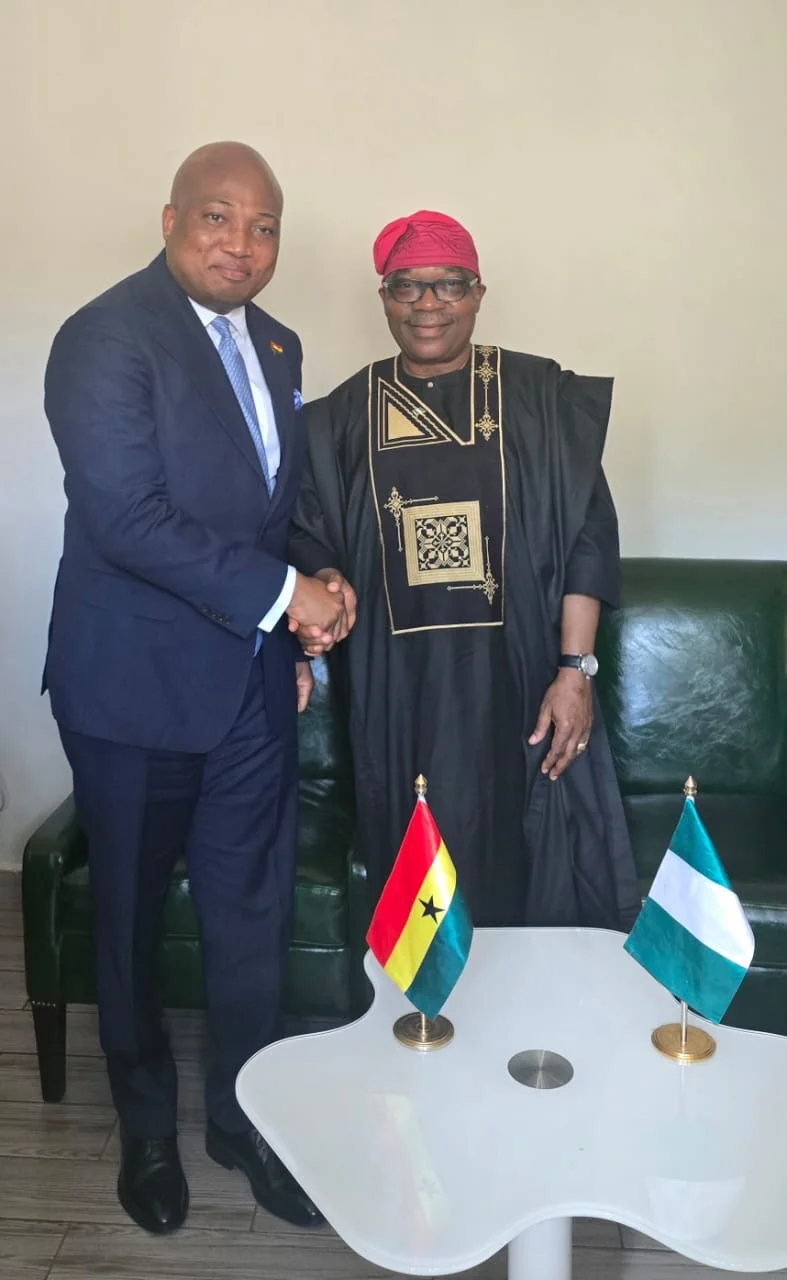
The Federal Government of Nigeria and the Government of Ghana have agreed to deepen their partnership against all forms of xenophobia, Afrophobia, intolerance, and violence against fellow Africans.
The two countries also emphasized that acts of violence against fellow Africans are contrary to the shared values of Pan-Africanism and the collective progress of the continent.
This is contained in a statement issued in Abuja by Kimiebi Ebienfa, spokesman, Ministry of Foreign Affairs, against the backdrop of a bilateral meeting between Nigeria’s minister of state for foreign affairs, Amb. Sola Enikanolaiye, and Ghana’s minister of foreign affairs, Samuel Ablakwa.


The ministers’ meeting was on the sidelines of the ongoing ECOWAS Mid-Year Summit holding from July 12 to July 19 in Freetown, Sierra Leone.
They underscored the need for urgent, coordinated regional and continental responses to tackle the root causes of afrophobic protests on the continent; protect the lives and dignity of African migrants; and promote harmonious coexistence.
According to them, criminals among the migrant population must be treated in accordance with the rule of law and not be subjected to violence and mob actions that often target even regular migrants and other law-abiding African citizens.
The ministers agreed to deepen bilateral ties to ensure the issue of Afrophobia is placed on the agenda of the next African Union Summit.
They committed to collaborating with other like-minded Member States to advocate for stronger mechanisms within the African Union framework, including enhanced monitoring, early warning systems, and preventive diplomacy to avert future occurrences.
Amb. Enikanolaiye appreciated the prompt response by Ablakwa to the request for an audience and commended the excellent bilateral relations between the brotherly countries.
He underscored the need for increased collaboration and strategic consultation between both countries and buttressed the need for preventive diplomacy, which will enable both countries to nip irritants in the bud before they escalate.
The minister further conveyed the greetings of President Bola Tinubu to the president of Ghana, John Mahama, and commended Ghana for championing Pan-Africanism.
He lauded the country’s calls for reparations for Africa and people of African descent over the historical injustice they suffered during the trans-Atlantic slave trade and the colonial period.
Enikanolaiye congratulated President Mahama on the landmark UN resolution on the Transatlantic Slave Trade and the recent hosting of the Next Steps High-Level Conference on the same matter.
According to him, Nigeria aligns with and fully supports the decisions of the Conference in the quest for reparative justice for Africans.
Responding, the Ghanaian foreign minister appreciated and congratulated Enikanolaiye on his recent appointment and called for continuous collaboration between Nigeria and Ghana during his tenure.
He aligned with the call for action-oriented preventive diplomacy, which could be achieved through brotherly communications devoid of bureaucracy.
The Ghanaian minister also appreciated the support of Nigeria for the landmark UN resolution on the Transatlantic Slave Trade and in the fight for the implementation of reparative justice.
He informed his counterpart of the official apologies received from the Pope, the Church of England, and the Church of Scotland, including encouraging efforts on the restitution of artifacts from a number of European countries, the repeal of Code Noir, and the formation of institutions in support of reparative justice in France.
Abiakwa extended sincere regards to Nigeria’s Minister of Foreign Affairs, Amb. Bianca Odumegwu-Ojukwu, over the positive impact of the Nigerian delegation to the High-Level Conference, taking into cognisance the statement and the commitment to the fight for reparative justice expressed by Nigeria at the forum.
The two ministers discussed issues that surround the recent Afrophobic protests and incidents targeting African nationals in South Africa to express deep concern over the resurgence of Afrophobic sentiments and violence.
Such acts, according to them, undermined the ideals of African unity, solidarity, free movement of persons, and regional integration, as enshrined in the Constitutive Act of the African Union and the objectives of the African Continental Free Trade Area (AfCFTA).
The meeting reaffirmed the strong fraternal ties between Nigeria and Ghana with calls on all Member States of the African Union to recommit themselves to the principles of Pan-Africanism, mutual respect, and the free movement of persons.
Both ministers called for sustained public education and dialogue to combat prejudice and foster greater understanding among African communities.
The ministers affirmed commitment by Nigeria and Ghana to continue collaborating within ECOWAS, the African Union, and other multilateral platforms aimed at building a more inclusive, peaceful, and prosperous Africa.