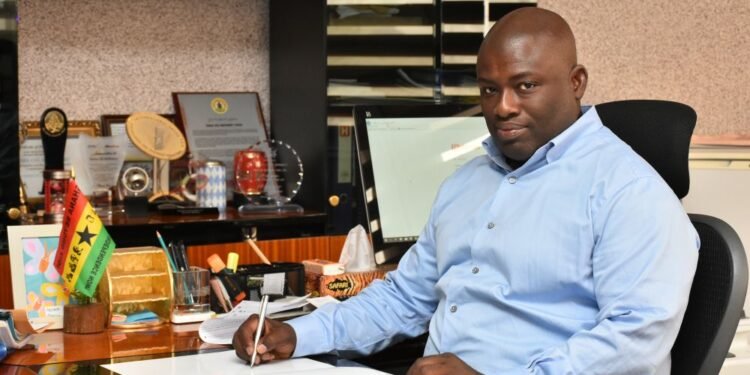
Former Goldman Sachs banker Asante Berko has gone on trial in New York over allegations that he helped channel more than $1m in bribes to Ghanaian officials to secure approvals for a multimillion-dollar power plant project.
The federal trial, which opened in Brooklyn on July 28, 2026, brings a decade-old Ghanaian energy transaction under fresh scrutiny. Berko has pleaded not guilty, and his lawyers say prosecutors cannot directly connect him to any unlawful payment.
Justice Department prosecutor Katherine Raut told jurors that Berko and associates outside Goldman allegedly paid senior Ghanaian officials to approve the development and financing of the plant, Bloomberg reported from the courtroom.

Raut said the alleged payments exceeded $1m and were intended to influence officials involved in executive approval, electricity regulation and parliamentary ratification. Berko was then part of the Goldman team managing financing for the proposed project.
The US Justice Department indictment alleges that more than $700,000 was transferred in bribes to Ghanaian officials and others connected to the approval process. It identifies people associated with Parliament, the electricity regulator and Ghana Grid Company, known as GRIDCo.
The indictment says payments also included $5,000 given to each of five Ghanaian officials during an all-expenses-paid trip to Turkey to inspect equipment proposed for the plant.
A central feature of the prosecution’s case is a series of emails exchanged while the project was moving through Ghana’s approval process.
The indictment says an alleged co-conspirator sent account details for an expected $250,000 payment in August 2015 and wrote that a Ghanaian official was waiting for the ‘holy rain’ and wanted it delivered quickly.
The message was forwarded to Berko, who allegedly instructed the sender to reply using personal email and added: ‘Gmail only!’
Prosecutors argue that the correspondence, financial records and other messages show Berko knew payments were being prepared for officials and sought to keep the exchanges away from Goldman’s compliance systems.
Goldman Sachs has not been charged with wrongdoing and cooperated with the investigation. Bloomberg reported that the bank withdrew from the transaction after compliance concerns and other ‘red flags’ emerged. Goldman held a 16 percent stake in the Turkish energy company involved, according to the courtroom report.
Berko’s lawyer, Robert Boone, told jurors that the government’s documents would not prove his client arranged or paid bribes.
Boone questioned whether any witness would testify to seeing Berko deliver money or observing a Ghanaian official receive a bribe. His defence argues that the government’s interpretation of emails and financial transfers does not establish Berko’s guilt.
Prosecutors must prove each charge beyond reasonable doubt. The indictment is a statement of allegations, and Berko remains presumed innocent unless a jury finds him guilty.
He faces one count of conspiring to violate the US Foreign Corrupt Practices Act, one substantive FCPA count and one count of conspiring to commit money laundering.
The money-laundering conspiracy count carries a maximum sentence of 20 years if he is convicted, according to the US Justice Department.
Separate SEC case explained
The US Securities and Exchange Commission brought a separate civil case against Berko in 2020, as Africa Briefing reported at the time.
The SEC complaint alleged that at least $2.5m was transferred to a Ghanaian intermediary to pay bribes connected to the project. It also alleged more than $200,000 in payments to other officials and more than $60,000 paid personally by Berko.
Those figures are not directly comparable with the totals cited in the criminal case and may overlap. The indictment counts alleged transfers to officials, while the SEC complaint described a wider flow of funds through an intermediary that regulators alleged was largely intended for bribes.
The SEC’s final judgment ordered Berko to pay $275,000 in disgorgement and $54,163.92 in prejudgment interest.
Berko consented to that judgment without admitting or denying the SEC’s allegations. The civil resolution was not a criminal conviction and does not determine the outcome of the trial now before the Brooklyn jury.