The Nigeria Customs Service (NCS) has urged the National Assembly to review Nigeria’s import waiver and concession regime, questioning whether the incentives still justify their fiscal cost and support the economic objectives for which they were established.
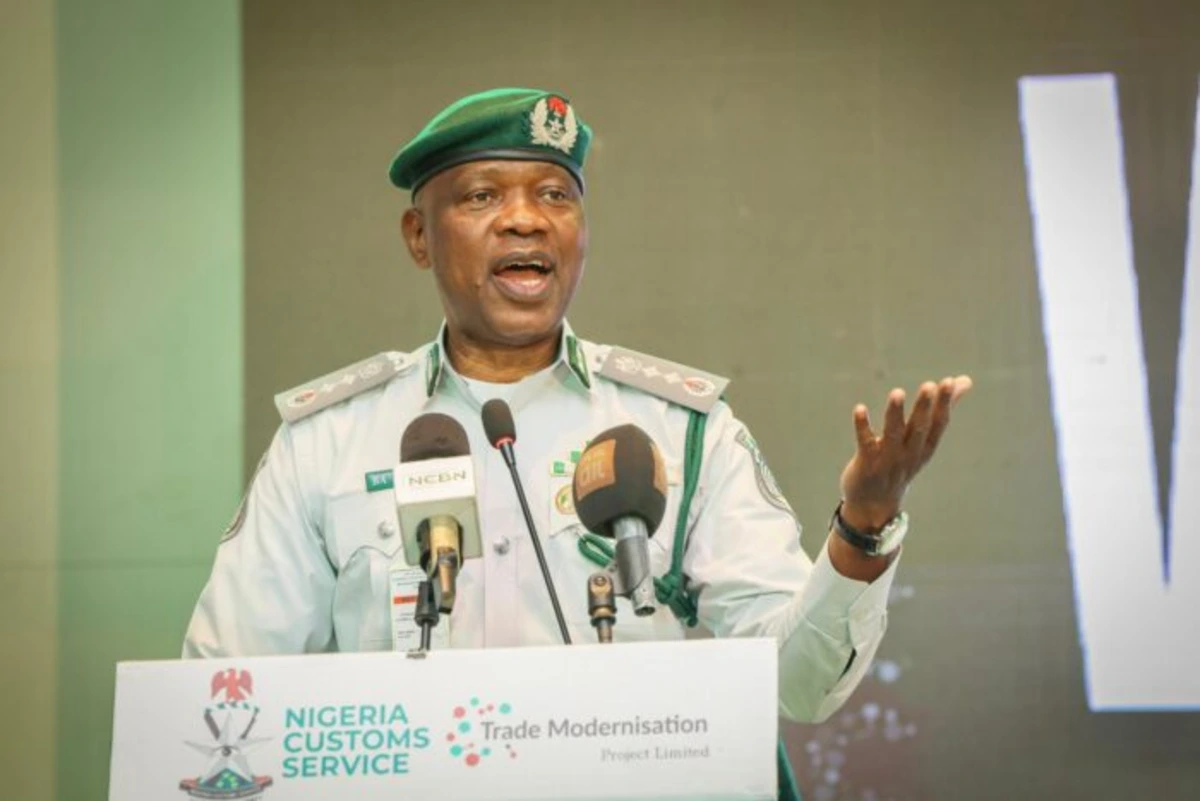
The Comptroller-General of Customs, Bashir Adeniyi, made the call on Wednesday in Abuja during a two-day retreat organised for the Senate Committee on Customs.
He also urged lawmakers to undertake a post-implementation review of the Nigeria Customs Service Act 2023, saying three years of implementation had provided enough evidence to determine which provisions require refinement as Nigeria’s trade environment evolves.


Adeniyi said legislative oversight should go beyond individual cargo clearances and focus on the systems and policies driving Customs operations, including automated risk management, valuation databases, cargo release timelines and tax exemptions.
- “Third, engage us on the exemption regime. A substantial volume of trade enters this country under waivers and concessions granted for policy reasons. Whether those concessions still serve the purposes for which they were created is a legislative question rather than a Customs one, and we would welcome your attention to it.”
- “The Act has now been in operation for three years. A statute of that age is no longer a proposition; it is a record.”
- “Hold us to outcomes rather than to activity. Ask what the release time was, not how many meetings were held about it,” he added.
The Customs chief said lawmakers should use the retreat to assess whether the law remains adequate for the demands of modern trade and identify areas requiring amendment.
The call for a review comes weeks after Adeniyi disclosed that Import Duty Exemption Certificate (IDEC) approvals granted by the Federal Government on selected imported goods and equipment reached about N34 trillion in 2025.
He said about 60% of the approvals were granted for military hardware procurement and attracted duty exemptions because of Nigeria’s prevailing security challenges.
Adeniyi also cautioned against judging Customs solely by revenue growth, noting that exchange-rate adjustments could inflate nominal collections without necessarily reflecting improvements in the agency’s operations.
According to him, the Service generated N7.277 trillion in 2025, exceeding its annual target by 10.24%, while collections between January and May 2026 reached N3.35 trillion.
He said the focus should instead be on whether revenue growth is supported by stronger systems, improved trade facilitation and greater efficiency.
Customs’ ongoing modernisation includes the deployment of the indigenous B’Odogwu customs platform and the Trade Modernisation Project, which are aimed at replacing manual processes with electronic records, automated risk rules and data-driven targeting.