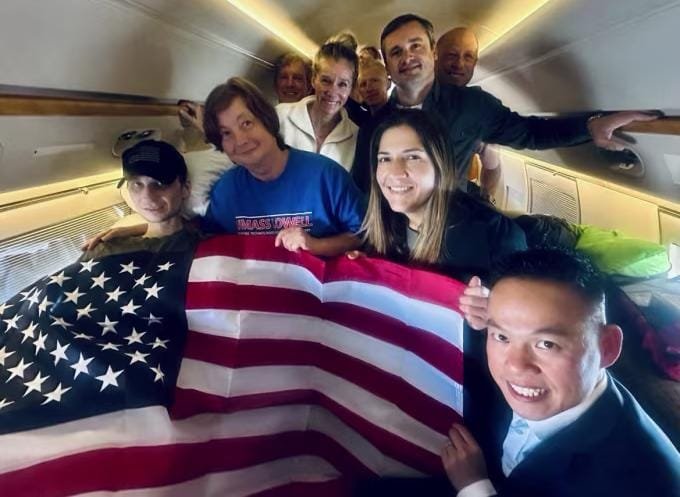
Russia has released former United States Marine Robert Gilman after more than four years in detention, following growing concerns about his deteriorating health.
The US State Department confirmed on Tuesday that Gilman was on his way home to reunite with his family, describing his release as long overdue.
President Donald Trump said Russian President Vladimir Putin approved Gilman’s release on humanitarian grounds following discussions between the two leaders. Trump said no prisoner exchange was involved and Russia did not request the release of anyone in return.


Gilman, 32, had been detained in Russia since January 2022. Russian authorities initially accused him of assaulting a police officer while intoxicated and he was sentenced to four-and-a-half years in prison. Additional allegations involving confrontations with prison officials later extended his sentence, while his family disputed the Russian authorities’ account of his conduct.
His health had reportedly deteriorated sharply in recent weeks. Advocates working with his family said he had entered a prolonged dissociative or catatonic-like state and required urgent medical treatment. US officials had also expressed serious concern that he could die in Russian custody.
Following his release, Gilman was transported from Russia aboard a specialised medical aircraft accompanied by his mother. Officials said he would undergo medical and psychological evaluation after returning to the United States, with further treatment expected at a military medical facility in Texas.
Trump said he had spoken with Gilman and disclosed that the former Marine had one immediate request on his return to the United States — a cheeseburger.
Secretary of State Marco Rubio welcomed the release but said Washington would continue pressing for the return of other Americans still detained in Russia, including Stephen Hubbard, whom the United States considers wrongfully detained.
Gilman’s sister, Lexie Hudson, thanked Trump and others involved in securing the release, saying her family was now focused on ensuring he received the treatment and support required for his recovery.
The release comes amid continuing tensions between Washington and Moscow, but represents a rare humanitarian agreement between the two governments without a corresponding prisoner swap.