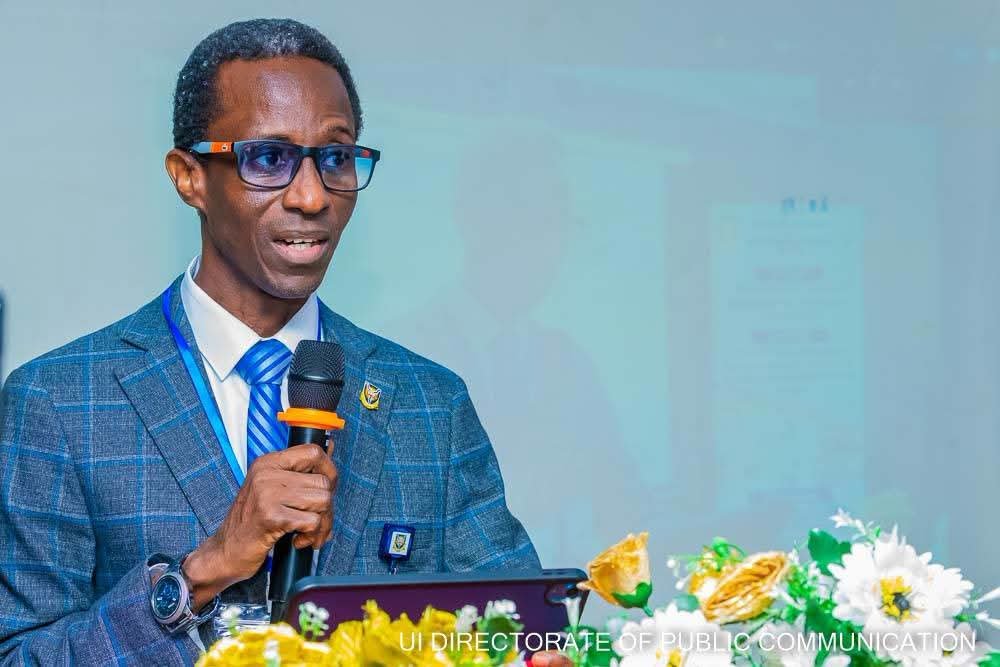
The deputy vice-chancellor for administration of the University of Ibadan, Professor Peter O. Olapegba, has called on African countries to become active architects of a new global order, rather than remain passive rule-takers.
He made this call on behalf of the vice-chancellor, Professor Kayode O. Adebowale, at the opening ceremony of the 17th Annual Ibadan Sustainable Development Summit (ISDS) organized by the University of Ibadan Centre for Sustainable Development (CESDEV).


The three-day summit, which was organized in collaboration with the Sustainable Development Solutions Network-Nigeria (SDSN-Nigeria), was themed “Harnessing the New Global Order: Africa’s Path to Inclusive and Multidimensional Development Beyond 2030.”
Professor Olapegba noted that the global architecture that shaped the post-World War II era was undergoing profound transformation, creating both unprecedented challenges and opportunities for Africa.
He stressed that the continent must determine its place in the emerging multipolar world, restating that Africa should play an active role in shaping the emerging global order and not continue to be a passive receiver of global decisions.
The deputy vice-chancellor explained that the theme of the summit was timely as Africa seeks to reposition itself in a rapidly changing global environment and advance its development agenda beyond the 2030 deadline of the Sustainable Development Goals.
He said Africa should build a future that is genuinely inclusive and multidimensional, clarifying that multidimensional development must move beyond the narrow measurement of Gross Domestic Product (GDP) to embracing human dignity, social inclusion, environmental sustainability, and peace.
Professor Olapegba noted that Africa possesses significant assets, including a youthful and growing population, entrepreneurial capacity, and an expanding technology ecosystem, assets that could drive economic transformation in the continent if properly harnessed through investment in education, skills development, and digital inclusion.
He identified debt distress, illicit financial flows, and the effects of climate change as some of the major challenges undermining the development of Africa.
He, therefore, called for bold, evidence-based and collaborative approaches to addressing these challenges, adding that African institutions should take greater responsibility for the development of solutions for the problems of the continent.
The DVC identified economic transformation, governance and institutional reform; and education, research and innovation as three critical areas that require more attention.
He also advocated greater support for informal enterprises and women and youth-led small and medium-sized enterprises, which he described as important components of African economies.
Professor Olapegba emphasized the need for strong, accountable and inclusive institutions, noting that Africa must strengthen its domestic institutions while advocating greater representation in international institutions.
He further stressed the importance of investing in science, technology and innovation and ensuring that educational curricula respond to the demands of a rapidly changing world.
The Deputy Vice-Chancellor reaffirmed the commitment of the University of Ibadan to using research and innovation to drive sustainable development, noting that the university would continue to serve as a catalyst for positive change in Nigeria and Africa.
The acting head of the Department of Sustainability Studies and Director of CESDEV, Dr. Olushola S. Fadairo, disclosed that the summit, which first held in November, 2010 was established to bring stakeholders together to interrogate developmental challenges facing Nigeria and other developing countries while creating new linkages, networking opportunities, and partnerships.
According to him, the summit which has now grown into an international platform, attracting participants from the Americas, Europe, Asia, and different parts of Africa has about 145 research papers from more than 51 institutions across the world to be presented at the 2026 summit.
He explained that the papers had been grouped into nine sub-themes covering sustainable development; development financing, inclusivity, climate action; digital transformation, indigenous knowledge; tourism and hospitality, and rural innovation and development.
Dr Fadairo stated that the 2026 edition marked CESDEV’s journey into the post-Agenda 2030 era, stressing that Africa must become an active agent in responding to global changes through research and home-grown innovations.
He disclosed that 17th Annual Ibadan Sustainable Development Summit is expected to provide a platform for academics, researchers, policymakers, development practitioners and students to exchange ideas, strengthen partnerships, and develop practical solutions towards inclusive and multidimensional development in Africa beyond 2030.
The summit featured keynote addresses by Professor Tandeka Charmaine Kiwane, an international relations expert; Professor Emmanuel Remi Aiyede of Department of Political Science, University of Ibadan; and Professor Phoebe Koundouri of Athens University of Economics and Business and a visiting professor at the University of Cambridge.
Goodwill messages were also delivered by the Deputy Vice-Chancellor Academic, Professor Juwon T. Arotiba, FWACS, FICD,; Dean of the Faculty of Multidisciplinary Studies, Professor P. C. Obutte; former Directors of CESDEV namely: Professor Labode Popoola, Professor Olanrewaju Olaniyan and Professor Saka Jimoh.