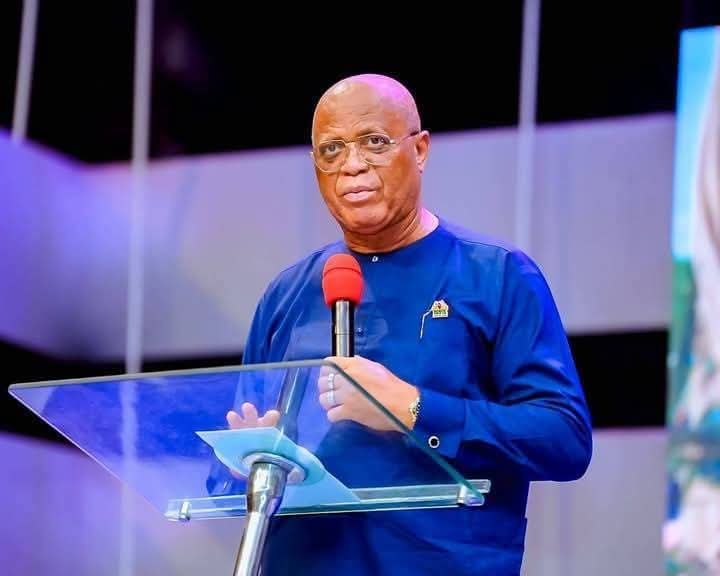
Akwa Ibom State Governor Umo Eno has revealed that his akara and bread business once generated at least ₦10 million every month, long before he ventured into politics, offering a striking account of his journey from small business to public office.
Eno disclosed this during the state’s monthly covenant prayer service on Tuesday, with his comments beginning to attract attention online on Wednesday.


The governor explained that his entrepreneurial journey started with the sale of akara and bread, which he branded as “Akara Burger.” He later expanded the venture into a coffee shop to serve customers who patronised the business, particularly workers travelling to ExxonMobil in the mornings.
According to Eno, customers would buy the akara and bread combination before heading to work, while others would stop at the coffee shop for refreshments. He said the business gradually became profitable enough to generate millions of naira every month.
The governor recalled that the shop where he operated the business still exists, describing the venture as part of his early experience in building a business from a relatively modest beginning.
He said the experience exposed him to important lessons about entrepreneurship, customer patronage and the process of growing a business, adding that his akara venture eventually became a significant source of income before his entry into politics.
Eno’s revelation comes months after First Lady Oluremi Tinubu generated controversy when she urged Nigerians to consider small businesses such as akara and kuli-kuli as possible ways of improving their livelihoods.Politics
Speaking after a Renewed Hope Initiative meeting with wives of state governors in Abuja in June, the First Lady said businesses such as akara selling and roasted corn could be started with relatively small capital. She explained that some beneficiaries of the initiative received grants rather than loans.
Her remarks triggered criticism on social media, with some Nigerians questioning whether such businesses could realistically provide sufficient income amid the country’s economic difficulties. She subsequently clarified that the empowerment programme extended beyond akara sellers to include tomato sellers, roasted plantain sellers, pepper traders and vegetable vendors.
The First Lady also announced a ₦100 million intervention for 2,000 petty traders in Jigawa State, with each beneficiary receiving ₦50,000 to recapitalise their businesses.Geographic Reference
President Bola Tinubu later joined the conversation at a Presidential Press Corps Dinner, where he jokingly referred to his wife as “Iya Alakara.”
Against that backdrop, Eno’s account has reignited discussion about the earning potential of small-scale businesses and the role such ventures can play in creating sustainable livelihoods. His personal experience also provides a notable perspective on the journey from entrepreneurship to political leadership.