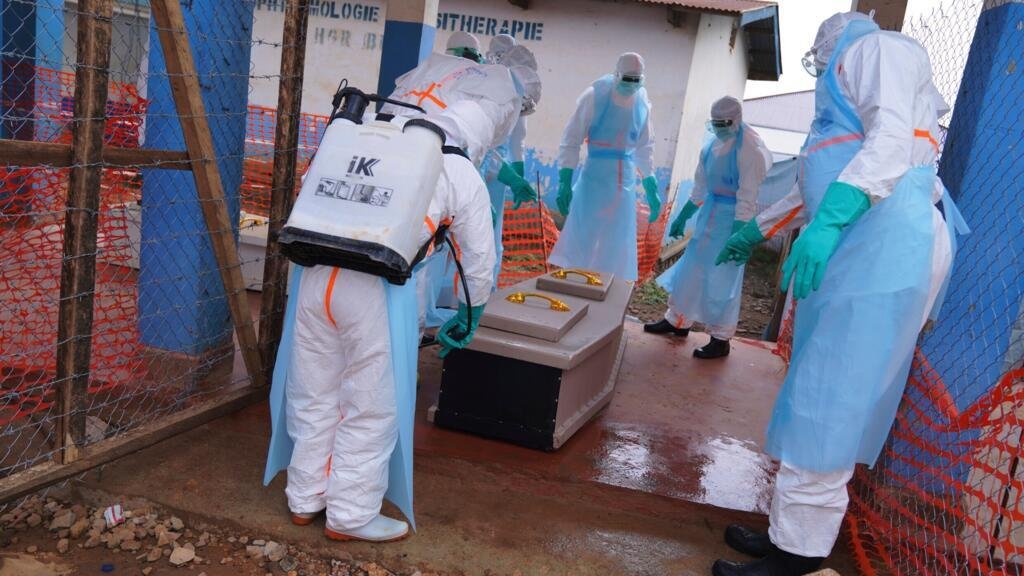
The United Nations (UN) says the Ebola outbreak continues to spread in the eastern provinces of the Democratic Republic of Congo (DRC), with more than 3,500 deaths reported.
UN Special Ebola Coordinator Julien Harneis, in a statement on Tuesday, said the deadly Ebola virus outbreak in DR Congo continued to spread across the vast country despite some success in containing it.
Harneis, however, called for international support to help responders on the ground.


“If we don’t have the resources, the epidemic will come back…it remains a deadly and massive epidemic,” the coordinator said.
Latest data from Sept. 12, indicates 7,200 reported cases of Ebola and close to 3,500 deaths across 62 health zones, according to the UN World Health Organisation ( WHO).
The virus is now present in seven provinces “covering a very vast geographic area”, Dr Olivier le Polain, Unit Head for Epidemiology and Analytics for Response at WHO, said.
“Although the response has been unprecedented in its scale, the epidemic continues to expand.”
In partnership with the authorities, UN agencies and partners have been assisting in tackling the Ebola Bundibugyo virus outbreak since the emergency was declared in mid-May.
But there are immense challenges involved in working in resource-rich regions where populations have experienced decades of violent insecurity and development setbacks.
“[In] many areas, the roads are massive potholes – not even potholes – trucks disappear into the mud; [in] many areas, the access, even by small plane, is complicated. And then there’s violence against the response,” Harneis said.
“We have cases in Bunia, in Ituri and in the far other end of the country in Sud-Ubangi, that is like a distance from Geneva to Dublin.”
The veteran aid coordinator warned that the 1.3 billion dollars humanitarian response is only 49 per cent funded, while Ebola “makes things much worse for all Congolese, “from worsening hunger levels to falling attendance at health centres, increases in maternal mortality” and interrupted treatment for people living with HIV/AIDS.
“We’ve done a lot of positive work through the scaling up bed capacity, but unless we get more specialized medical care, we will eventually come to a plateau,” Harneis continued, stressing the need for countries to deploy international emergency medical teams immediately.
“If you don’t provide the care, if you don’t finance the care, if you don’t provide the technical resources, then Ebola is a live enemy and will come back at us,” he warned, adding that another one billion dollars will be needed to sustain the response beyond the first six months.
“There’s been some indication from Member States that they might be prepared to send those teams, but we need a far greater support and dedication of those resources.”
The Ebola outbreak continues to unfold in areas of great humanitarian need and will take “many, many months to get this outbreak under control fully”, insisted WHO’s le Polain.
The epidemiologist described how infections were beginning to decrease in some areas but rise “exponentially” in others, including North Kivu, where the number of weekly cases has now doubled, from about 100 to 200 cases.
“We’re worried about particularly Butembo and Katwa”, a major axis in the northern part of North Kivu, the WHO official explained.