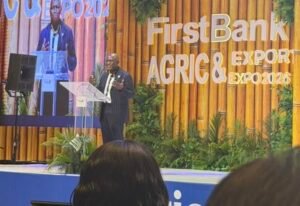
Gov. Babajide Sanwo-Olu of Lagos State has called for more efficient agricultural value chains to enable Nigeria to transition from exporting raw commodities to value-added products for global markets.
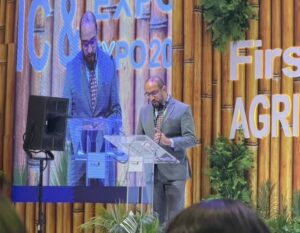
Sanwo-Olu made the call in a goodwill message at the opening ceremony of the fifth edition of FirstBank Agric and Export Expo in Lagos on Wednesday.
The governor was represented at the event by the Ms Abisola Olusanya, the Commissioner for Agriculture and Food Systems.


The two-day expo, with the theme, “From Farm to Global Markets: Building Nigeria’s Export Value Chain”, focuses on strengthening agriculture and non-oil exports through partnerships among farmers, processors, exporters, financiers, policymakers and investors.
Sanwo-Olu said Lagos occupied a strategic position in Nigeria’s agricultural export chain as the nation’s commercial hub and major gateway for movement of goods, services and capital.
He cited Imota Rice Mill, which produced over 500,000 bags of Eko Rice within a year, as example of opportunities created when production is linked with processing and other stages of value chain.
The governor said the state was also investing in infrastructure, cold-chain logistics, storage and agro-industrial development to support movement of agricultural products from farms to international markets.
He urged stakeholders to focus on value addition, saying cassava could be processed into starch and ethanol, while cocoa could be transformed into cocoa butter, liquor and powder before export.
He also called for financing structures that recognise agricultural production cycles, noting that conventional short-term financing models may not adequately meet the needs of agricultural businesses.
In his opening remarks, Mr Olusegun Alebiosu, Chief Executive Officer, FirstBank Group, said the expo had evolved from an awareness and engagement initiative into a platform connecting producers, processors, exporters, financiers, policymakers and investors.
Alebiosu said FirstBank was committed to supporting agriculture and exports as critical components of Nigeria’s economic diversification agenda.
He said this year’s edition represented deliberate shift from conversations to execution by facilitating partnerships, financing solutions, market access and knowledge exchange.
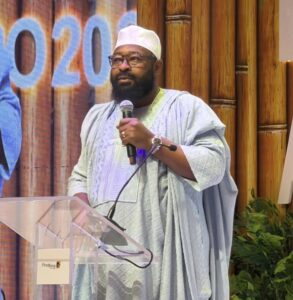
According to him, more than 2,000 participants and 100 exhibitors are taking part in the expo, which features discussions, technical sessions, business matchmaking, exhibitions and networking engagements.
Also speaking, Gov. Mohammed Bago of Niger, said Nigeria’s food import bill, which he put at over three billion dollars, could rise to four billion dollars before the end of the year.
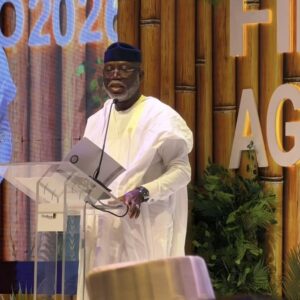
Bago called for increased domestic food production and financing to de-risk agriculture, saying the sector could help address food insecurity, create employment and generate foreign exchange.
He said the state was developing irrigation, livestock as well as greenhouse projects targeted at domestic and export markets.
He urged banks and private investors to support agricultural production.
On his part, Gov. Lucky Aiyedatiwa of Ondo State said the state was moving beyond primary agricultural production to processing, packaging, traceability and export.
Aiyedatiwa said Ondo had distributed more than two million cocoa seedlings and inaugurated a committee on compliance with the European Union Deforestation Regulation to strengthen traceability in its cocoa value chain.
He called on investors to set up processing, storage, logistics and other agro-industrial facilities in the state, instead of just acquiring land or buying raw commodities.
Brazil’s Consul General in Lagos, Mr Ronaldo Vieira, said his country’s agricultural development was built through collaboration among government, private sector, research institutions, universities, producers and financial institutions.
According to Vieira, Brazil’s experience shows the importance of integrating research, technology, skills development, production and finance to develop agricultural value chains.