The National Theatre says its ‘Circus in Motion,’ a contemporary circus can create new career opportunities for Nigerian performers while promoting wider African cultural exchanges and strengthening professional links among artists across the continent.
The General Manager and Chief Executive Officer of the theatre, Tola Akerele, said this at a media briefing ahead of the festival on Friday in Lagos.
themomentng reports that Circus in Motion, scheduled for Oct. 3 and 4, is organised by the National Theatre and sponsored by the European Union.


According to Akerele, the Circus in Motion is the first-ever contemporary circus festival in West Africa.
She said the family-oriented event will offer free entry and feature live performances, youth and community outreach, and professional development activities.
She added that unlike traditional circus, commonly associated with animals, contemporary circus focused on human bodies through acrobatics, movement, dance and aerial performance.
She said Nigeria already possessed physical performance traditions that could provide a foundation for developing contemporary circus.
“It’s a career path actually. You can actually become a circus performer and you can earn and survive,” she said.
Akerele said the initiative would combine Nigerian traditions with international techniques rather than reproduce European circus models.
She said Nigerian heritage could provide original stories for the global circus stage.
“We want to do what is us,” she said.
She said the festival would also encourage African artists and companies to collaborate, tour and build opportunities within the continent.
Akerele said longer training exchanges would be desirable in future, including opportunities for Nigerian performers to spend more time training with practitioners from other countries.
An Ivorian cultural entrepreneur, Chantal Djedje, said African traditional dances and physical movements already contained elements associated with circus.
Djedje said the festival would also recognise African artistic practices that had often been described differently instead of circus.
Djedje cited circus initiatives in Guinea and South Africa as examples of how training could connect young people, including those from disadvantaged backgrounds, with professional performance opportunities.
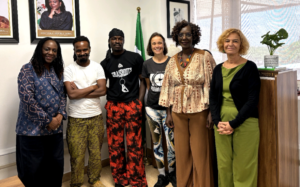
NAN reports that circus practitioners from Nigeria, Ethiopia, Senegal and Switzerland are collaborating to exchange skills, develop performances and strengthen professional links among African artists.
The collaboration includes Fekat Circus from Ethiopia, SenCirk from Senegal, Nigerian practitioners, and Swiss circus artist Jessica Arpin.
Also, Arpin said that the inclusive nature of circus, presented it as a space for different kinds of bodies and sizes rather than a competition based on physical conformity.
Sanuel Udoh, Founder and Artistic Director of Slum Circus, said some Nigerian performers already possessed skills such as juggling, contortion and acrobatics without knowing their professional definitions or potential career value.
He said the ongoing training ahead of the circus was more of a mentorship programme than a conventional masterclass.
Udoh said the mentorship was helping performers recognise their abilities and see possibilities for developing them professionally.
He said outreach programmes had also taken the initiative to schools in Oworonshoki and Bariga, where students were introduced to the possibility of developing physical skills into creative careers.
Udoh said the immediate focus was helping Nigerian performers recognize and develop abilities they already possess.
“The artistes, they have this act in them, but they don’t know what it is,” he said.