The Moment Nigeria
  • Home
  • News
  • Business
  • Entertainment
  • Interviews
  • Life and Styles
  • Sport
No Result
View All Result
  • Home
  • News
  • Business
  • Entertainment
  • Interviews
  • Life and Styles
  • Sport
No Result
View All Result
The Moment Nigeria
No Result
View All Result
  • Home
  • News
  • Business
  • Entertainment
  • Interviews
  • Life and Styles
  • Sport

China develops brain-computer interface to restore visual perception

by Honesty Victor
October 9, 2026
Reading Time: 2 mins read
China develops brain-computer interface to restore visual perception
Share on FacebookShare on TwitterShare on WhatsappShare on LinkedIn

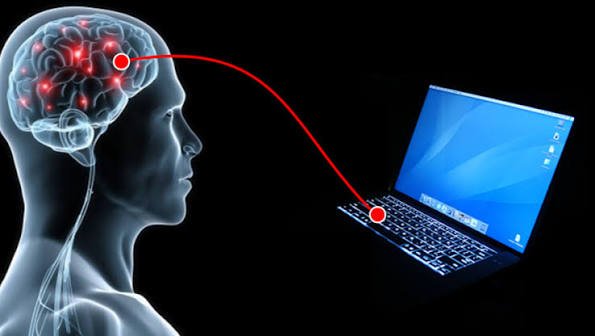
Chinese researchers have developed a brain-computer interface (BCI) technology that can restore visual perception for people with certain forms of irreversible blindness.

The system has enabled a visually impaired man to recognise and write numbers, Chinese and English characters, grasp objects and navigate around obstacles.

The procedure was performed in Hubei province.

RELATED STORIES

Kogi govt extends retirement age for health workers to 65

Kogi govt extends retirement age for health workers to 65

November 21, 2026
MTN defends data billing system, unveils transparency drive on usage tracking

MTN set to launch 5G in Côte d’Ivoire ahead of 2027 network expansion

November 20, 2026

 ​‌‌‍⁠‌‍⁠⁠‍​‌‍​​Doctors implanted a chip smaller than half a small fingernail into the sclera, the outer wall of the eyeball.

The device does not penetrate the eye and operates without connecting wires or external magnetic attachments.

Cameras in specially designed glasses capture images and convert them into electrical signals, which are transmitted wirelessly to the implant.

The chip then stimulates nearby ocular nerves, sending signals to the brain’s visual cortex.

According to experts, the technology could potentially be used for seven types of blindness associated with nerve damage, including retinitis pigmentosa, advanced age-related macular degeneration, advanced glaucoma and diabetic retinopathy.

The researchers are working to improve the technology, particularly its ability to reproduce colour, depth perception and more detailed images.

The long-term goal is to help patients perform everyday activities more independently, including travelling, avoiding obstacles and recognising banknotes.

Researchers expect advances in artificial intelligence and more precise mapping of connections between the eye and brain to further develop artificial vision.


Next Post
Supreme Court dismisses PDP’s second appeal

APC writes INEC, seeks enforcement of supreme court judgment on parties’ membership registers

Leave a Reply Cancel reply

Your email address will not be published. Required fields are marked *

STANBIC IBTC ADVERT

About Us

Themomentng.com is an online community of reporters and social advocates dedicated to bringing you features, news reports by Africans, but from a global perspective.

Contact Us

+447771081433
+2348051966180(WhatsApp/SMS Only)
Email: themomentng@gmail.com

Categories

  • Business
  • Education
  • Entertainment
  • Events
  • Featured
  • Food
  • Foreign
  • Health
  • Interviews
  • Life and Styles
  • Metro
  • Motoring
  • News
  • Opinion
  • Politics
  • Religion
  • Society
  • Sport
  • Technology
  • Top Story

Follow Us

Facebook Twitter Instagram

Copyright © Themomentng.com. All Rights Reserved.

No Result
View All Result
  • Home
  • News
  • Business
  • Entertainment
  • Interviews
  • Life and Styles
  • Sport